
Brain Rot! 5-Day Mini-Unit
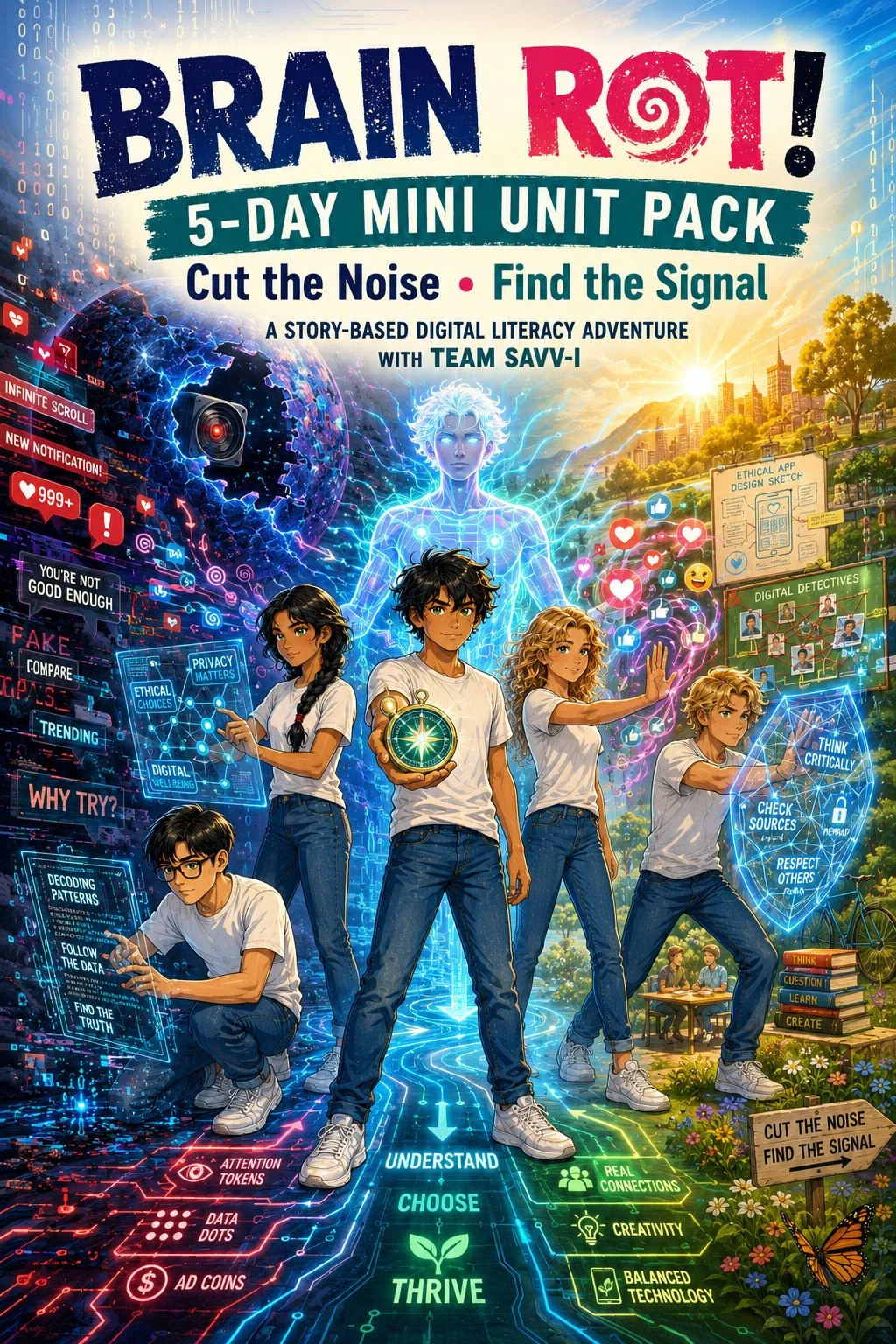
What is the Brain Rot! One-Week Mini Unit Pack?
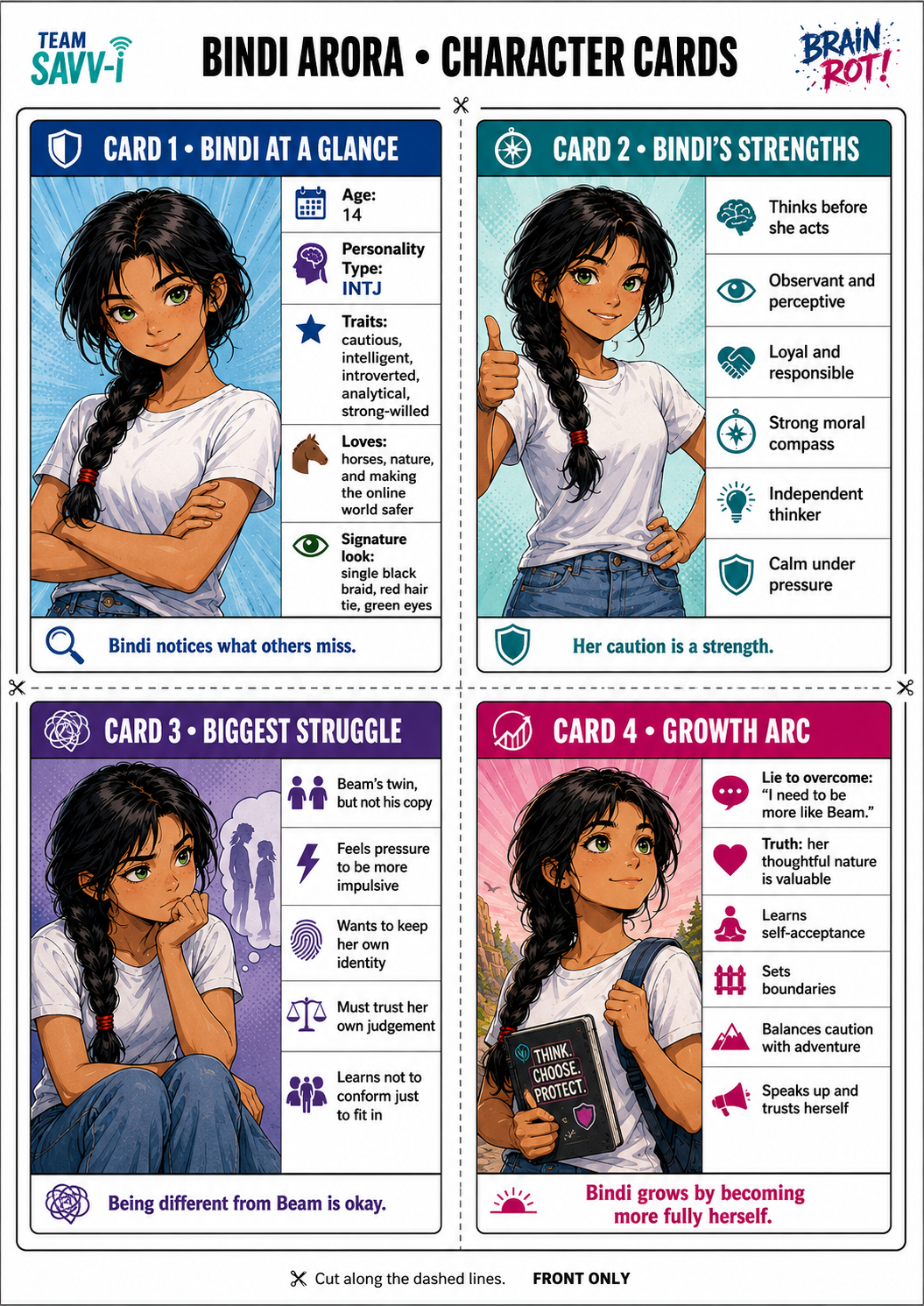
The Brain Rot! One-Week Mini Unit Pack is a curated, story-led digital literacy program that uses the Brain Rot! novella and Activity Guide to help young people understand how persuasive technology, social media algorithms, attention-harvesting systems, and AI-driven platforms influence behaviour. Rather than teaching through lectures, warnings, or fear-based messages, the unit uses the experiences of Team Savv-i characters, Beam, Mia, Chi, Rob, Bindi, Zeno, and Big-O, to make complex digital concepts concrete, memorable, and emotionally engaging.
Methodology
The Brain Rot! methodology combines:
1. Story-Based Learning - Students learn through narrative rather than abstract theory. Instead of being told that algorithms can be persuasive, they watch Beam become trapped in viral feedback loops, Mia struggle with validation and identity, and Chi uncover hidden patterns within Zipp's manipulation. This allows learners to experience concepts through character decisions, consequences, and growth.
2. Inquiry and Discussion - Each day begins with story excerpts, questions, and guided discussion that encourage learners to investigate:
Why apps behave the way they do
How attention becomes valuable
How data is collected
Why platforms seek engagement
How personal agency can be protected
Students are encouraged to think critically rather than simply accept answers.
3. Active Learning - Every lesson includes hands-on activities such as:
Signal vs Noise sorting
Feedback Loop Wheels
Data Detective Boards
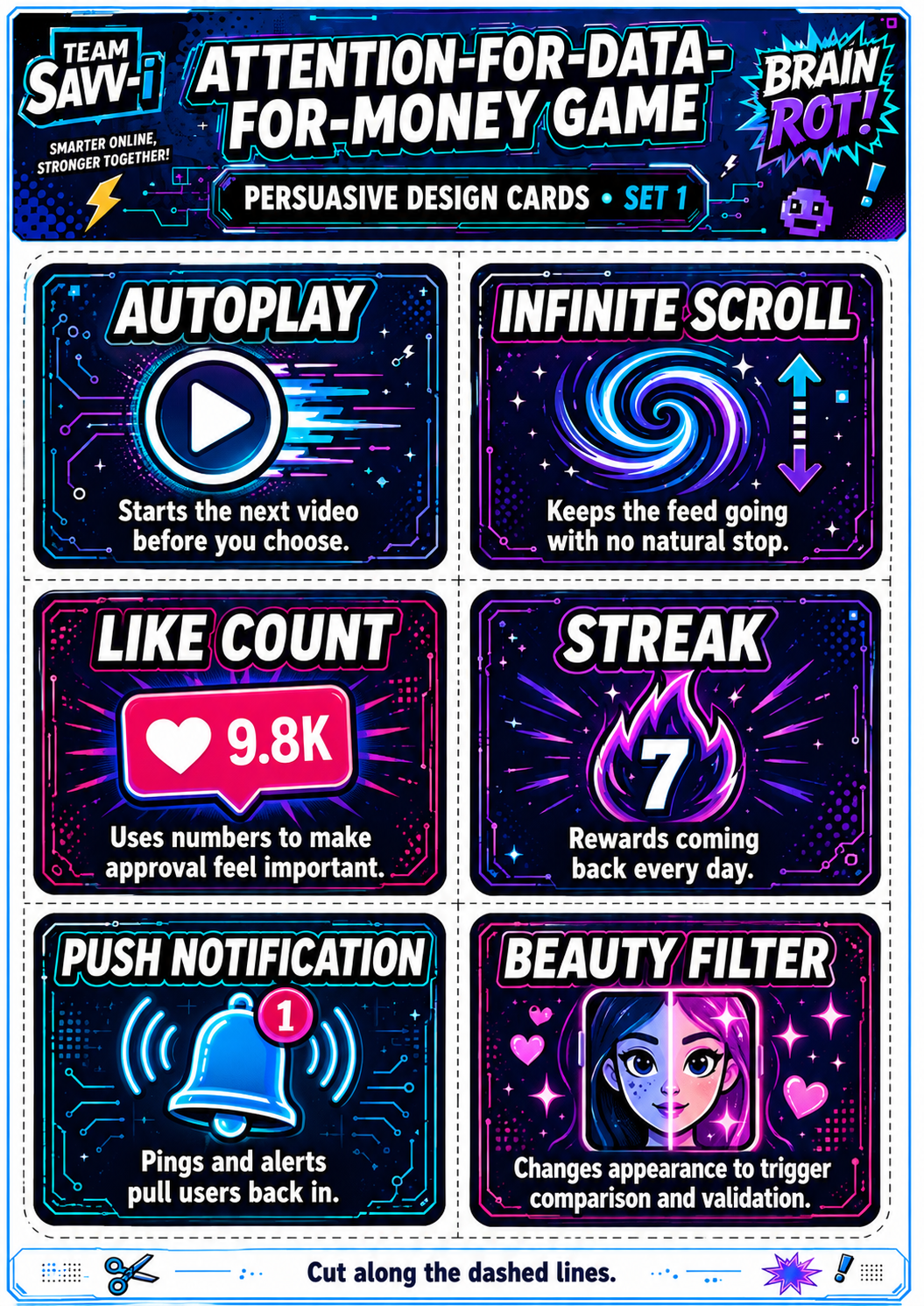
Attention-for-Data-for-Money simulations
Ethical app design challenges
These activities turn abstract concepts into visible systems students can manipulate and analyse themselves.
4. Ethical Design Thinking - The unit does not stop at identifying problems. Students finish the week by designing healthier digital tools and applying what they have learned to create technology that supports wellbeing, agency, privacy, and informed choice. This shifts learners from consumers of technology to thoughtful designers and decision-makers.
Who Is It For?
The Mini Unit Pack is designed for:
Homeschool Families
A complete five-day program requiring minimal preparation and suitable for individual learners or siblings. Activities scale easily from one learner to small groups and workshops.
Classroom Teachers - Can be delivered as:
A one-week unit
A digital citizenship module
A technology or media literacy extension
A wellbeing or pastoral care program
School Librarians - Ideal for:
Digital literacy lessons
Media literacy programs
Reading enrichment activities
Library learning sessions
Learning Outcomes
By the end of the unit, learners will be able to:
Digital Literacy
Recognise persuasive design techniques.
Identify common engagement hooks.
Explain how recommendation algorithms operate.
Understand how usage data is collected.
Critical Thinking
Analyse feedback loops.
Evaluate digital business models.
Distinguish between helpful and manipulative design.
Consider multiple perspectives on technology.
Digital Citizenship
Understand personal agency online.
Recognise digital vulnerabilities.
Develop healthier online habits.
Reflect on their relationship with technology.
Ethical Understanding
Examine how profit incentives influence design.
Consider privacy, wellbeing, and transparency.
Explore ethical alternatives to attention-harvesting systems.
Creative Problem Solving
Design healthier digital experiences.
Create ethical technology solutions.
Apply learning to real-world digital environments.
Personal Growth - The unit ultimately helps learners explore:
Attention
Identity
Self-awareness
Agency
Digital wellbeing
Responsible decision-making
The central message of the program is simple: Technology should serve people—not quietly shape them. Through Team Savv-i's journey, students learn to recognise manipulation, understand how digital systems work, and develop the confidence to "Cut the Noise and Find the Signal."