Reading Alone Is Powerful — But Edufiction Turns Stories into Conversations
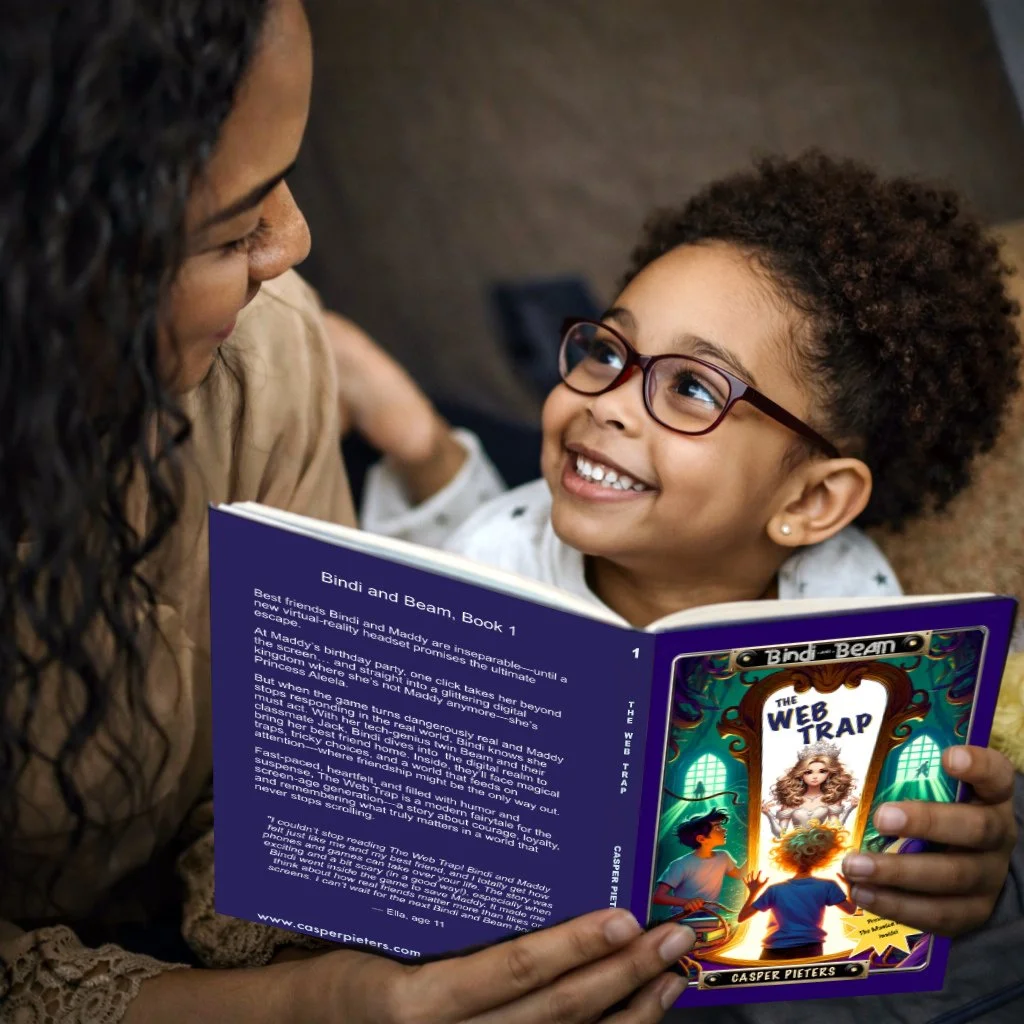
A recent article* in The Conversation explores a refreshing idea for parents: reading to young children improves their social skills — even if you don’t pause to ask questions. The study found that after just two weeks of shared bedtime reading, children showed measurable gains in empathy and creativity. Interestingly, it didn’t significantly matter whether parents used structured prompts or simply read the story straight through. The takeaway? The shared reading experience itself carries developmental power.
That’s reassuring news for busy families. No scripts. No pressure. Just read.
But here’s where we can go deeper.
Reading Builds Empathy. Edufiction Builds Insight.
Stories naturally nurture empathy because children step into someone else’s perspective. They imagine feelings, motivations, and consequences. This cognitive empathy — understanding how others think and feel — strengthens through narrative exposure. Yet while the study suggests questions aren’t essential for social gains, it doesn’t mean conversations lack value.
This is where edufiction becomes transformative.
Edufiction blends compelling storytelling with embedded factual or developmental themes. It doesn’t pause the narrative to “teach.” Instead, it weaves learning seamlessly into plot, character arcs, and settings. Children absorb information because they care about what’s happening. Now imagine pairing that story with a thoughtfully designed education guide — not a worksheet, but a gentle conversation companion.
That’s where insight flourishes.
Why Narrative-Based Guides Matter
The research suggests:
Shared reading strengthens empathy.
Structured questioning isn’t required for growth.
Consistency matters more than technique.
But it didn’t examine how richer dialogue might extend those benefits long term.
Education guides built around edufiction can:
Deepen Perspective-Taking
Instead of asking, “What happened?” a guide might prompt: “Why do you think the character chose that? Have you ever felt something similar?”
The narrative provides emotional safety. Children respond because they’re discussing a character — not being interrogated about themselves.
Strengthen Critical Thinking
Edufiction embeds real-world concepts inside story. A guide can gently uncover them:
Social dynamics
Environmental themes
Emotional regulation strategies
Historical or scientific insights
The learning feels organic because it grows from the plot.
Foster Connection
Reading builds bonding. But conversation builds understanding. When parents and children reflect together on a character’s dilemma, they co-construct meaning. The story becomes a shared emotional reference point — a language for discussing real life.
A Critical Perspective on the Study
The article highlights promising findings, but context matters:
The intervention lasted only two weeks.
Participants largely came from higher-income families.
The focus was on short-term empathy and creativity outcomes.
What remains unclear is how reading habits shape children over months and years — especially when layered with intentional dialogue. This is where edufiction paired with guidance offers something sustainable.
Not scripted questioning.
Not academic pressure.
But purposeful reflection anchored in story.
From Passive Listening to Active Meaning-Making
The beauty of edufiction is that it respects story first. The educational layer is invisible during reading. The guide simply opens doors afterward:
“What would you have done differently?”
“Why do you think that choice had consequences?”
“How does this connect to our world?”
These conversations:
Encourage moral reasoning
Develop emotional vocabulary
Support identity formation
Strengthen relational trust
In short, they turn reading time into relational time.
The Thought Byte
The study reassures parents: just reading is enough to nurture empathy. But edufiction — supported by thoughtful education guides — transforms reading into something even more powerful: A shared lens for understanding the world.
Stories spark empathy.
Conversation builds insight.
Together, they shape thoughtful humans.
And that might be the real magic of bedtime reading.
*Source article by ErinClabough - Associate Professor of Psychology, University of Virginia: https://theconversation.com/reading-to-young-kids-improves-their-social-skills-and-a-new-study-shows-it-doesnt-matter-whether-parents-stop-to-ask-questions-274926