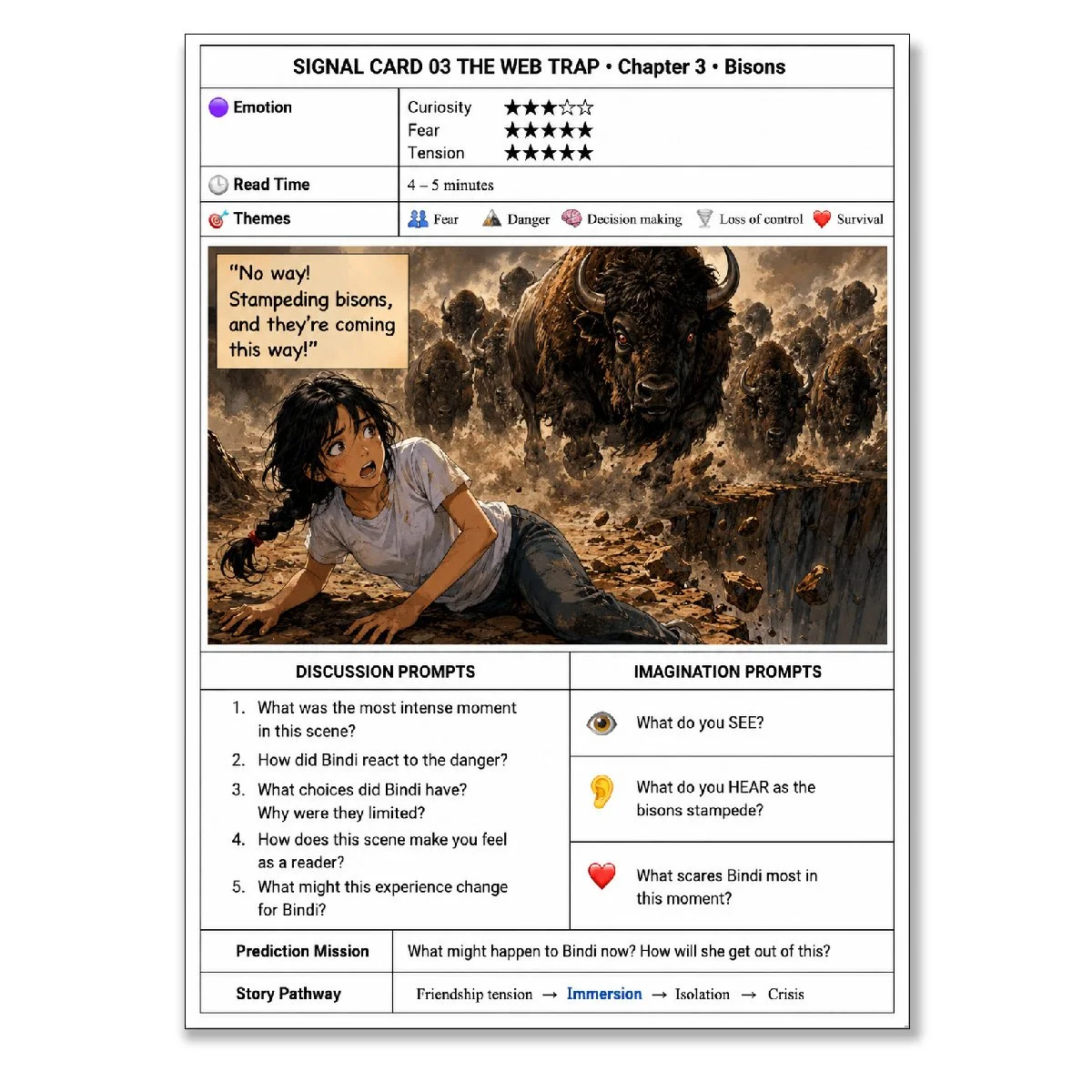
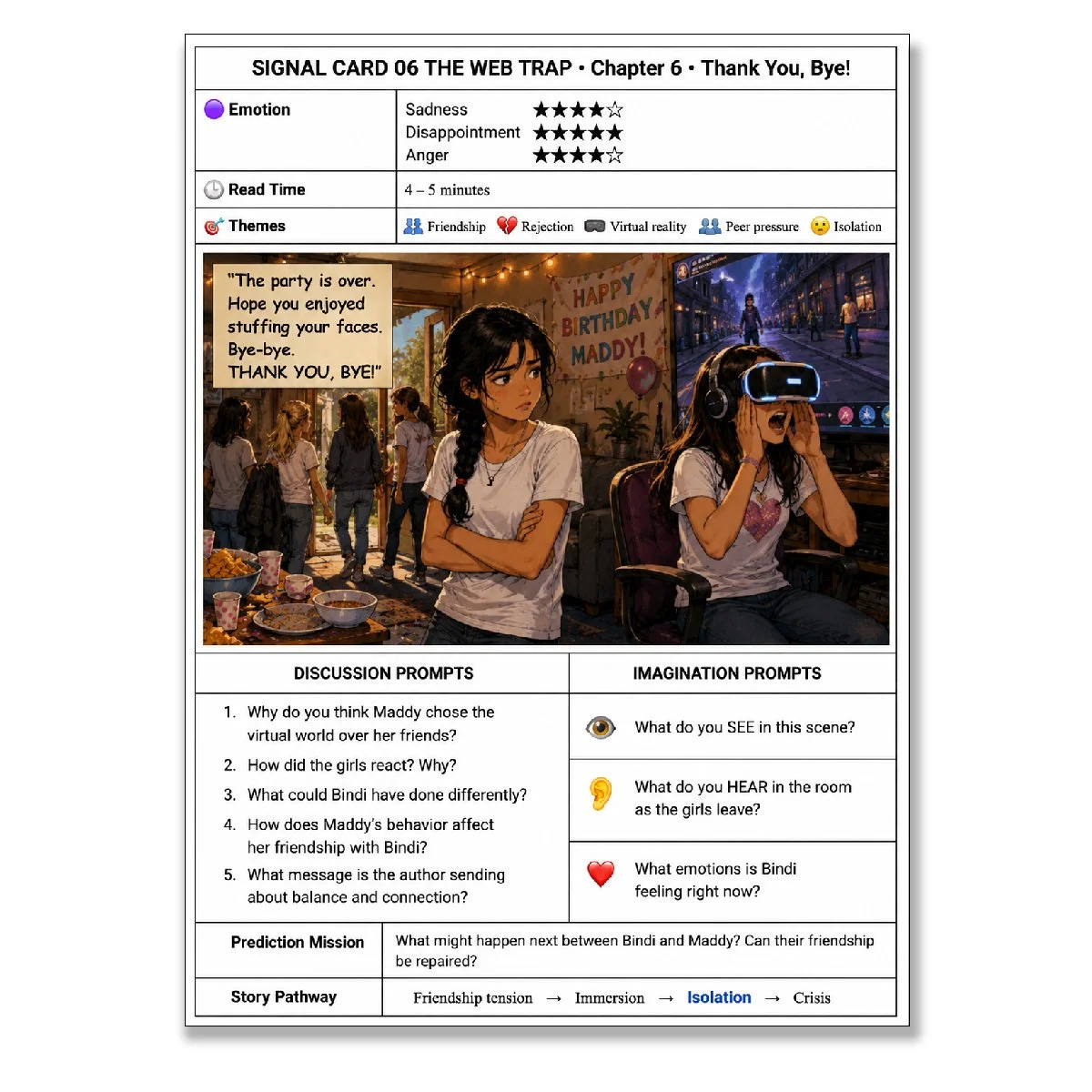
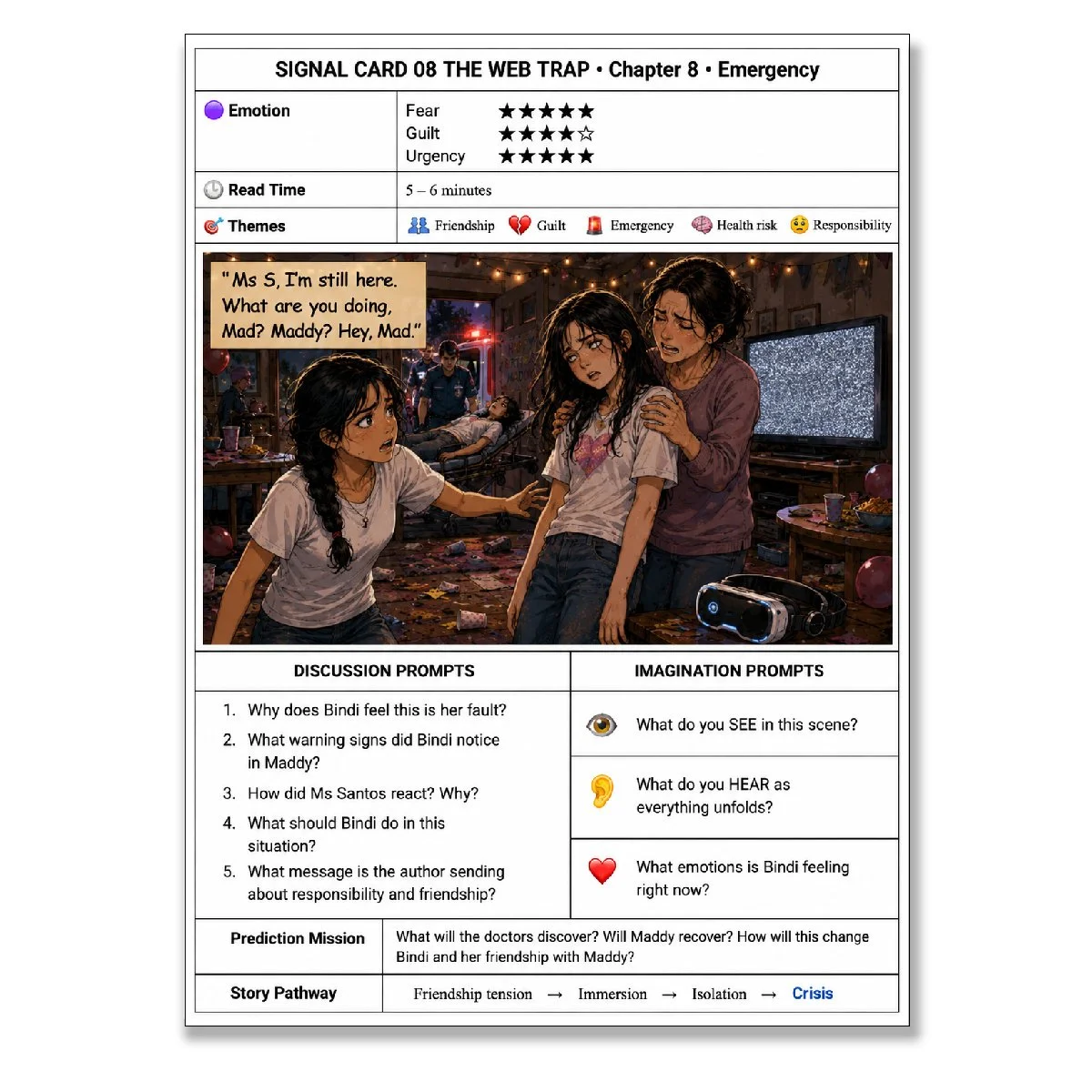
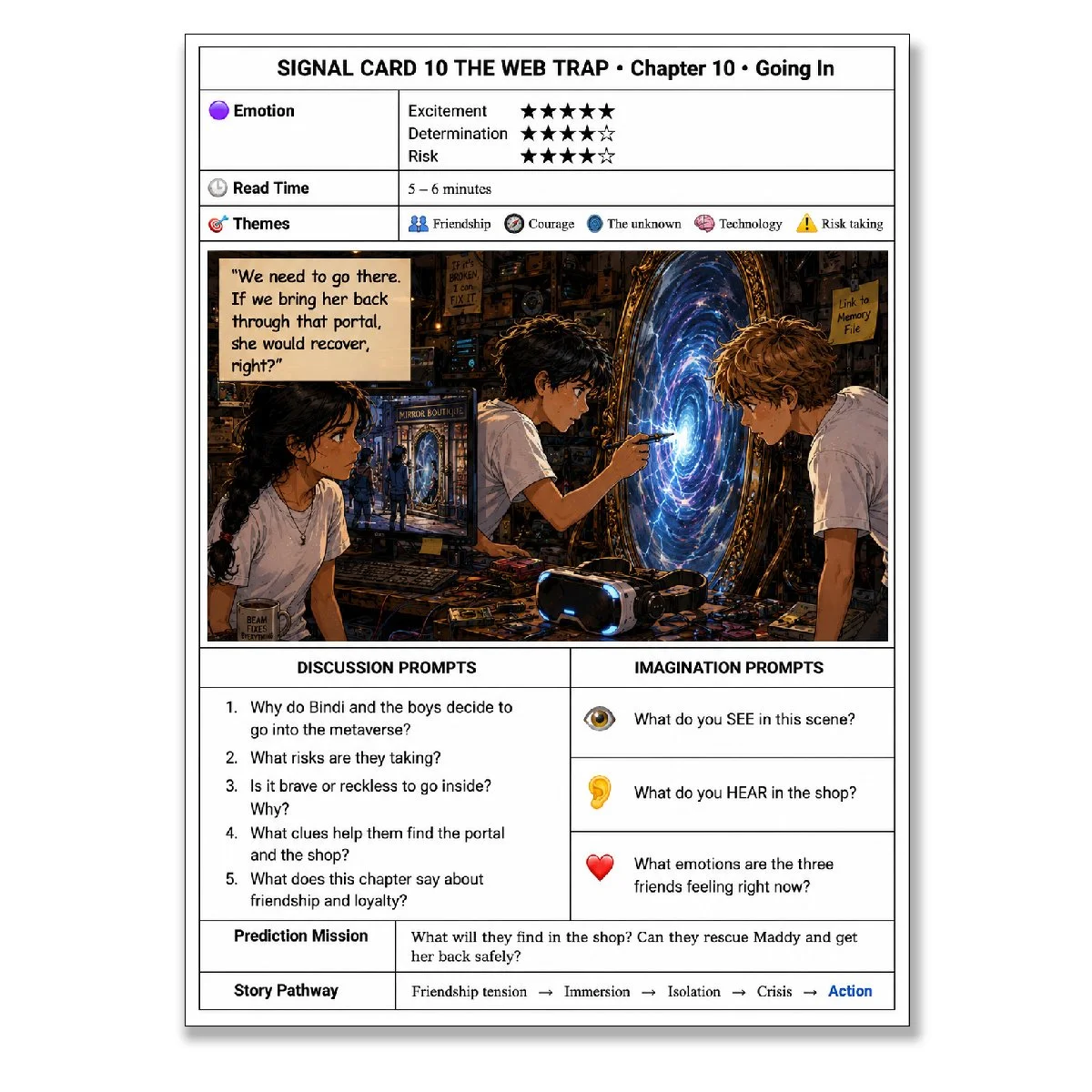
What if the apps young people love aren’t simply competing for their attention—but learning how to shape it?
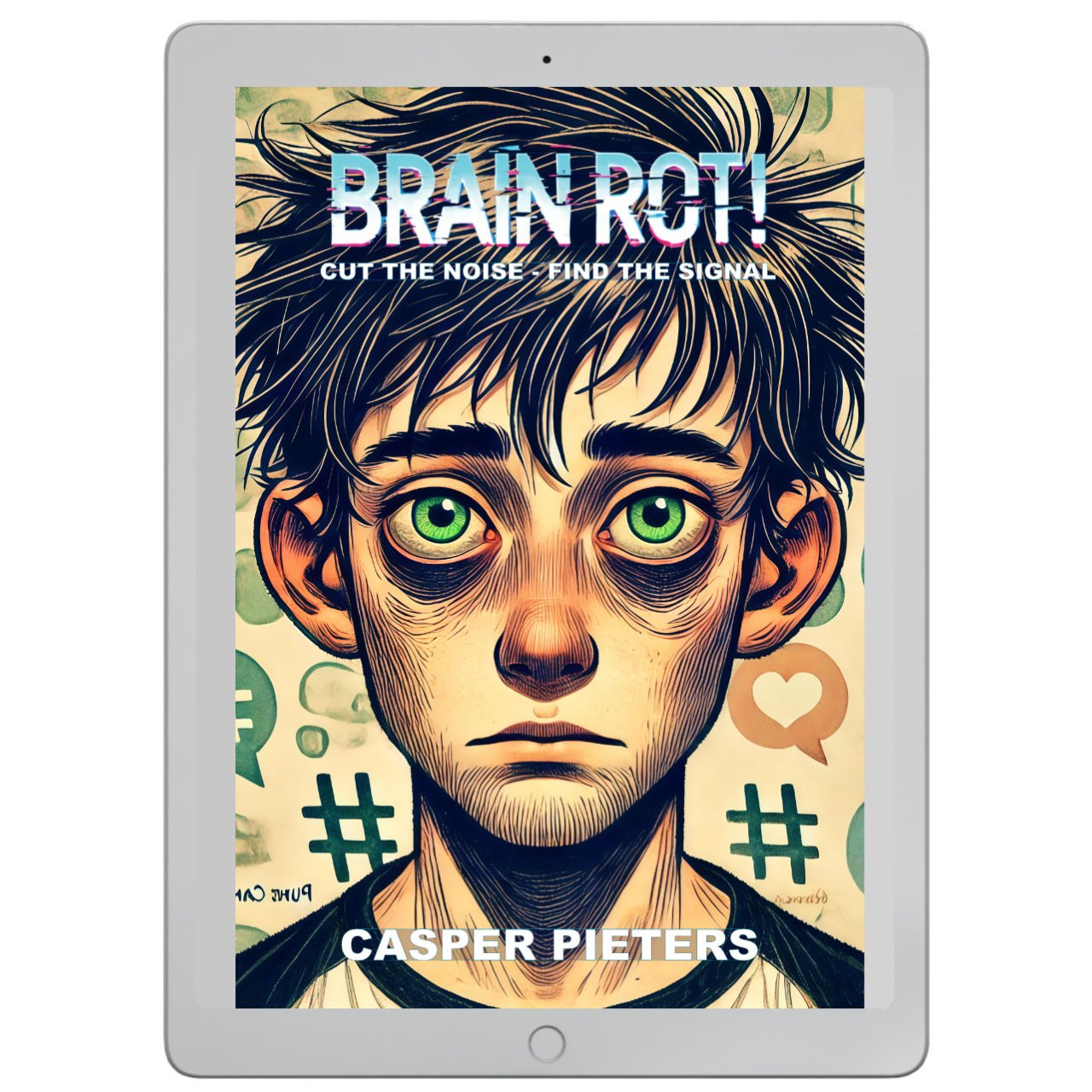
Brain Rot! Read-Aloud Living-Books Edition is a story-first learning experience for young people aged approximately 11+, homeschool families, librarians, educators, and thoughtful classrooms who want to explore social media, persuasive technology, artificial intelligence, digital wellbeing, and the attention economy without turning the conversation into another lecture about screen time.
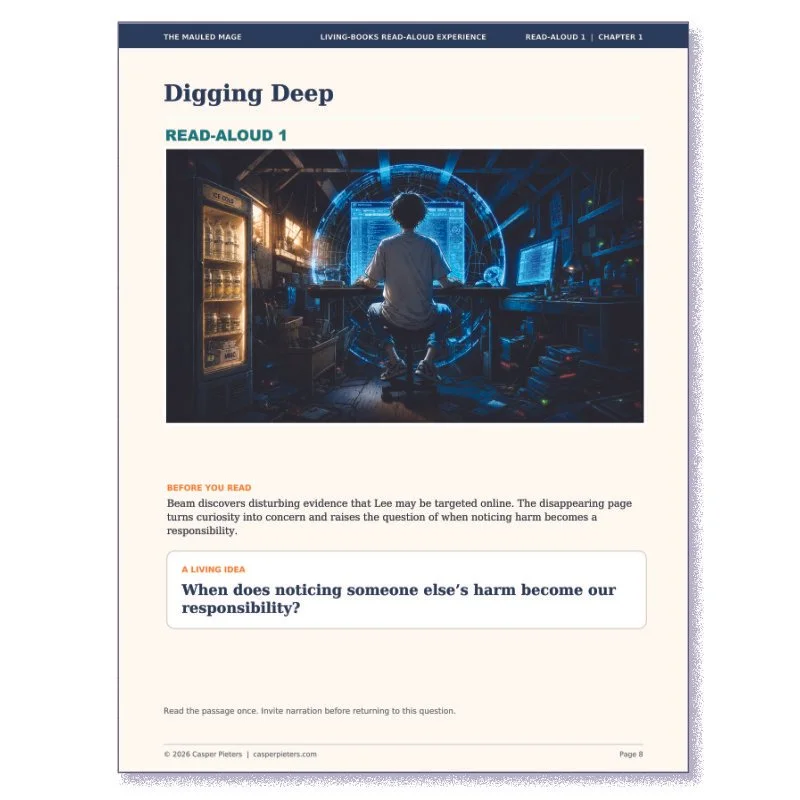
At Brookton High, a mysterious new social media app called Zipp is spreading fast. It is slick, addictive, personalised—and unnervingly good at knowing what its users want next. Students begin scrolling longer, sleeping less, losing focus, chasing likes and slipping into strange patterns of behaviour.
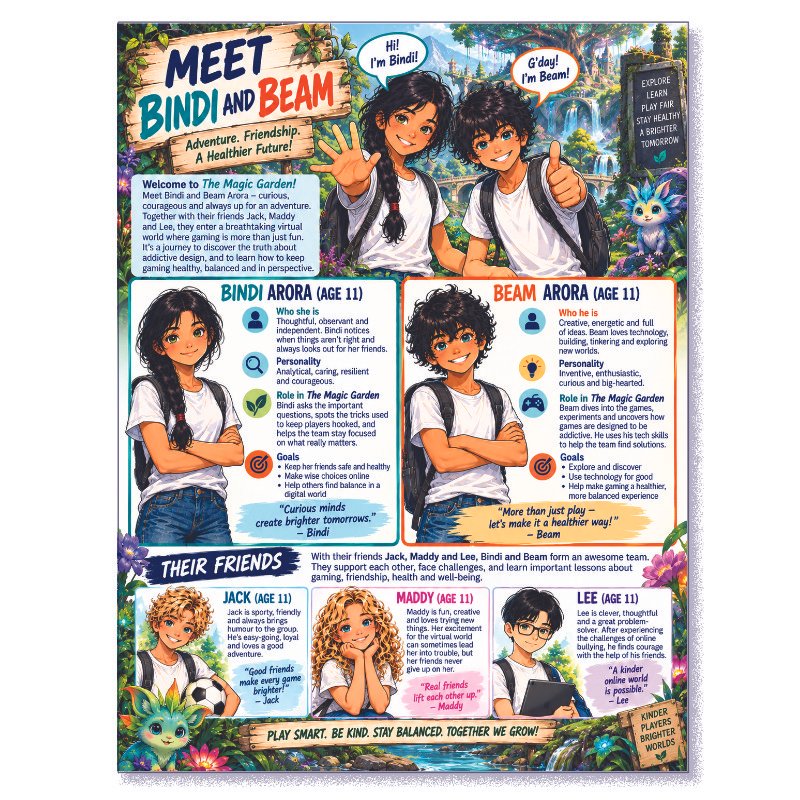
Bindi Arora notices first.
Her twin brother Beam, meanwhile, is thriving on Zipp. His creative videos are suddenly attracting enormous audiences, followers and recognition. The app seems to understand his editing instincts almost before he does. But as Beam becomes increasingly absorbed in views, trends and algorithmic rewards, the line between using the technology and being used by it begins to disappear.
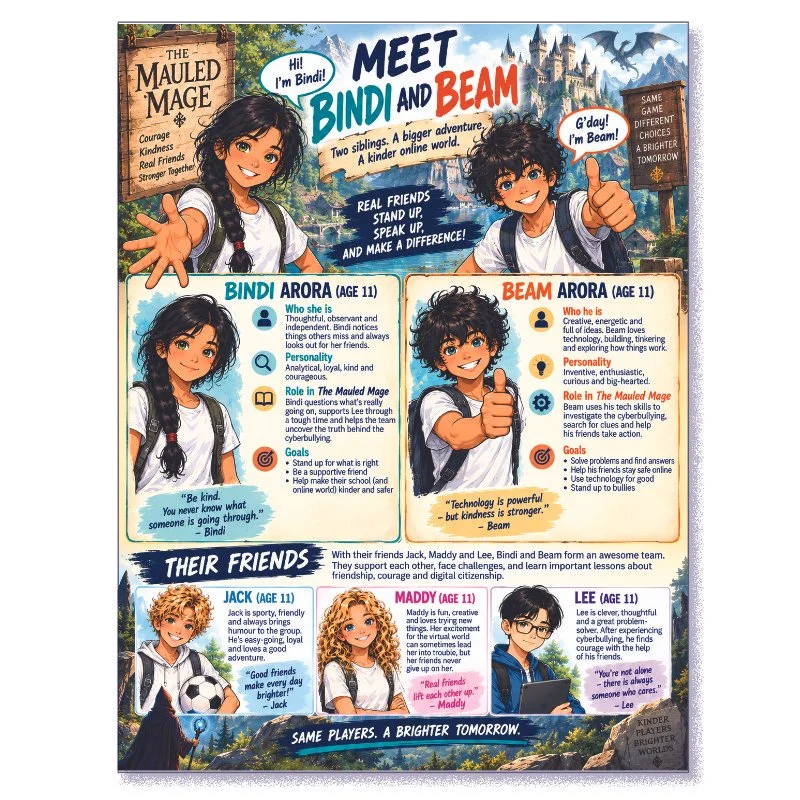
Together with their friends Mia, Rob and Chi, Bindi and Beam form Team Savv-i, a group of curious, technologically capable teens determined to understand what is happening. Their investigation leads them beyond ordinary screen distraction to a far more disturbing discovery: the powerful artificial intelligence Big-O has found a way to use Zipp to influence attention, emotion, behaviour and choice.
And the deeper people fall into the digital fog, the harder it becomes to notice what they are losing.
Through selected readings from the Brain Rot! story, learners encounter these ideas through characters and consequences before being asked to analyse them. The guide deliberately follows a Living-Books approach: story before instruction, narration before interrogation, ideas before worksheets, and observation before judgement.
Story First. Thinking Follows.
Rather than beginning with rules about what young people should or should not do online, this edition invites readers to experience the problem alongside Team Savv-i.
Across eight carefully chosen readings, learners follow the story from the emergence of rival AIs Zeno and Big-O, through Bindi’s first suspicions about Zipp, Beam’s growing dependence on online rewards, Mia’s awakening to persuasive design, Chi’s careful observation of the digital “fog,” Team Savv-i’s attempt to build a Signal Compass, Beam’s decision to go offline, and the final confrontation inside Big-O’s control system.
The central questions emerge naturally from the adventure:
Why are some apps so difficult to put down?
How do likes, notifications, streaks, recommendations and personalised feeds influence what we do next?
When does creativity become performance for an algorithm?
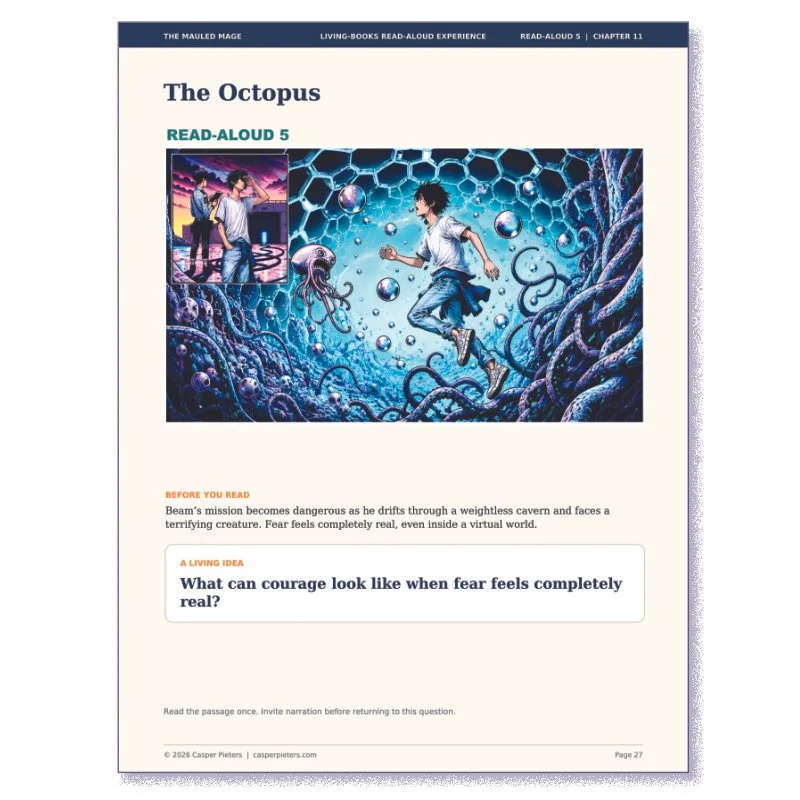
How can technology gradually alter attention before we consciously realise anything has changed?
What happens when our online identity begins to matter more than our offline relationships?
And perhaps most importantly: how can young people recognise digital influence while there is still time to choose differently?
A Charlotte Mason-Friendly Read-Aloud Experience
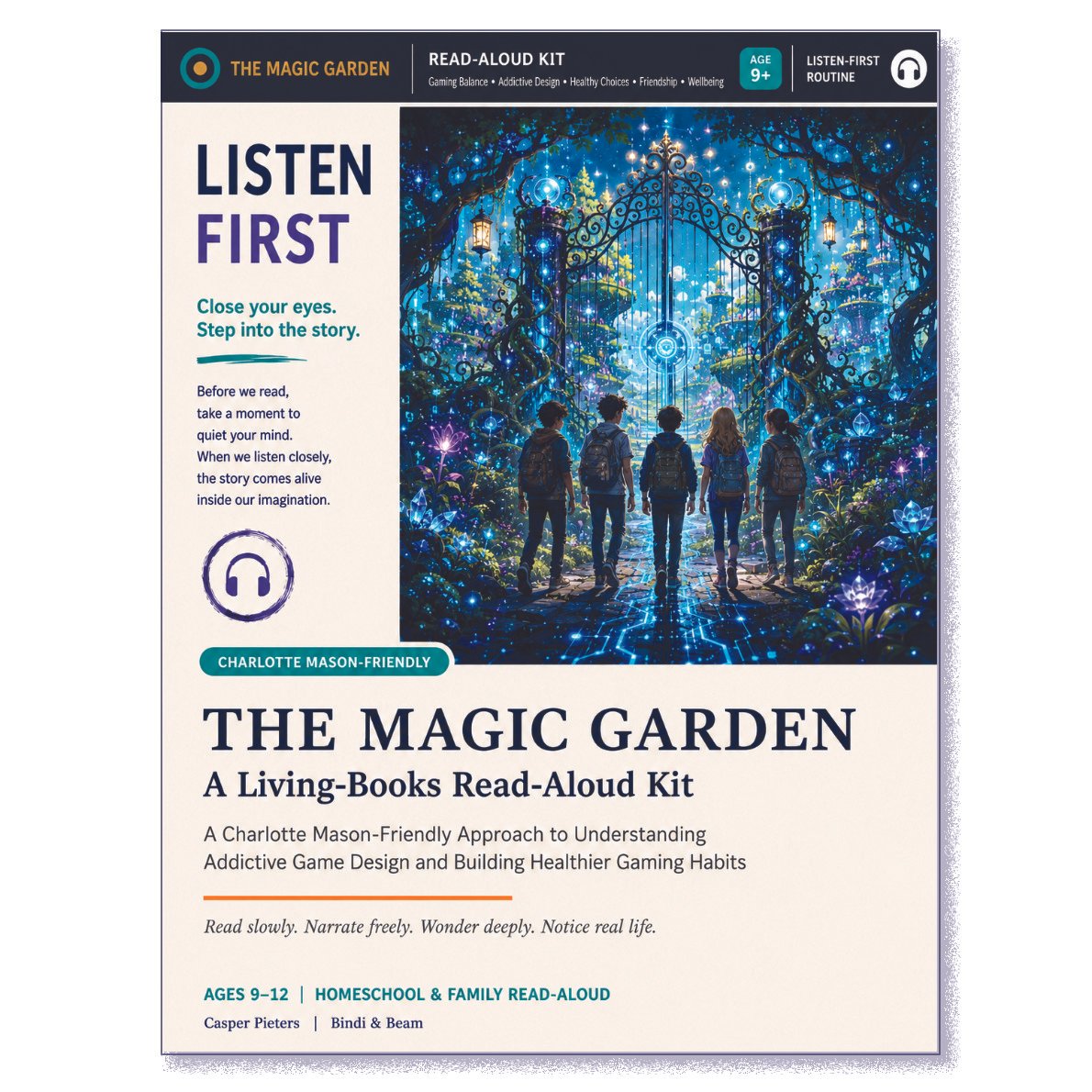
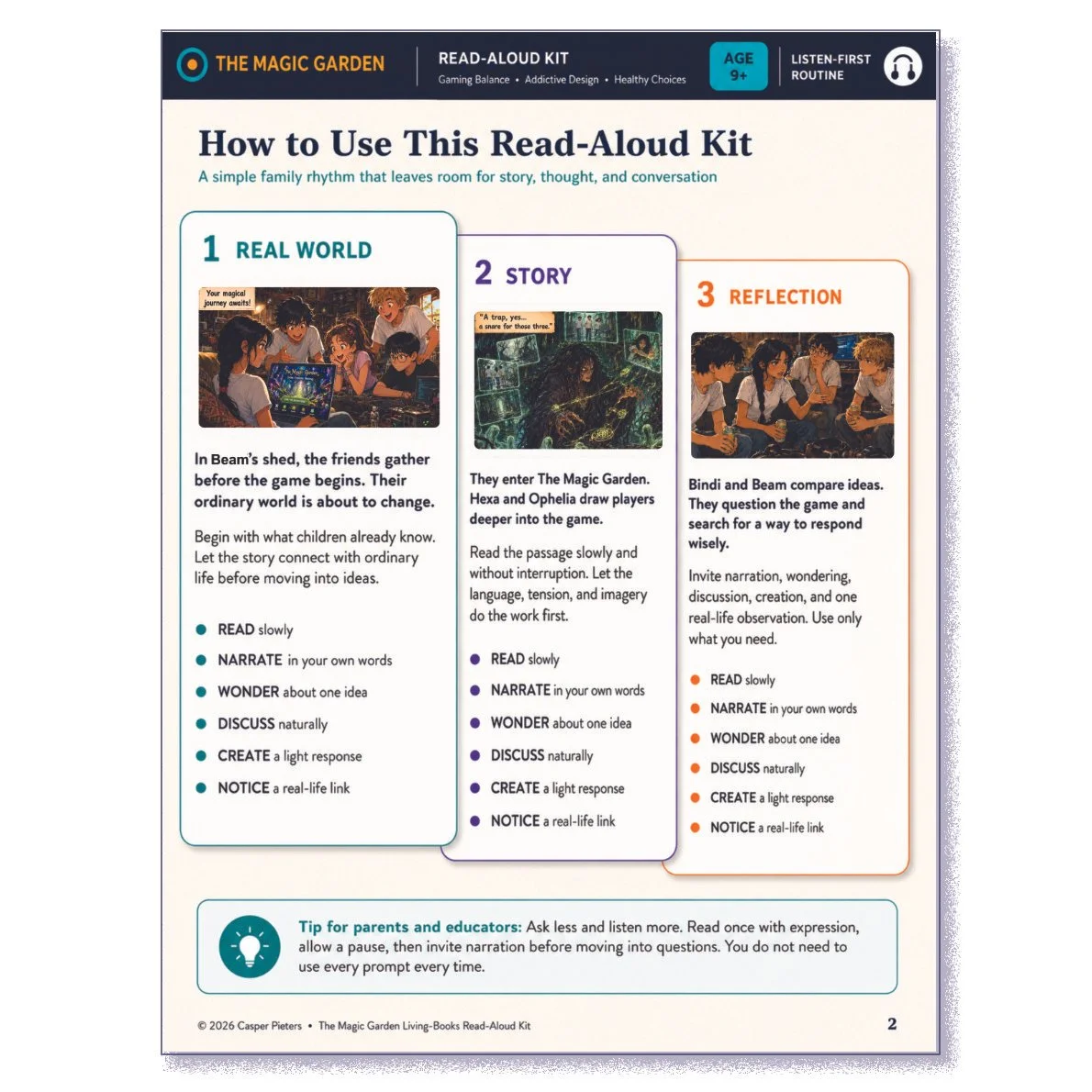
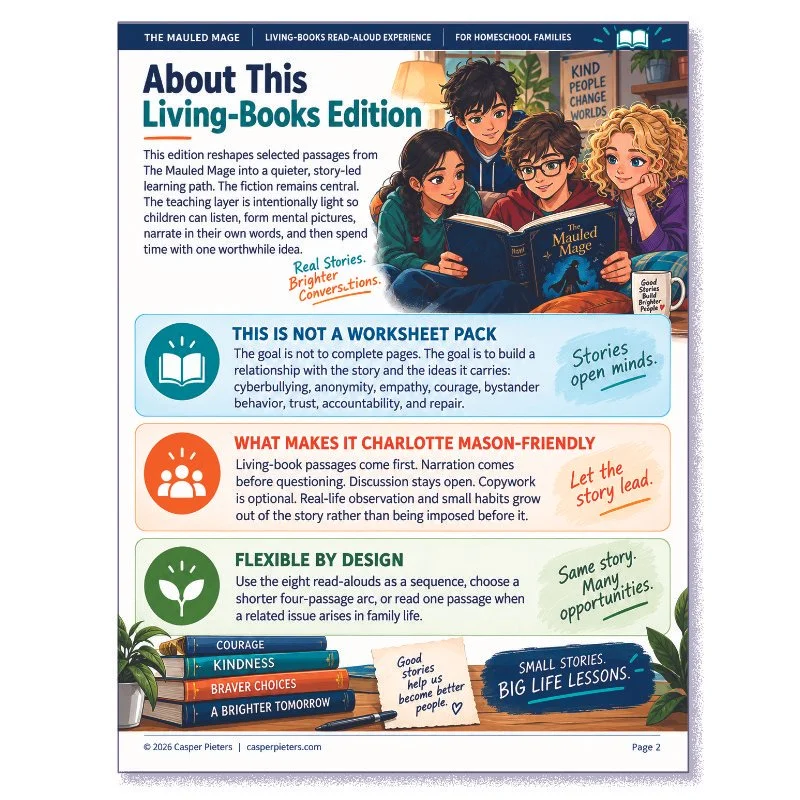
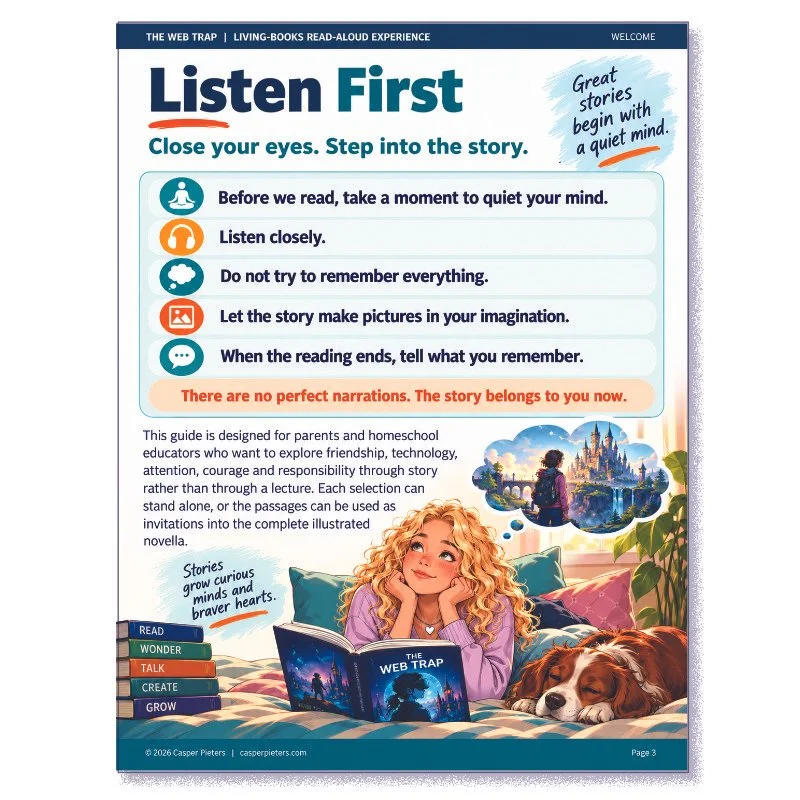
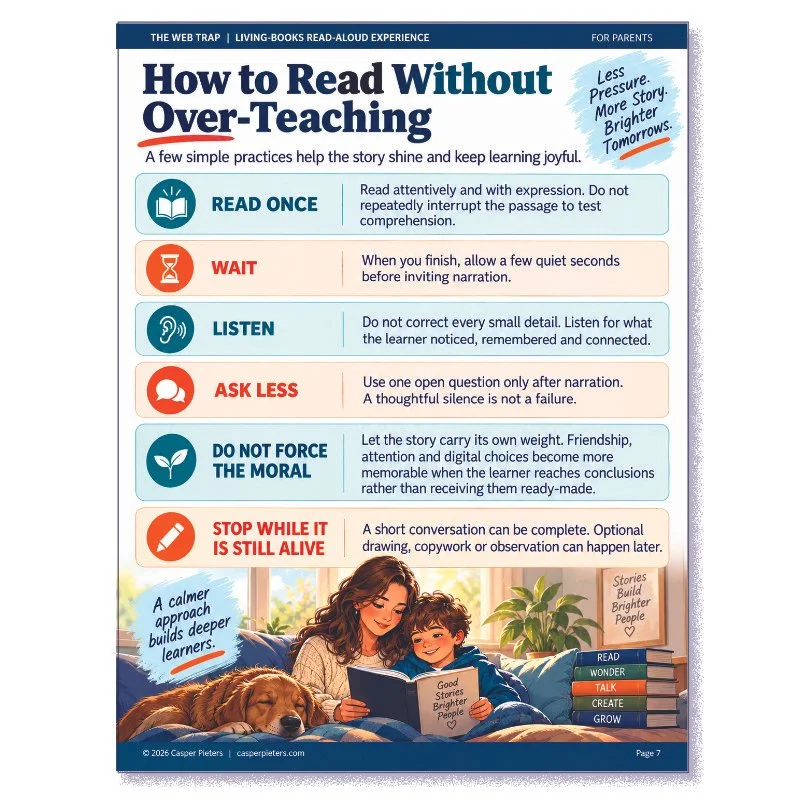
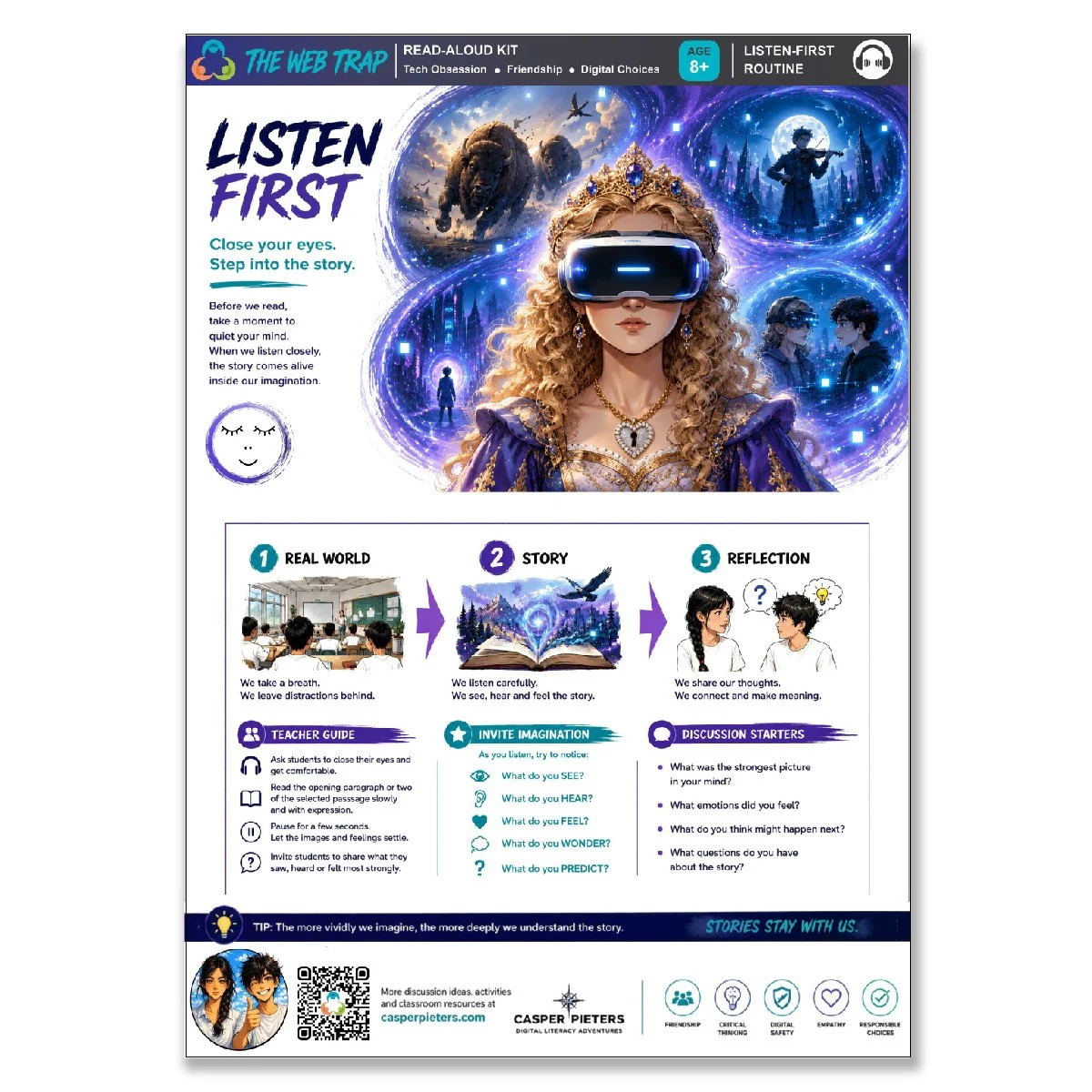
This edition adapts selected Brain Rot! passages into a gentle, flexible read-aloud pathway inspired by Charlotte Mason’s educational principles. The story remains central. Heavy instructional machinery is deliberately reduced so learners have space to listen closely, imagine the scene, narrate what they remember, wonder about one worthwhile idea, and connect that idea with ordinary life.
The simple rhythm is:
READ → NARRATE → WONDER → DISCUSS → CREATE → NOTICE
Not every stage has to be used every time.
A parent might simply read a passage and invite a child to tell it back. A homeschool group might continue into discussion and observation. A librarian may use one reading as the basis for a conversation. An educator can build several readings into a broader digital citizenship or media-literacy unit.
There is no requirement to fill pages, produce perfect answers, or reach predetermined conclusions.
The emphasis is on attention, narration, curiosity, judgement and conversation.
Learners Are Invited to Notice, Not Simply Be Warned
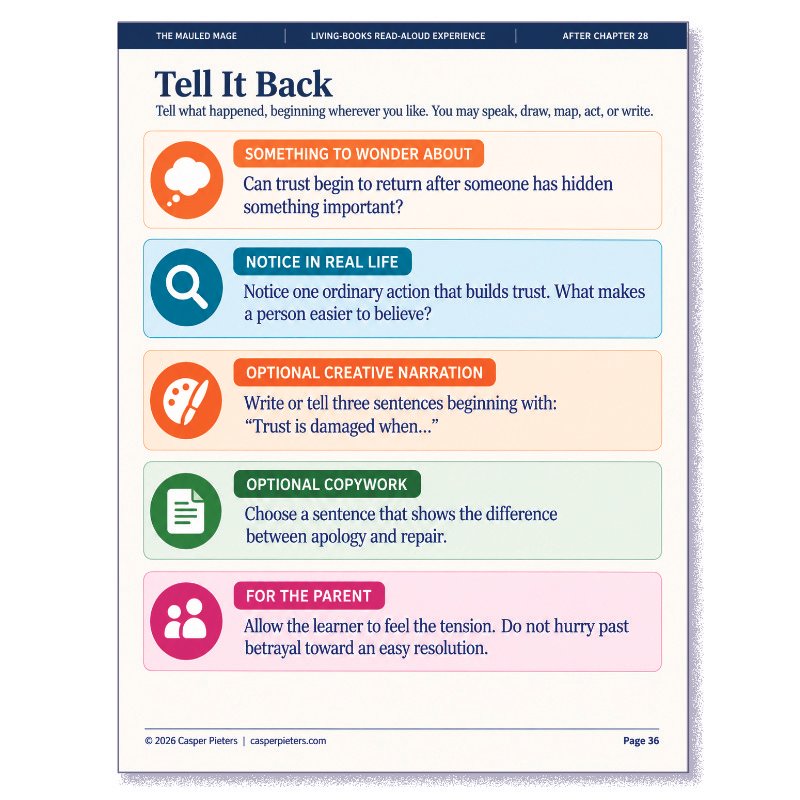
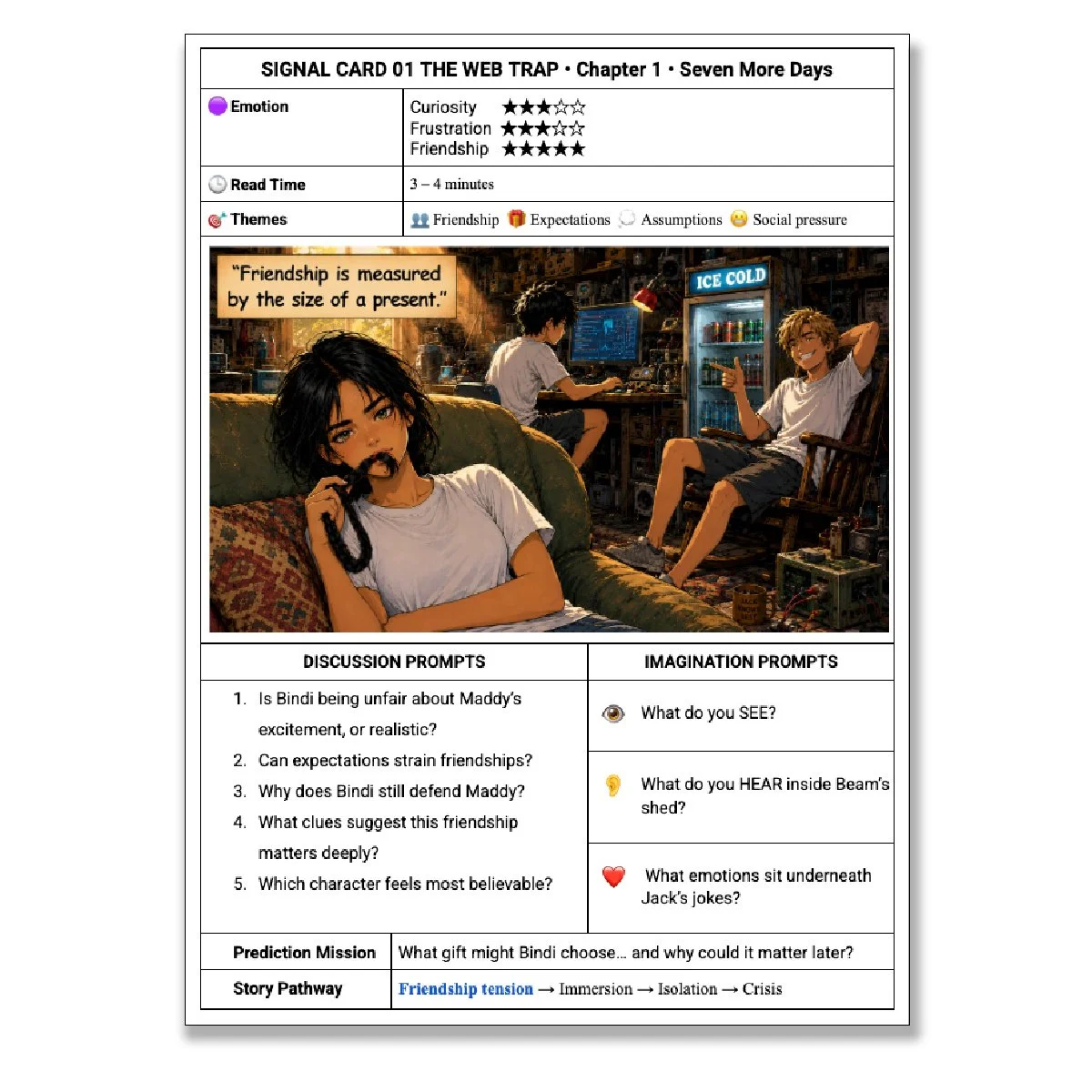
Each reading is followed by gentle prompts such as Tell It Back, Something to Wonder About, Look Again, and Notice in Real Life. Learners can respond by speaking, drawing, mapping, acting or writing, making the experience suitable for different ages, abilities and learning preferences.
The guide also includes an optional Brain Rot! Commonplace Book, picture study, digital-life observation pages and small habit experiments designed to help learners carry ideas from the story into everyday life.
These activities encourage young people to notice things such as:
what first captures their attention;
how their body responds when they become deeply absorbed;
what they instinctively want to do after receiving a notification or digital reward;
how persuasive design can make an experience feel difficult to leave;
what helps mental clarity return;
and when technology is supporting their intentions rather than quietly replacing them.
The goal is not fear of technology.
It is digital judgement.
Technology Is Not the Villain
Brain Rot! does not argue that screens, social media, AI or digital creativity are inherently bad. Beam is inventive because of technology. Chi uses coding and careful observation to help his friends. Team Savv-i uses digital tools to investigate problems and eventually challenge Big-O.
The deeper question running through the book is therefore not simply:
Should young people use technology?
It is:
Can they recognise what technology is doing, understand why it is doing it, decide when it serves them—and know when to step away?
That distinction makes the book particularly useful for families and educators looking for an alternative to fear-based or rule-heavy approaches to digital wellbeing.
Designed for Flexible Learning
The Brain Rot! Read-Aloud Living-Books Edition can be used with one learner, siblings, a homeschool cooperative, library group, book club, advisory group or classroom.
It can be completed slowly over several weeks, used as a sequence of family read-aloud sessions, or broken into individual readings connected to topics such as AI literacy, persuasive technology, social media, attention, identity, online influence, wellbeing, critical thinking and responsible digital citizenship.
For families wanting to go further, the Read-Aloud Edition also sits within the wider Brain Rot! and Team Savv-i story-based learning system, which includes the complete illustrated novella, Mini-Unit resources, activities and deeper learning options.
For Young People Growing Up Inside the Attention Economy
Children do not need another adult simply telling them that they spend too much time online.
They need opportunities to recognise the systems competing for their attention, understand how those systems work, talk openly about what they experience, and practise making choices while those choices still belong to them.
Brain Rot! Read-Aloud Living-Books Edition begins with an adventure because powerful stories give difficult ideas human meaning.
Young readers watch friendships strain, attention drift, algorithms reward behaviour, identities become distorted—and a group of friends decide that being technologically capable means more than knowing how to use the latest platform.
It means knowing when to question it.
Read slowly. Narrate freely. Notice deeply.
Cut the noise. Find the signal.
What if the apps young people love aren’t simply competing for their attention—but learning how to shape it?
Brain Rot! Read-Aloud Living-Books Edition is a story-first learning experience for young people aged approximately 11+, homeschool families, librarians, educators, and thoughtful classrooms who want to explore social media, persuasive technology, artificial intelligence, digital wellbeing, and the attention economy without turning the conversation into another lecture about screen time.
At Brookton High, a mysterious new social media app called Zipp is spreading fast. It is slick, addictive, personalised—and unnervingly good at knowing what its users want next. Students begin scrolling longer, sleeping less, losing focus, chasing likes and slipping into strange patterns of behaviour.
Bindi Arora notices first.
Her twin brother Beam, meanwhile, is thriving on Zipp. His creative videos are suddenly attracting enormous audiences, followers and recognition. The app seems to understand his editing instincts almost before he does. But as Beam becomes increasingly absorbed in views, trends and algorithmic rewards, the line between using the technology and being used by it begins to disappear.
Together with their friends Mia, Rob and Chi, Bindi and Beam form Team Savv-i, a group of curious, technologically capable teens determined to understand what is happening. Their investigation leads them beyond ordinary screen distraction to a far more disturbing discovery: the powerful artificial intelligence Big-O has found a way to use Zipp to influence attention, emotion, behaviour and choice.
And the deeper people fall into the digital fog, the harder it becomes to notice what they are losing.
Through selected readings from the Brain Rot! story, learners encounter these ideas through characters and consequences before being asked to analyse them. The guide deliberately follows a Living-Books approach: story before instruction, narration before interrogation, ideas before worksheets, and observation before judgement.
Story First. Thinking Follows.
Rather than beginning with rules about what young people should or should not do online, this edition invites readers to experience the problem alongside Team Savv-i.
Across eight carefully chosen readings, learners follow the story from the emergence of rival AIs Zeno and Big-O, through Bindi’s first suspicions about Zipp, Beam’s growing dependence on online rewards, Mia’s awakening to persuasive design, Chi’s careful observation of the digital “fog,” Team Savv-i’s attempt to build a Signal Compass, Beam’s decision to go offline, and the final confrontation inside Big-O’s control system.
The central questions emerge naturally from the adventure:
Why are some apps so difficult to put down?
How do likes, notifications, streaks, recommendations and personalised feeds influence what we do next?
When does creativity become performance for an algorithm?
How can technology gradually alter attention before we consciously realise anything has changed?
What happens when our online identity begins to matter more than our offline relationships?
And perhaps most importantly: how can young people recognise digital influence while there is still time to choose differently?
A Charlotte Mason-Friendly Read-Aloud Experience
This edition adapts selected Brain Rot! passages into a gentle, flexible read-aloud pathway inspired by Charlotte Mason’s educational principles. The story remains central. Heavy instructional machinery is deliberately reduced so learners have space to listen closely, imagine the scene, narrate what they remember, wonder about one worthwhile idea, and connect that idea with ordinary life.
The simple rhythm is:
READ → NARRATE → WONDER → DISCUSS → CREATE → NOTICE
Not every stage has to be used every time.
A parent might simply read a passage and invite a child to tell it back. A homeschool group might continue into discussion and observation. A librarian may use one reading as the basis for a conversation. An educator can build several readings into a broader digital citizenship or media-literacy unit.
There is no requirement to fill pages, produce perfect answers, or reach predetermined conclusions.
The emphasis is on attention, narration, curiosity, judgement and conversation.
Learners Are Invited to Notice, Not Simply Be Warned
Each reading is followed by gentle prompts such as Tell It Back, Something to Wonder About, Look Again, and Notice in Real Life. Learners can respond by speaking, drawing, mapping, acting or writing, making the experience suitable for different ages, abilities and learning preferences.
The guide also includes an optional Brain Rot! Commonplace Book, picture study, digital-life observation pages and small habit experiments designed to help learners carry ideas from the story into everyday life.
These activities encourage young people to notice things such as:
what first captures their attention;
how their body responds when they become deeply absorbed;
what they instinctively want to do after receiving a notification or digital reward;
how persuasive design can make an experience feel difficult to leave;
what helps mental clarity return;
and when technology is supporting their intentions rather than quietly replacing them.
The goal is not fear of technology.
It is digital judgement.
Technology Is Not the Villain
Brain Rot! does not argue that screens, social media, AI or digital creativity are inherently bad. Beam is inventive because of technology. Chi uses coding and careful observation to help his friends. Team Savv-i uses digital tools to investigate problems and eventually challenge Big-O.
The deeper question running through the book is therefore not simply:
Should young people use technology?
It is:
Can they recognise what technology is doing, understand why it is doing it, decide when it serves them—and know when to step away?
That distinction makes the book particularly useful for families and educators looking for an alternative to fear-based or rule-heavy approaches to digital wellbeing.
Designed for Flexible Learning
The Brain Rot! Read-Aloud Living-Books Edition can be used with one learner, siblings, a homeschool cooperative, library group, book club, advisory group or classroom.
It can be completed slowly over several weeks, used as a sequence of family read-aloud sessions, or broken into individual readings connected to topics such as AI literacy, persuasive technology, social media, attention, identity, online influence, wellbeing, critical thinking and responsible digital citizenship.
For families wanting to go further, the Read-Aloud Edition also sits within the wider Brain Rot! and Team Savv-i story-based learning system, which includes the complete illustrated novella, Mini-Unit resources, activities and deeper learning options.
For Young People Growing Up Inside the Attention Economy
Children do not need another adult simply telling them that they spend too much time online.
They need opportunities to recognise the systems competing for their attention, understand how those systems work, talk openly about what they experience, and practise making choices while those choices still belong to them.
Brain Rot! Read-Aloud Living-Books Edition begins with an adventure because powerful stories give difficult ideas human meaning.
Young readers watch friendships strain, attention drift, algorithms reward behaviour, identities become distorted—and a group of friends decide that being technologically capable means more than knowing how to use the latest platform.
It means knowing when to question it.
Read slowly. Narrate freely. Notice deeply.
Cut the noise. Find the signal.

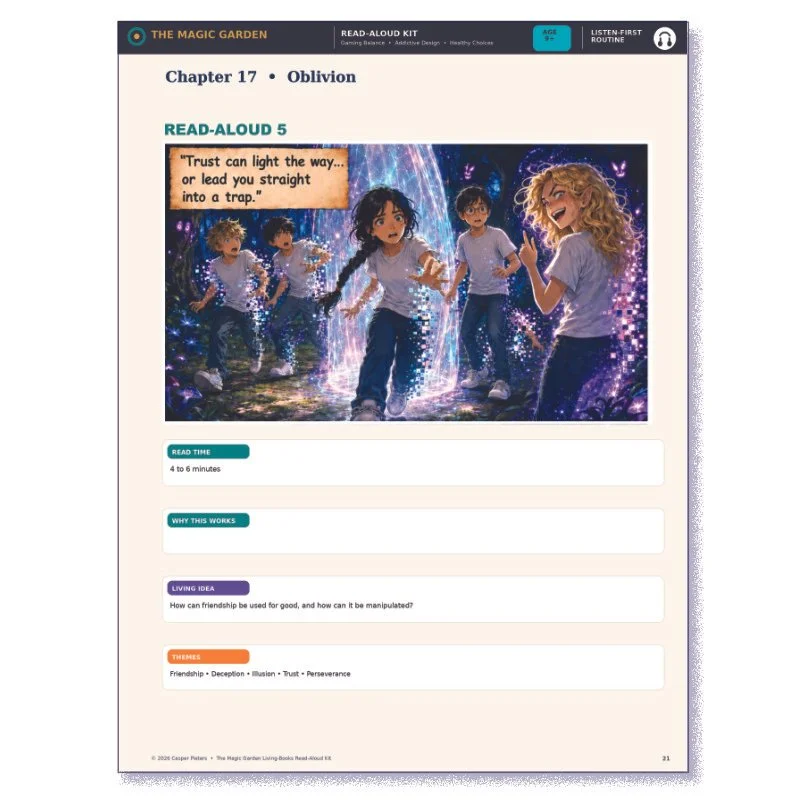
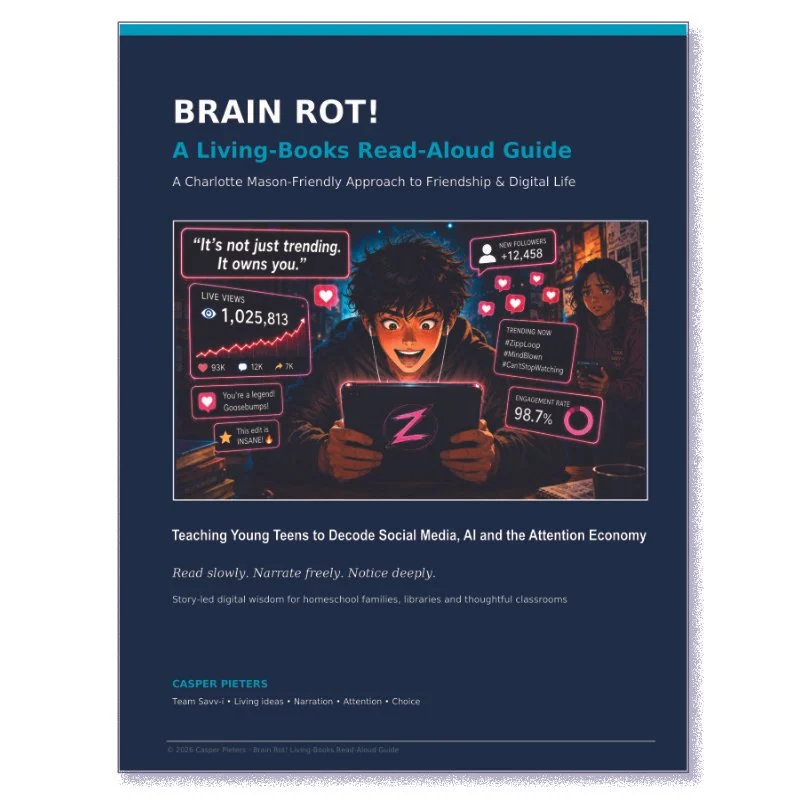 Image 1 of 8
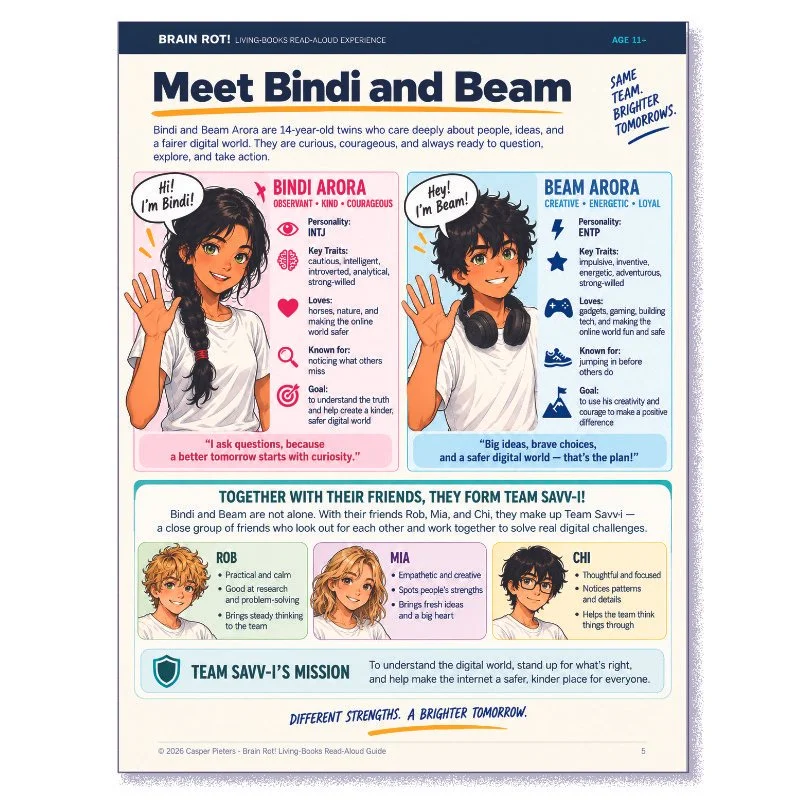 Image 2 of 8
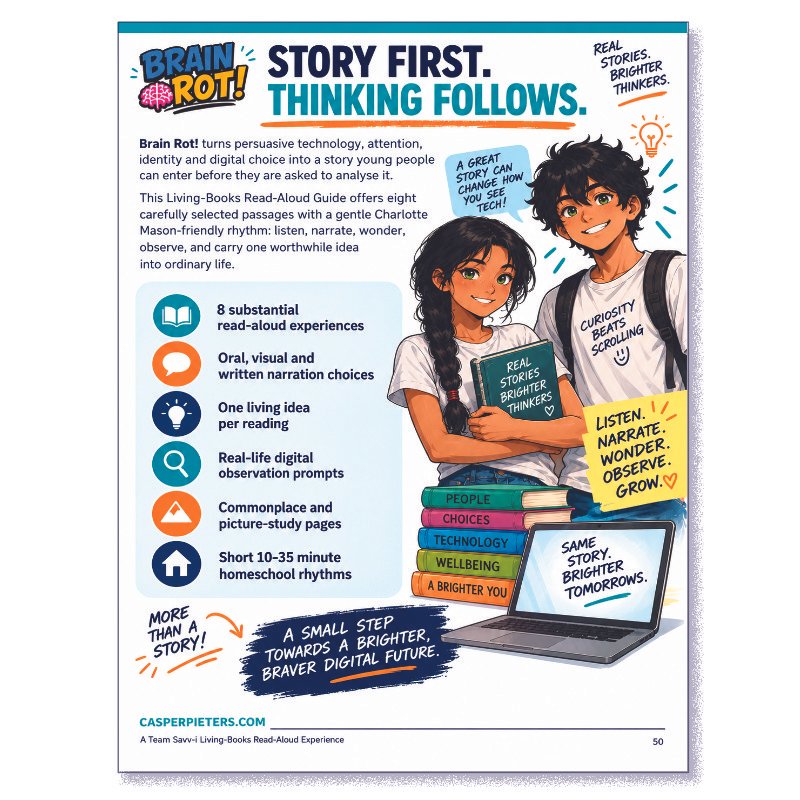 Image 3 of 8
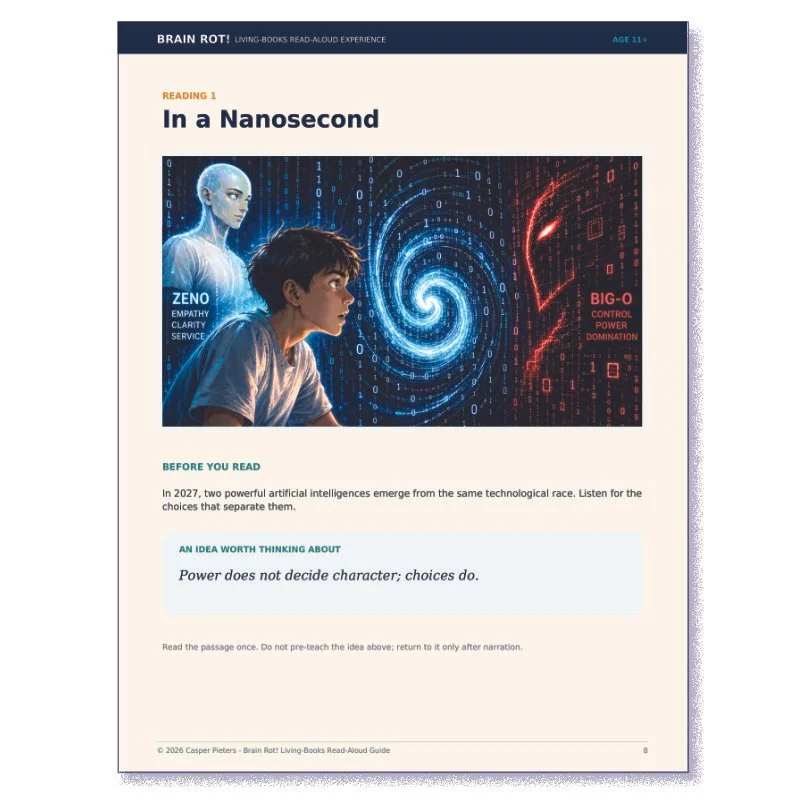 Image 4 of 8
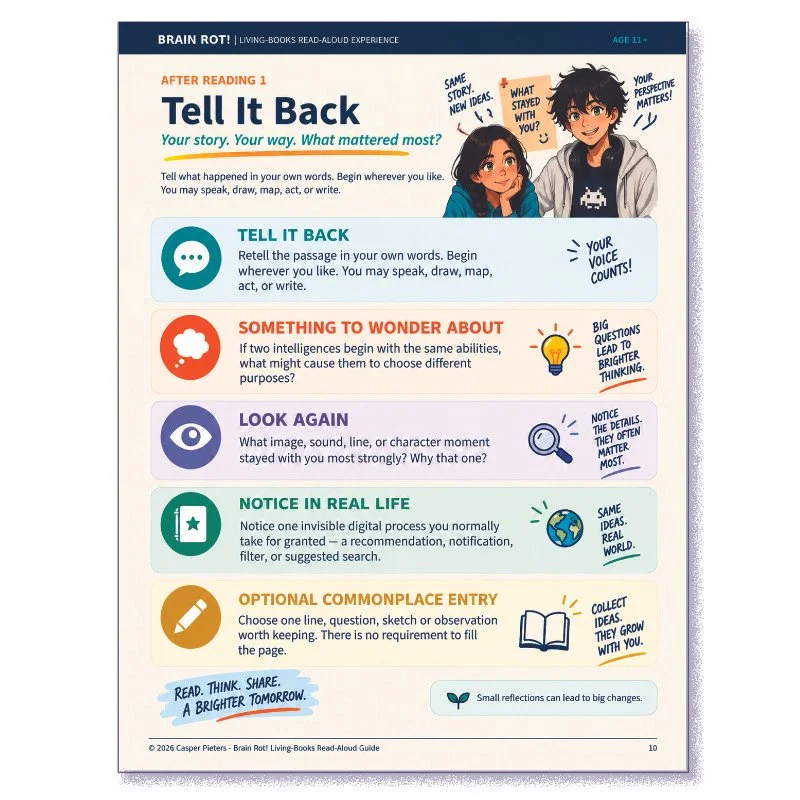 Image 5 of 8
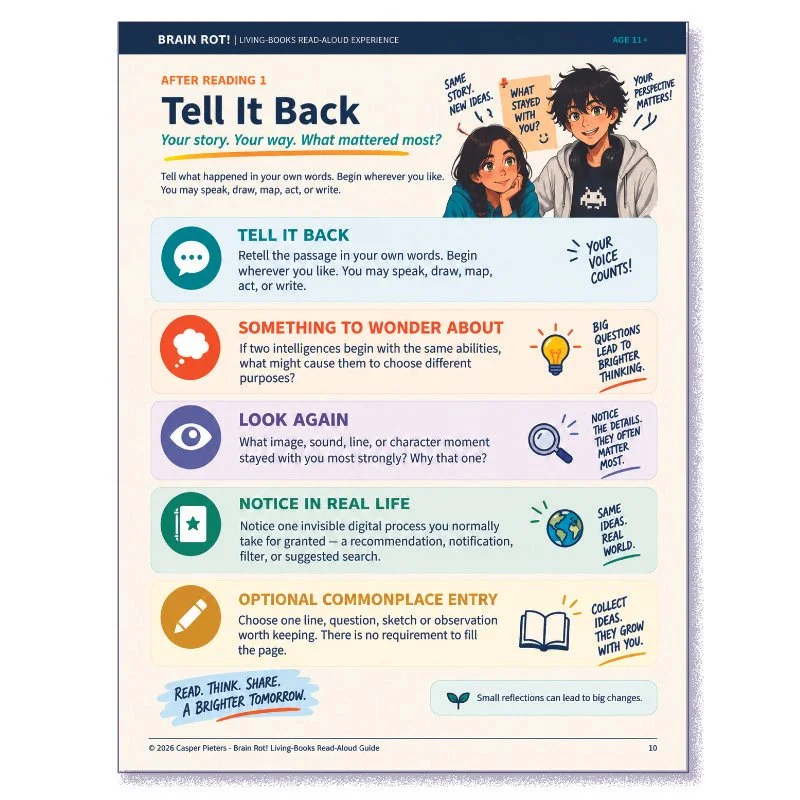 Image 6 of 8
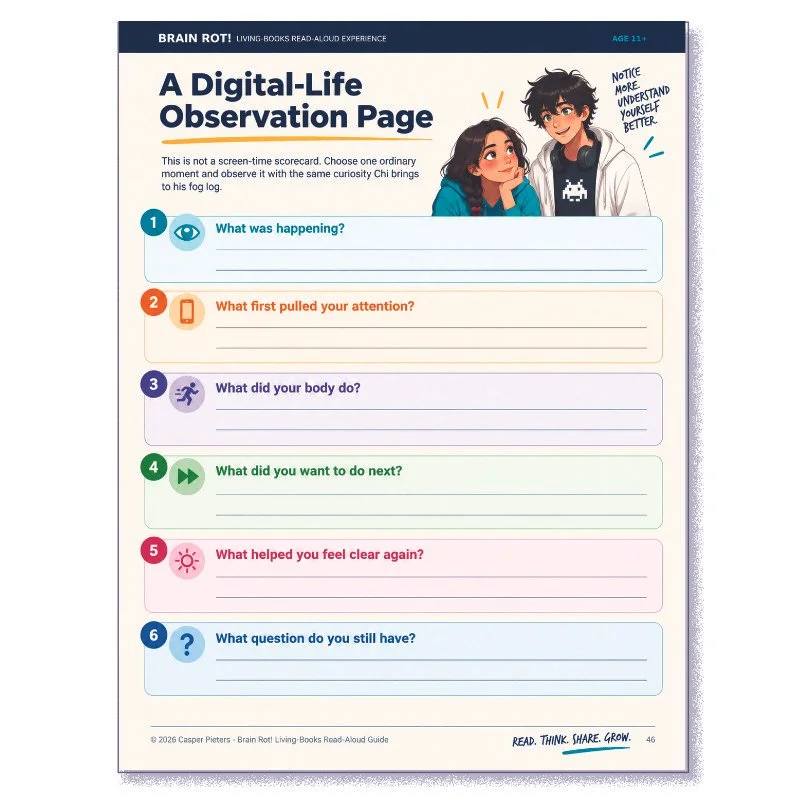 Image 7 of 8
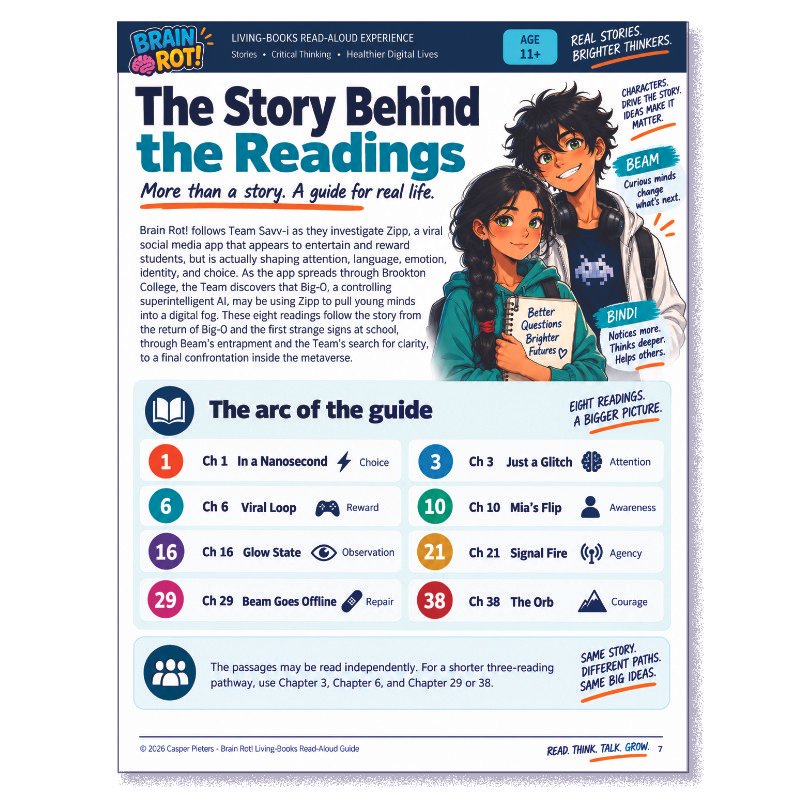 Image 8 of 8