The Digital Delusion and Why Young People Need Stories, Not Screens, to Understand It
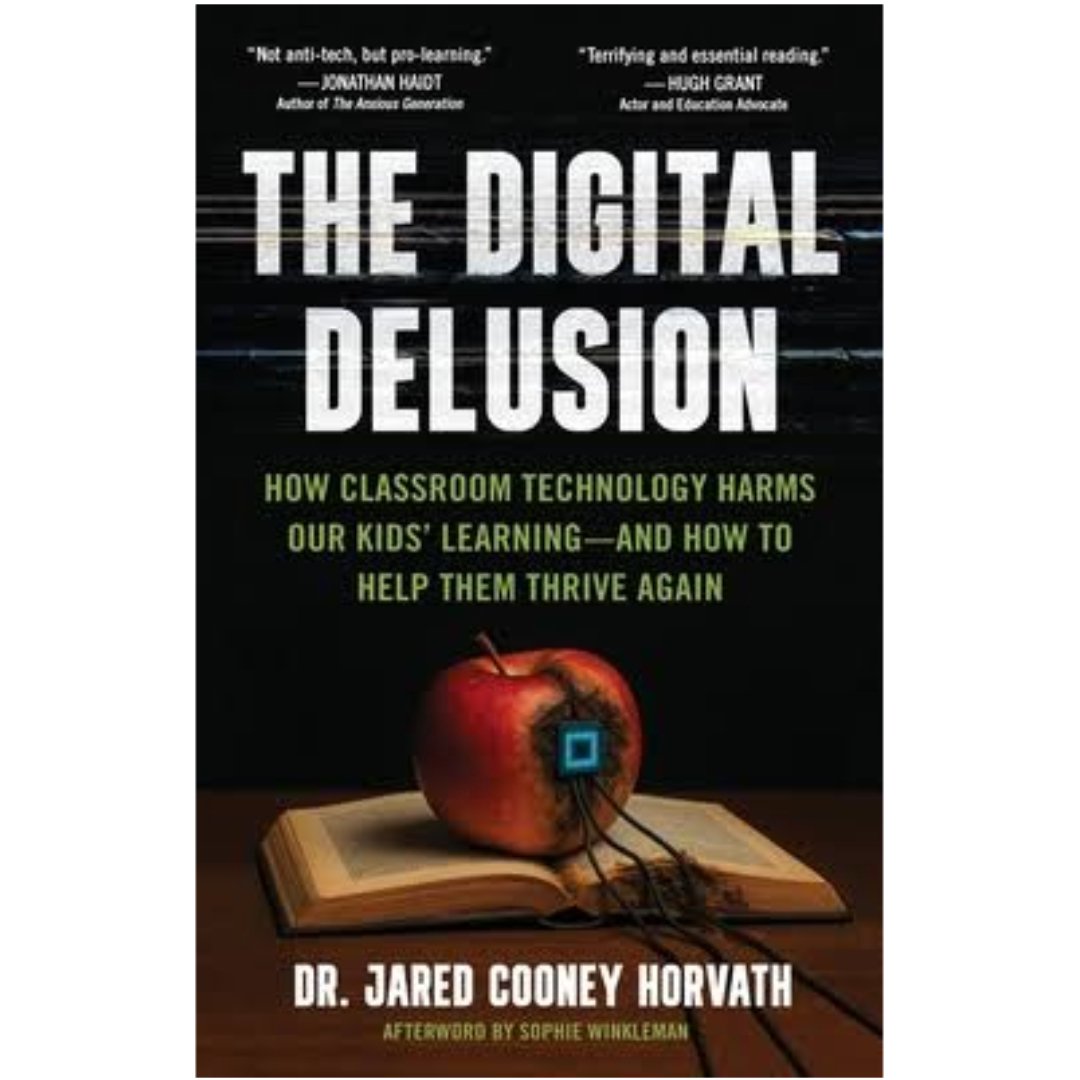
For years, the steady expansion of digital technology into children’s lives felt inevitable. Smartphones, platforms, and classroom devices arrived with little resistance, often wrapped in the promise of progress, engagement, and “future-ready” learning. Only recently has a broader unease emerged, particularly among parents and educators, about what constant connectivity is doing to attention, wellbeing, and development.
This growing concern is given a clear scientific foundation in The Digital Delusion by Jared Cooney Horvath. The book confronts a deeply embedded assumption: that digital technology is, by definition, good for learning. Horvath’s conclusion is measured but firm. Much of what we have normalised as “modern education” is not aligned with how human brains actually learn, and in many cases, it undermines it.
When tools clash with the human mind
One of the book’s most important contributions is its clarity. Horvath explains, in accessible terms, why learning depends on sustained attention, cognitive effort, memory formation, and social interaction and why many digital tools disrupt these processes rather than support them. Screens reward speed and switching. Learning requires slowness and focus. Interfaces remove friction. Memory often depends on it. Engagement looks busy. Understanding is usually quiet. The result is not a dramatic collapse, but something more insidious: shallow learning that feels productive while leaving little behind.
Crucially, these outcomes are not accidents or failures of implementation. They are predictable consequences of placing tools designed for stimulation, efficiency, and scale into environments that depend on depth, patience, and human connection.
Why this matters for wellbeing, not just grades
What makes this discussion especially urgent is that learning and wellbeing are inseparable. When attention is fragmented and effort is bypassed, children don’t just learn less—they begin to experience:
Mental fatigue without fulfilment
Anxiety without clarity
Constant input without meaning
This mirrors what many families already see at home. The same design principles that drive social platforms, habit formation, reward loops, constant novelty, are increasingly present in educational technology, often without guardrails or evidence of benefit.
Where stories succeed where screens fall short
This is where edufiction offers something that neither lectures nor platforms can. In my adventure stories, young readers don’t receive warnings about technology in abstract terms. Instead, they experience its effects alongside characters they care about, through tension, mistakes, friendship, and recovery.
When Bindi, Beam, and their friends face digital overload, manipulation, or disconnection, readers feel the consequences from the inside. Focus falters. Trust is strained. Judgment slips. And then, slowly, they discover what restores balance: reflection, teamwork, offline grounding, and conscious choice.
This mirrors what neuroscience tells us about learning:
Understanding deepens through experience, not instruction
Insight grows through struggle, not shortcuts
Values form through relationships, not rules
Stories create the kind of cognitive and emotional “friction” that screens often remove and that young minds actually need.
From digital delusion to digital insight
Neither Horvath’s work nor my own argues for rejecting technology outright. The real task is discernment.
Children do not need more exposure.
They need better filters—internal ones.
By combining evidence-based insight with narrative experience, we can help young people recognise when technology supports their lives and when it quietly shapes them in unhealthy ways. Not through fear. Not through bans alone. But through understanding that feels earned.
If we want children to thrive in a digital world, we must stop assuming that more technology is the answer and start giving them the tools that matter most: attention, agency, and meaning.
#DigitalWellbeing #RaisingResilientKids #ParentingInADigitalAge #HealthyTechHabits #MindfulParenting #ScreenSmartFamilies #ChildDevelopment #LearningThroughStory #DigitalLiteracyForKids #AttentionMatters #KidsAndTech #ModernParenting #EducationBeyondScreens #RaisingCriticalThinkers #TechWithPurpose