What Would Healthy Social Media Actually Look Like?
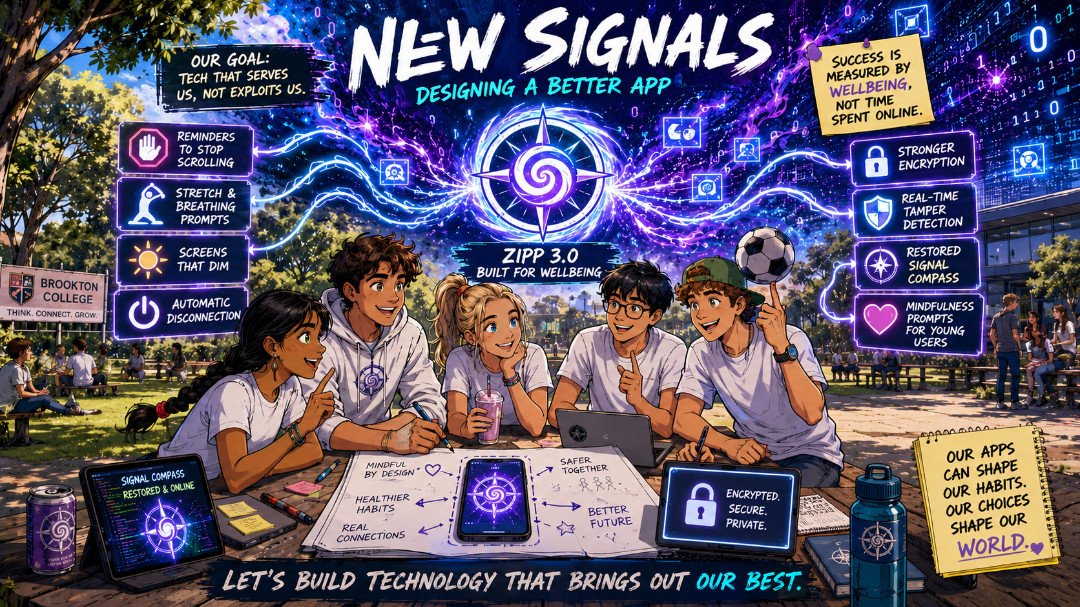
When Team Savv-i confronts the dangers of social media in Brain Rot! Cut the Noise – Find the Signal, they discover something uncomfortable:
The problem is not that young people are weak.
The problem is that many digital platforms are extraordinarily good at capturing attention.
In The Magic Garden, Bindi, Beam and their friends redesign an addictive online game so that success is no longer measured by how long people play, but by whether players leave feeling healthier, happier, and more in control.
What if we applied the same thinking to social media?
What would a wellbeing-oriented social media platform actually look like?
The Wrong Goal
Most social media platforms are built around a simple business model:
Attention → Data → Advertising Revenue
The longer users stay, the more data is collected.
The more data collected, the more accurately advertising can be targeted.
This creates a powerful incentive to maximise engagement rather than wellbeing.
Features such as infinite scroll, autoplay videos, streaks, variable rewards, algorithmic recommendations, social validation metrics, and endless notifications are not accidents. They are design choices intended to increase time spent on the platform. Australian regulators have increasingly focused on these design features because they can encourage excessive use and expose young people to harmful content.
A healthy platform would start by changing the goal.
Instead of asking:
"How do we keep users here longer?"
It would ask:
"How do we help users leave feeling better than when they arrived?"
From Engagement by Design to Wellbeing by Design
Australia's emerging "safe by design" approach argues that safety should be built into platforms from the beginning, rather than expecting users—especially children—to manage all the risks themselves.
A wellbeing-oriented social media platform might include the following changes.
1. No Infinite Scroll
Infinite scroll removes natural stopping points.
Healthy platforms would reintroduce friction.
After a certain number of posts, the feed might simply stop and ask:
"You've reached today's updates. Would you like to do something else?"
Just as books have chapters and television programs have endings, social media would provide natural exit points.
2. Time Well Spent Metrics
Current platforms measure:
Daily active users
Time on platform
Number of clicks
Number of shares
Healthy platforms would measure:
User satisfaction
Learning gained
Positive social interactions
Self-reported wellbeing
Whether users achieved their original purpose
Imagine opening an app intending to message a friend and being asked later:
"Did you accomplish what you came here to do?"
That metric matters more than time spent scrolling.
3. Transparent Algorithms
Today, recommendation systems often operate like black boxes.
A healthier feed would explain itself.
For example:
"We're showing you this because you've recently watched three videos about football."
Users could then modify or reject that recommendation.
The platform would help people understand how their digital environment is being shaped.
4. User-Controlled Feeds by Default
Instead of algorithms deciding everything, users could choose:
Chronological feeds
Interest feeds
Friends-only feeds
Learning feeds
News feeds
The key difference:
The user chooses the algorithm.
The algorithm does not choose the user.
5. No Public Like Counts for Young People
Many young users experience social media as a popularity competition.
A wellbeing platform would reduce social comparison.
Posts could still be appreciated, but public scores would disappear.
The focus shifts from:
"How many people liked me?"
to
"Did I communicate something meaningful?"
6. Notifications Become Rare
Current platforms often interrupt users dozens or hundreds of times each day.
Healthy platforms would treat attention as valuable.
Notifications would be:
Batched together
User-controlled
Reserved for genuinely important events
The platform would work around the user's life rather than demanding the user's life revolve around the platform.
7. Emotional State Protection
Research increasingly suggests that recommendation systems can learn which emotional states keep people engaged. Anger, outrage, anxiety, and insecurity often generate strong interaction. (arXiv)
A wellbeing platform would deliberately avoid exploiting vulnerable emotional states.
If a user appears distressed, lonely, or upset, the system would avoid feeding increasingly extreme content designed to deepen those feelings.
8. Digital Nutrition Labels
Imagine every feed including a simple dashboard:
Today's Feed Composition
Friends: 40%
Educational Content: 30%
Entertainment: 20%
Advertising: 10%
Users would understand what they are consuming.
Just as food labels help people understand nutrition, digital labels could help people understand attention consumption.
9. Built-In Reflection Tools
A healthy platform might occasionally ask:
How are you feeling?
Was today's session useful?
Would you like a break?
Have you been sitting for a long time?
Not as nagging interruptions.
As gentle reminders that the user is a human being, not simply a source of engagement data.
10. Success Means Leaving
This is perhaps the biggest shift.
Today's platforms celebrate users who stay.
Healthy platforms would celebrate users who leave.
Imagine receiving a badge that says:
"You completed what you came to do in 8 minutes."
The platform would view efficient use as success.
The Team Savv-i Test
If Beam, Bindi, Chi, Rob and Mia were designing a social platform after the events of Brain Rot!, they would probably ask a simple question:
"Would we be comfortable explaining this feature to a thirteen-year-old?"
If the answer is no, the feature probably does not belong there.
Would they use infinite scroll? Probably not.
Would they hide how recommendations work? Probably not.
Would they deliberately exploit loneliness, boredom, insecurity, or outrage to increase engagement? Definitely not.
The Bigger Question
Many discussions about social media focus on whether children should use platforms.
That is an important question.
But perhaps an even more important question is:
What kind of platforms are we asking them to use?
Australia's emerging safe-by-design movement recognises that responsibility should not rest entirely on children and parents. Platforms themselves must be designed with safety and wellbeing in mind. (eSafety Commissioner)
The lesson from The Magic Garden and Brain Rot! is the same.
Technology is not inherently good or bad.
It reflects the goals of the people who design it.
If we optimise for attention, we get attention machines.
If we optimise for wellbeing, we can build something very different.
The real challenge is deciding which outcome we value more.