Why I wrote The Mauled Mage, its symbolism and intent
The Mauled Mage – Symbolism and Story Synopsis
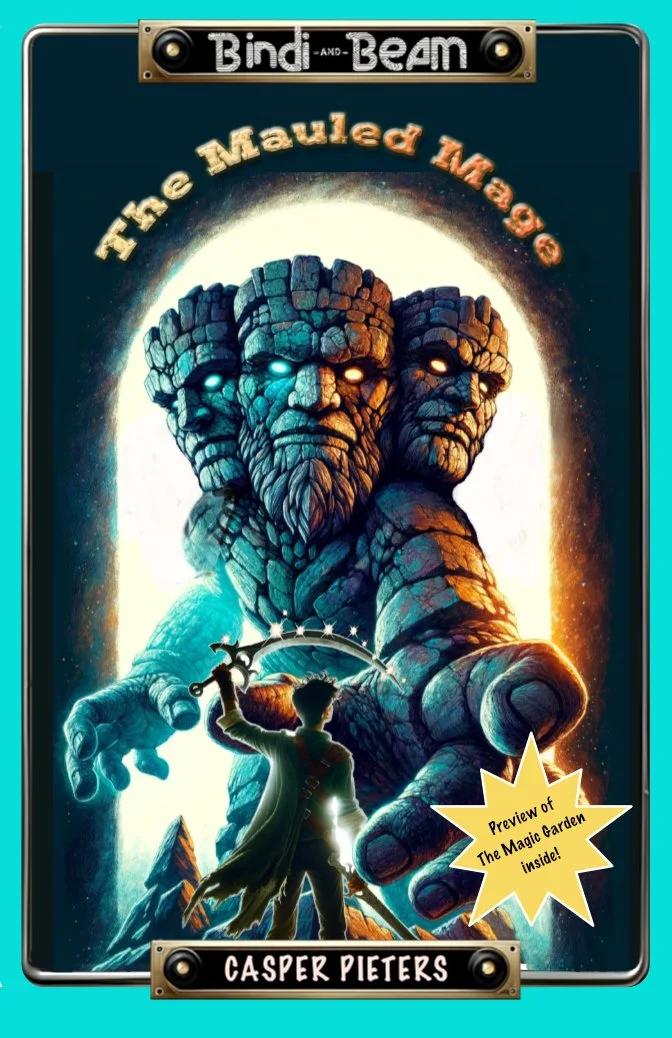
Overview for Parents and Educators (warning contains spoilers)
I wrote The Mauled Mage because bullying has always been one of the ugliest and most damaging social behaviours young people can face. But with the rise of social media, online gaming, messaging platforms, and anonymous digital spaces, this cruelty has become even more pervasive, harder to escape, and often harder for adults to see. The anonymity, reach, and round-the-clock nature of online life can give bullying a new intensity. It can follow a child home, invade private spaces, spread quickly, hide behind false identities, and make the victim feel there is nowhere safe left to turn.
Cyberbullying can take many forms. It may involve attacking, exposing, excluding, impersonating, threatening, humiliating, or turning others against someone online. But facts alone do not fully explain its impact. That is why I wrote this story as an experience rather than a lesson. Through The Mauled Mage, I wanted readers to feel the emotional force of cyberbullying from the inside: the isolation, fear, guilt, confusion, low self-worth, helplessness, and social annihilation it can create, but also the darker emotions that drive it, including cruelty, hatred, resentment, self-protection, and the desperate urge to gain power over others.
As a teacher, I have seen forms of cruelty among young people that can deeply wound and crush the spirit. I have seen how humiliation, exclusion, mockery, and group hostility can leave lasting scars, especially when they unfold in hidden or semi-hidden ways. That lived awareness became the impulse behind this book. I wanted to write a story that did not flatten cyberbullying into a simple issue of “good kids” and “bad kids,” but instead explored its emotional complexity from multiple angles, while still making clear that such behaviour is profoundly harmful and must be confronted.
In the story, Beam discovers that Lee, a quiet and socially isolated student, is being cyberbullied through World of Warcraft. The abuse is difficult to prove. Messages disappear, evidence cannot be captured, and the bully hides behind digital protections that make tracing the source almost impossible. Beam is disturbed by what he finds and wants to act quickly. Bindi urges caution. Maddy brings emotional understanding shaped by her own experience of bullying. Miss Pardo, the school counselor, genuinely wants to help, but is limited by the lack of proof. From the beginning, the story shows one of the central truths of cyberbullying: adults may care deeply, yet still struggle to intervene effectively when the harm is concealed, fleeting, or technically difficult to verify.
When Beam and Lee enter the metaverse in an attempt to trace the bully, the novel shifts into a symbolic fantasy world where the deeper emotional truth of cyberbullying becomes visible. What begins as a rescue mission becomes a descent into a disturbing digital underworld shaped by manipulation, fear, false identities, public shaming, and mob aggression. Lee is trapped inside a cocoon-like bubble. Beam and his friends are pulled into a hostile world where appearances deceive, emotions are manipulated, and cruelty spreads from one person to the group. Gradually, it becomes clear that the bully has engineered the entire trap, using impersonation, psychological pressure, and gaming power to isolate, humiliate, and endanger the group.
The symbolism in the fantasy world is central to the meaning of the story. The disappearing messages and masked digital routes symbolize the evasiveness and hidden nature of online abuse. The bubbles and cocoons represent isolation, panic, and the trapped helplessness a victim can feel. The shape-shifting troll, the false judge, and the golden-robed mage symbolize false identities, distortion, and the theatrical performance of power that often lies at the heart of cyberbullying. Most powerful of all is Ghoric and the sham courtroom, which symbolize pile-ons, rumor, public humiliation, and the terrifying ease with which a crowd can become part of the harm. In these scenes, the story turns invisible digital dynamics into something emotionally immediate and understandable.
One of the most important things I wanted this novella to do was to offer a truly multi-perspective understanding of cyberbullying. Lee represents the victim: anxious, isolated, wary, and inwardly overwhelmed. Beam represents the impulsive upstander, eager to help but not always careful enough. Bindi brings judgment, restraint, and critical thinking. Maddy contributes empathy and emotional memory. Miss Pardo represents adult responsibility, but also adult limitation. Even the bully is not left as a flat villain. When Elvin Stewpot is finally exposed, the story reveals that he too has been wounded by earlier bullying and exclusion. This does not excuse what he does. It does, however, help readers understand how shame, rejection, and unresolved pain can harden into resentment, and then spill outward as cruelty.
That is why reading the full story matters. The Mauled Mage does not simply define cyberbullying. It allows readers to move through it emotionally and socially. They see what it does to the victim, what it stirs up in bystanders, how quickly group behaviour can intensify the damage, how fear and confusion distort judgment, and how the bully’s actions may be rooted in pain without ever being justified by it. In that sense, the book offers not just information, but insight. It invites readers to experience the emotional weather of cyberbullying in all its complexity.
The ending is especially important to me because it moves beyond revenge. After everything the group has endured, they do not simply retaliate. Instead, they bring the matter to Miss Pardo and confront it properly. In a structured meeting, Elvin admits that earlier bullying made him feel small, powerless, and deeply hurt, and that being excluded from the gang reopened those wounds. The others do not excuse his behaviour, but they do listen. The story holds two truths together: what he did was wrong, and understanding why he did it matters if real change is to occur. That movement toward accountability, understanding, and repair reflects my belief that while bullying must be firmly addressed, lasting resolution requires more than punishment alone.
Taken as a whole, The Mauled Mage is my attempt to help parents, educators, and young readers understand cyberbullying not only as a behaviour, but as an emotional and social reality. It explores what cyberbullying looks like, what it feels like, how it spreads, why it is often hidden, why some children stay silent, why some become cruel, and why meaningful resolution demands courage, empathy, responsibility, and wise adult guidance. Above all, I wrote it because I wanted young readers to feel seen, adults to understand more deeply, and conversations about cyberbullying to move beyond slogans into genuine human insight.