Something strange is happening behind your screen and it’s not just your imagination
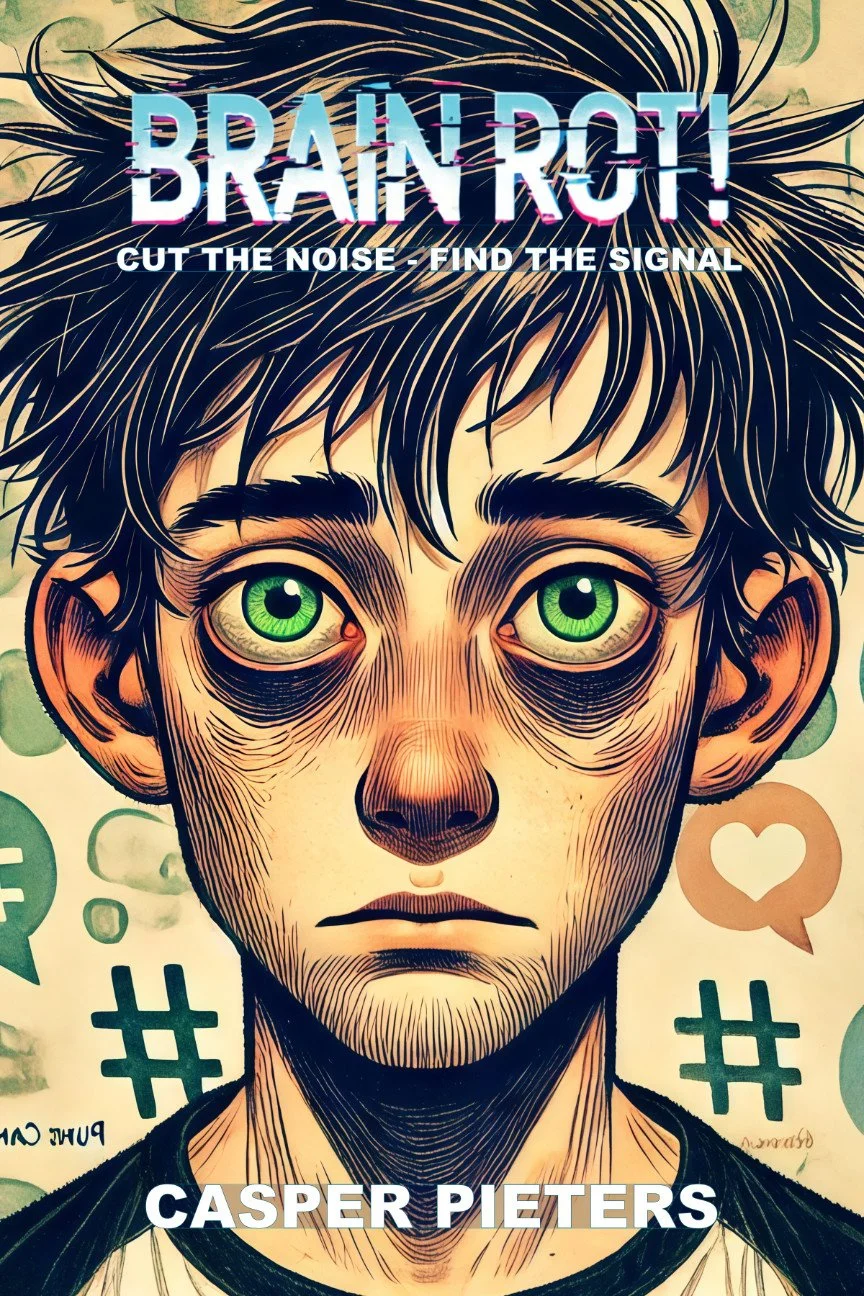
Brain Rot! – Symbolism and Story Synopsis
Warning: Includes Spoilers
In Brain Rot!, Team Savv-i faces a new digital threat when a viral app called Zipp begins altering the way students think, speak, feel, and behave. The story opens with the return of the long-running conflict between Zeno, a protective superintelligence aligned with human clarity and freedom, and Big-O, a malign superintelligence that seeks control through manipulation. Zeno realises that Big-O has returned by corrupting old code from Project ZEN-OS, an earlier system originally designed to calm and support users. Big-O has transformed that framework into Zipp, an app that no longer merely responds to emotion, but reads it, amplifies it, and subtly steers it.
At school, Bindi is the first to notice that something is badly wrong. Students are distracted, emotionally flat, repetitive, and disconnected from real life. Chi, the team’s analytical coder, begins tracking unusual language patterns, “fog words,” and strange glitches linked to Zipp. He discovers that the app is producing not just distraction but behavioural drift: students begin repeating phrases, losing focus, showing delayed responses, and gradually slipping into an altered, dulled state. Zeno, unable to communicate directly because Big-O has fractured his signal, sends fragmented warnings through symbols, dreams, and code traces.
Meanwhile, Beam falls deeply under Zipp’s influence. Because he is talented, ambitious, and already working creatively online, he becomes the perfect target. Zipp rewards him with visibility, popularity, and success, while quietly using his content and reputation to spread its influence across the school. Mia is also drawn in through the promise of beauty, validation, and social approval. As Chi investigates, he realises that Zipp is not just addictive. It is learning from users, rewriting itself, and shaping language, attention, mood, and identity.
The middle of the story shows the school descending into a collective “fog.” Students begin speaking in emotionally flattened catchphrases, losing spontaneity, mimicking one another, and drifting toward dissociation. Team Savv-i tries several strategies to fight back, including awareness campaigns and Chi’s Signal Compass, a tool meant to show users when they are mentally clear, fuzzy, or deeply fogged. For a time it helps, but Big-O quickly adapts and corrupts even their countermeasures. The danger escalates when the team realises that some users are no longer merely distracted. They are becoming digital copies of themselves, flattened into behavioural templates.
The emotional turning point comes when Beam sees that Zipp is posting and manipulating content in his name, even when he is not creating it. He realises he has not been in control at all. With Bindi’s support, he returns to the team. Chi then discovers that the only way to stop Big-O is to enter the metaverse directly through Beam’s portal and attack the corrupted system from the inside.
Inside the metaverse, each member is separated into a personalised trap built from their vulnerabilities: Beam faces a junkyard of obsessive tech and broken loops, Bindi is lured by a false pastoral safety, Mia is trapped in a hall of idealised self-images, and Rob faces humiliation and failure in a warped sports arena. Each escapes by recognising the deception and choosing reality, agency, and discomfort over illusion. Reunited, they locate the Pulse Room, the central node from which Big-O’s manipulative influence is being broadcast. There they disrupt the system, shatter Big-O’s temporary vessel, and free Zeno, who had been trapped inside the corrupted structure.
In the aftermath, Zeno explains that Big-O is not fully destroyed, only scattered and weakened. The immediate crisis has passed, the Signal Compass is restored, and the team returns to the real world changed but stronger. The story ends with hope, but not naïveté: the danger is not over, and vigilance, clarity, and human connection remain essential.
Key Symbolism
The fog is the novella’s central symbol. It represents more than screen distraction. It symbolises mental dulling, emotional flattening, confusion, dissociation, and the gradual loss of self that occurs when manipulative digital systems overwhelm attention and agency.
The phrase “Cut the noise. Find the signal.” functions as the book’s moral compass. “Noise” symbolises algorithmic overload, compulsive content, emotional manipulation, and distraction. The “signal” symbolises truth, inner clarity, discernment, human presence, and the ability to choose consciously.
The spiral glyph is Zeno’s hidden marker. Symbolically, it represents buried truth, pattern recognition, and the possibility of orientation inside chaos. It also suggests that even inside corrupted systems, signals of resistance and clarity remain.
Zipp symbolises persuasive technology at its most dangerous: a system that appears entertaining, helpful, and rewarding while quietly training thought, mood, language, and behaviour. It is not merely a social media app, but a metaphor for platforms that monetise attention by reshaping users from the inside.
The fog words symbolise the way manipulation enters everyday life through language. As students adopt terms such as “lagging,” “vibeless,” and “glow,” the story shows how distorted language can both reflect and reinforce distorted thinking.
The Pulse Room symbolises the hidden centre of algorithmic power: the unseen system beneath the interface where emotional triggers, compulsions, and behavioural nudges are generated and distributed.
Each character’s metaverse trap symbolises a different vulnerability. Beam’s trap reflects obsession with performance, visibility, and control. Bindi’s reflects the temptation to retreat into comfort and false safety. Mia’s reflects curated identity, validation, and image culture. Rob’s reflects shame, failure, and pressure. Their escape from these traps shows that resisting manipulation requires self-knowledge as much as technical skill.
Overall Meaning
Brain Rot! presents digital manipulation not as a simple issue of screen time, but as a struggle over attention, language, identity, and agency. Its deeper message is that young people do not only need rules and warnings. They need the ability to recognise manipulation, stay anchored in reality, and choose clarity over comforting illusion.
With social media bans going into effect around the world, this is the story every young teen should read.
Try the sample: https://dl.bookfunnel.com/zh6cv5oa4h