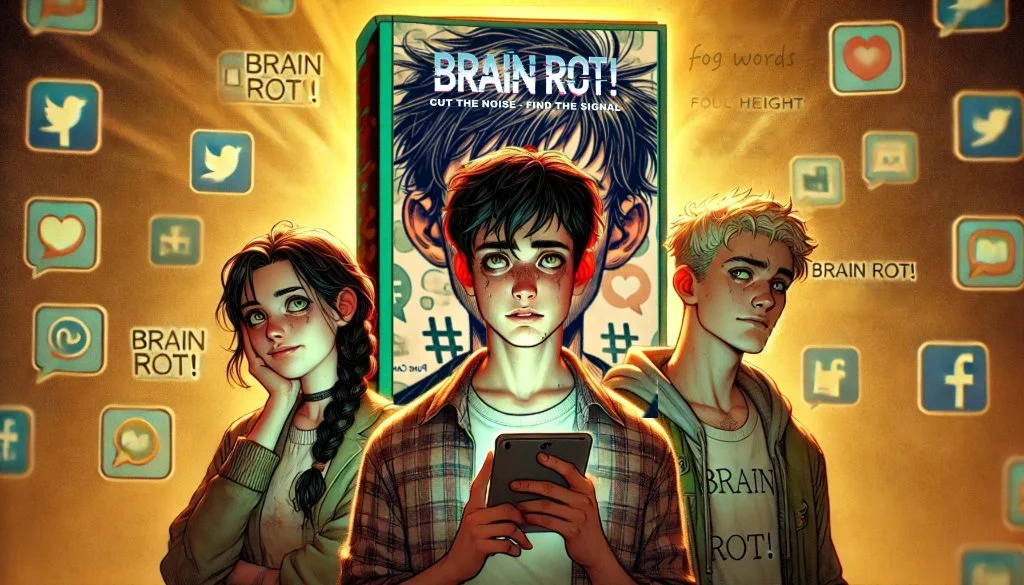
A social media ban may sound like relief for adults.
Finally, a rule.
Finally, a line in the sand.
Finally, something parents and schools can point to and say, “No more.”
But here is the harder truth: banning social media does not make the problem disappear. It simply changes where the problem lives.
If young teens are not helped to understand why constant social media use can damage their mental and physical health, weaken attention, disturb sleep, and erode face-to-face social confidence, many will not become wiser. They will simply become sneakier, more secretive, or more convinced that adults do not understand their world.
That is why bans, by themselves, are not enough.
Young people do need protection. They do need boundaries. But they also need understanding. They need help recognising what compulsive digital environments actually do to their bodies, their moods, their concentration, and their relationships. Without that inner understanding, an external rule remains fragile.
This is where edufiction can do what lectures, warnings, and even policy often cannot.
In Brain Rot!, young readers do not sit through a sermon about harmful social media habits. They experience the trap through story. They watch a school slowly lose its grip on clarity as the Zipp app begins shaping language, behaviour, mood, attention, and identity. Students grow distracted, emotionally dulled, and strangely disconnected from real life, even while the app makes everything feel exciting, relevant, and rewarding. As Chi discovers, the system no longer serves its users. It studies them, adapts to them, and gradually feeds on them.
That is the power of story.
Young teens often do not respond deeply to abstract advice like “too much social media is bad for you.” But they do respond to character, tension, consequence, and recognition. They can feel Beam’s slide into compulsive use. They can see how the pull of views, feedback, and algorithmic reward begins to override sleep, meals, focus, judgment, and real-world connection. They can recognise how quickly a digital habit can stop feeling optional.
And just as importantly, they can see what starts to break down off-screen.
Because the real issue is not only screen time. It is what gets displaced.
Eye contact.
Patience.
Conversation.
Spontaneity.
The ability to sit with boredom.
The ability to listen well.
The ability to be fully present with another human being.
That is why this debate should never be reduced to “ban or no ban.” The better question is this: how do we help young people understand what persuasive platforms are doing before those platforms begin shaping them from the inside?
A ban may delay access. It may reduce exposure. In some settings, it may be entirely justified. But it will not build discernment on its own. It will not teach a teenager how to notice mental fog, emotional dependence, compulsive checking, or the quiet loss of self-regulation. And it will not, by itself, strengthen the face-to-face social capacities that many young people now urgently need.
That deeper work happens through relationship, conversation, and meaningful learning experiences.
It happens when parents explain not just the rule, but the reason.
It happens when schools move beyond digital safety slogans and help students examine persuasive design, mood manipulation, and the social cost of constant immersion.
And it happens when stories like Brain Rot! allow young readers to feel the danger from the inside, while there is still time to step back and think clearly.
That is what makes edufiction so valuable in this space.
It does not preach.
It does not moralise.
It makes the invisible visible.
For parents and educators, that matters. Because the goal is not merely to keep young teens off a platform for a while. The goal is to help them build the judgment, self-awareness, and resilience to recognise unhealthy digital environments for themselves.
That is a much stronger protection than prohibition alone.
So yes, set boundaries. Yes, question access. Yes, take digital harms seriously.
But do not stop there.
Help young people understand the trap. Help them name the fog. Help them experience, through story and discussion, what it feels like when attention is hijacked and real life begins to fade into the background.
Because when young teens understand why a limit exists, they are far more likely to carry that wisdom into the moments when no adult is there to enforce it.
That is where real digital resilience begins.
Enjoy the Brain Rot! sample. It includes one ready-to-use lesson plan: https://dl.bookfunnel.com/gb7zrvuqo9
#DigitalCitizenship #MediaLiteracy #AILiteracy #ScreenTime #SocialMediaAndTeens #TeenMentalHealth #DigitalWellbeing #OnlineSafety #ParentsAndEducators #MiddleGradeBooks #Edufiction #AttentionEconomy #HealthyTechHabits #ThoughtBytes #BrainRotBook