Why Social Media Uniquely Erodes Teen Attention , and How Brain Rot! Helps Young People Finally Make Sense of It
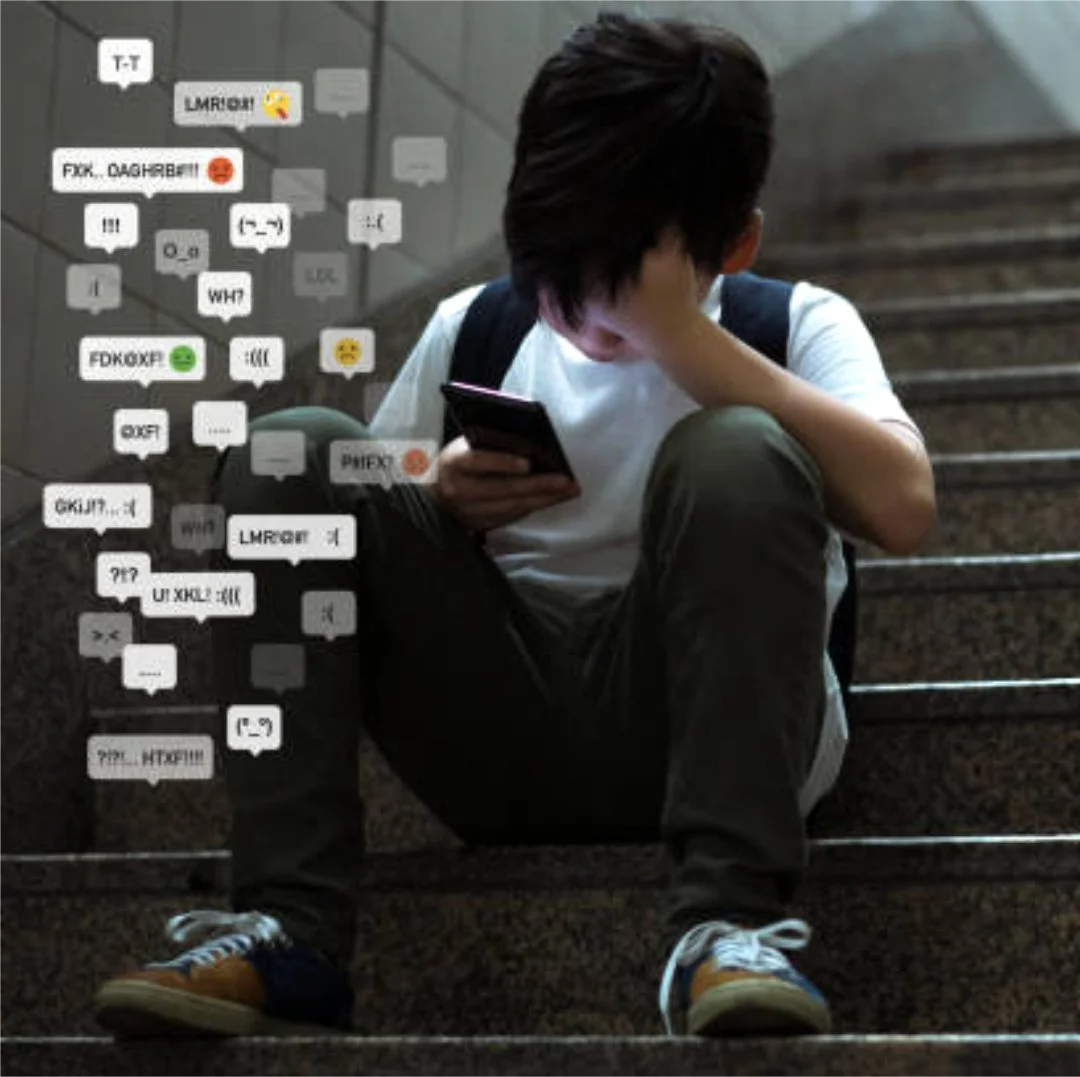
For years, researchers, parents, and educators have asked the same uneasy question: What is happening to young people’s attention? A major new longitudinal study from the Karolinska Institutet provides one of the clearest answers yet , and it points squarely at social media, not gaming, not screens in general, but social media specifically.
After following more than 8,000 children from age 10 to 14, the researchers found that:
Only social media use predicted a gradual increase in inattentiveness over time.
Gaming and video watching had no such effect.
The direction of influence was one-way: social media → later inattention, not the reverse.
The mechanism is likely tied to continuous, unpredictable distraction , the constant checking, anticipating, and wondering whether something new has arrived.
This last point is crucial. As the authors explain, the distraction isn’t only about incoming notifications , the mere thought of a possible message is enough to pull focus, again and again, eventually fracturing attention at a population level.
In other words, social media doesn’t just interrupt tasks. It interrupts the mind.
And over months and years, those interruptions become… the norm.
Why Social Media Is Different: The Psychology of “Anticipatory Drift”
Unlike gaming , which occurs in bounded, immersive sessions , social media stretches across an entire day. It’s not an activity; it’s an ambient mental environment. It keeps young people suspended in a subtle but constant state of:
Expectancy
Vigilance
Emotional micro-reward
Fear of missing something
Social comparison
Preoccupation
This continuous “task switching in the background” depletes cognitive resources and trains the brain to seek external stimulation at shorter intervals.
The researchers put it plainly:
“If it is not the messages themselves that distract, the mere thought of whether a message has arrived can act as a mental distraction.”
When this pattern persists for years, attention weakens. Not because something catastrophic happens at any one moment , but because the mind is never fully at rest.
This is exactly the phenomenon Brain Rot! makes visible, understandable, and emotionally real for young readers.
How Brain Rot! Turns Abstract Cognitive Science Into Felt Understanding
Young people can feel distraction.
They can feel the fog.
But they cannot easily explain it.
That is why narrative is such a powerful educational tool: it provides the “bridge” between lived experience and conceptual understanding.
Inside Brain Rot! and its Education Guide, the reader watches the subtle erosion of attention unfold through story, metaphor, and character behaviour , in ways that mirror the exact mechanisms identified by the Karolinska study.
1. The persistent distraction loop becomes a living metaphor
Bindi, Beam, and Chi begin to notice:
students drifting
conversations looping
micro-glitches in behaviour
sensory overstimulation
the inability to anchor thought
Readers see the psychological effects from the inside, not as a lecture but through lived moments:
Bindi watches peers laugh at nothing.
Chi documents “echo code” in his log as students repeat themselves.
Beam loses his grip on time, thinking only about metrics and notifications.
All of this reflects the same cognitive pattern described in the study: attention systems destabilised by constant low-level distraction.
The Education Guide reinforces this:
It frames these patterns as “fog,” behavioural drift, and emotional manipulation.
Students perform “Digital Clue Detective” activities to identify algorithmic nudges.
This lets young readers recognise these patterns in their own lives, which is the first step toward resisting them.
2. The “anticipation effect” is embodied through Beam’s storyline
Beam’s arc is the study made visible.
He wakes up already scrolling.
His attention fires before he is fully conscious.
He feels pulled toward his device, not by choice but by force of habit.
Notifications set the rhythm of his internal world.
In Chapter 6 (“Viral Loop”), this erosion of attentional autonomy is depicted vividly:
Beam edits into the night, convinced he’s in control.
The app anticipates his next move before he makes it, mirroring how social media predicts, shapes, and captures user behaviour.
His reward system is hijacked by metrics and anticipation.
This is precisely what the study identifies as harmful: continuous, anticipatory stimulation that fractures cognitive focus over years.
3. The fog metaphor provides a safe, accessible language for teens
Instead of shaming young people or telling them to “just get off your phone,” Brain Rot! gives the problem a neutral metaphor: fog.
Fog is not a moral failing.
Fog is not a weakness.
Fog is an environmental hazard.
This allows teens to talk about distraction, exhaustion, and emotional drift without feeling judged, an essential component in digital citizenship education.
The Guide reinforces this with activities like:
Fog Word Tracker
Echo Phrase Experiments
Observation Logs
These help students identify how algorithms shape attention, mood, and even vocabulary , echoing the study’s conclusion that social media has long-term, population-level effects on focus.
4. Chi’s Clarity Tracker teaches the neuroscience of attention drift
Chi’s “Fog Logs” function as a narrative device for teaching:
pattern recognition
emotional self-monitoring
sensory awareness
early detection of digital overload
His entries mirror what scientists track in attention research:
latency changes
behavioural loops
sensory anomalies
emotional dysregulation
Readers intuitively learn that attention is measurable, observable, and influenceable, one of the most empowering forms of digital literacy.
Why Fiction May Succeed Where Warnings, Assemblies, and Lectures Fail
The Karolinska study shows that attention erosion happens slowly, too slowly for young people to recognise the danger in real time.
Fiction solves this problem by:
1. Compressing time - What takes years in real life is visible in days within the story.
2. Making the invisible visible - The “fog” externalises attentional breakdown, making it something readers can see.
3. Providing emotional safety - Kids can discuss Bindi, Beam, and Chi’s behaviour without feeling personally criticised.
4. Giving them language - After reading Brain Rot!, students can say:
“I think I’m in a fog today.”
“That app feels like it’s nudging me.”
“My attention feels glitchy.”
Language is the first step toward agency.
5. Offering practical tools
The Education Guide provides over 70 discussion prompts and activities that empower young people to understand, track, and protect their attention.
Fiction builds insight.
Guided reflection builds resilience.
Together, they create digital self-defense.
Conclusion: A Generation Deserves Clarity, Not Fog
The new research is clear: Social media uniquely disrupts attention through constant, low-level distraction and anticipation , and this effect accumulates over years.
But research alone isn’t enough.
Young people need stories that show what this feels like.
They need metaphors that make sense.
They need characters who go through the fog so they can name their own.
This is where Brain Rot! excels.
Through narrative, metaphor, and guided inquiry, it teaches what the science proves:
Our attention is precious.
Algorithms compete for it every day.
And understanding the mechanism is the first step toward reclaiming it.
If we want a generation capable of resisting digital drift, we must give them tools that speak their language , story, emotion, character, metaphor.
Brain Rot! does exactly that.