A Task Design Learning Sequence
AI-Assisted, Human-Led Learning Through The Web Trap: The Birthday Party
AI-Assisted, Human-Led Learning is a story-driven Task Design approach that places students' independent thinking at the centre of learning. Rather than using artificial intelligence to generate answers or complete assignments, students investigate authentic problems, gather evidence, develop interpretations and exercise their own judgement. AI becomes a thinking partner—challenging assumptions, suggesting alternative perspectives and helping students test and refine their reasoning. Responsibility for understanding, evaluating and deciding remains firmly with the learner.
In The Web Trap: The Birthday Party, students investigate why Maddy, despite being surrounded by friends, might be vulnerable to escaping into the immersive world of DreamWalker virtual reality. They examine the contradictions between her private thoughts, spoken words and actions, exploring how her desire for admiration, sensitivity to social judgement and genuine need for friendship might influence her digital choices.
Across five 45-minute lessons, students progressively move from character investigation and evidence-based interpretation to collaborative debate, cause-and-effect modelling, intervention design and independent decision-making. Rather than simply asking AI to explain Maddy's personality, they first construct their own interpretations using evidence from the story. They may then use AI to challenge their conclusions, identify overlooked possibilities and test proposed solutions before deciding which suggestions deserve to be accepted, modified or rejected.
The learning sequence follows four connected stages:
THINK — Investigate independently. Examine Maddy's behaviour, gather textual evidence and develop an initial interpretation.
CHALLENGE — Question assumptions. Use AI or structured peer discussion to test interpretations, consider alternative explanations and identify unsupported conclusions.
REFINE — Improve understanding. Revisit the story evidence, revise interpretations and strengthen proposed solutions.
DECIDE — Exercise human judgement. Reach and defend an independent conclusion about Maddy's vulnerabilities, protective friendships and healthier digital choices.
Through this process, students develop critical literacy, digital citizenship, AI literacy, empathy and practical problem-solving skills. They also learn that immersive technology is not inherently harmful: its effects depend on how, why and when it is used.
The central principle is simple: AI should extend students' capacity to think, not replace the thinking that makes learning meaningful.

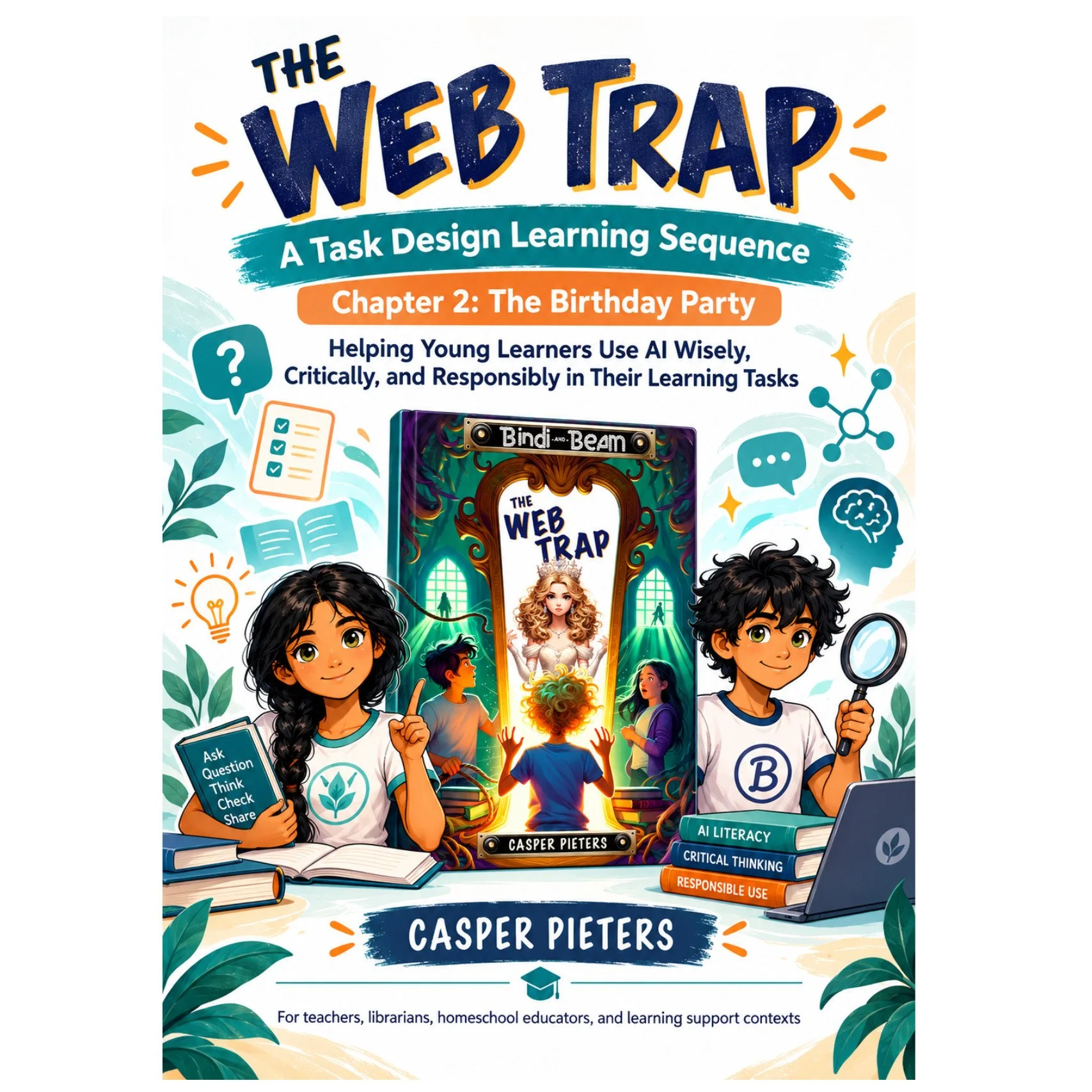 Image 1 of 9
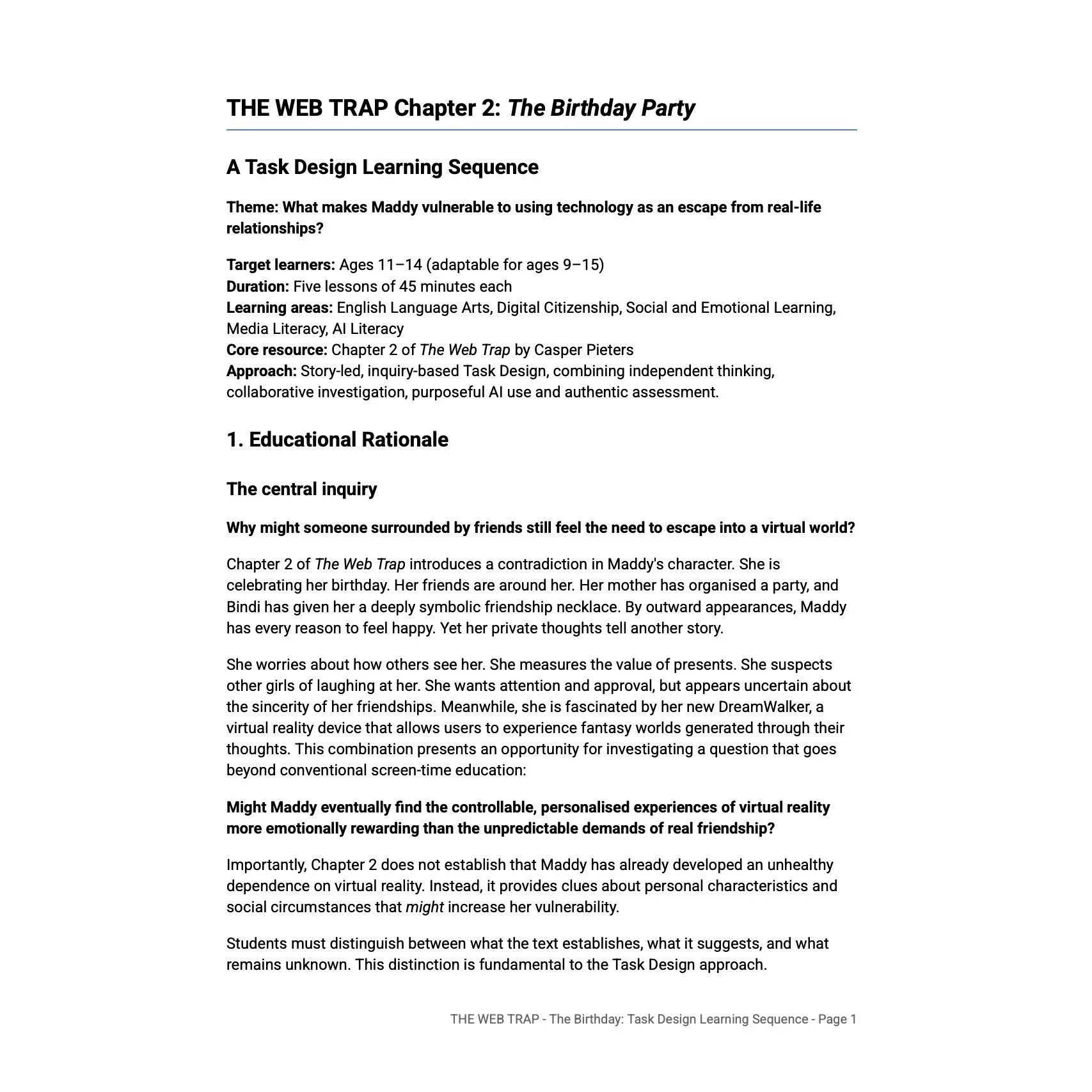 Image 2 of 9
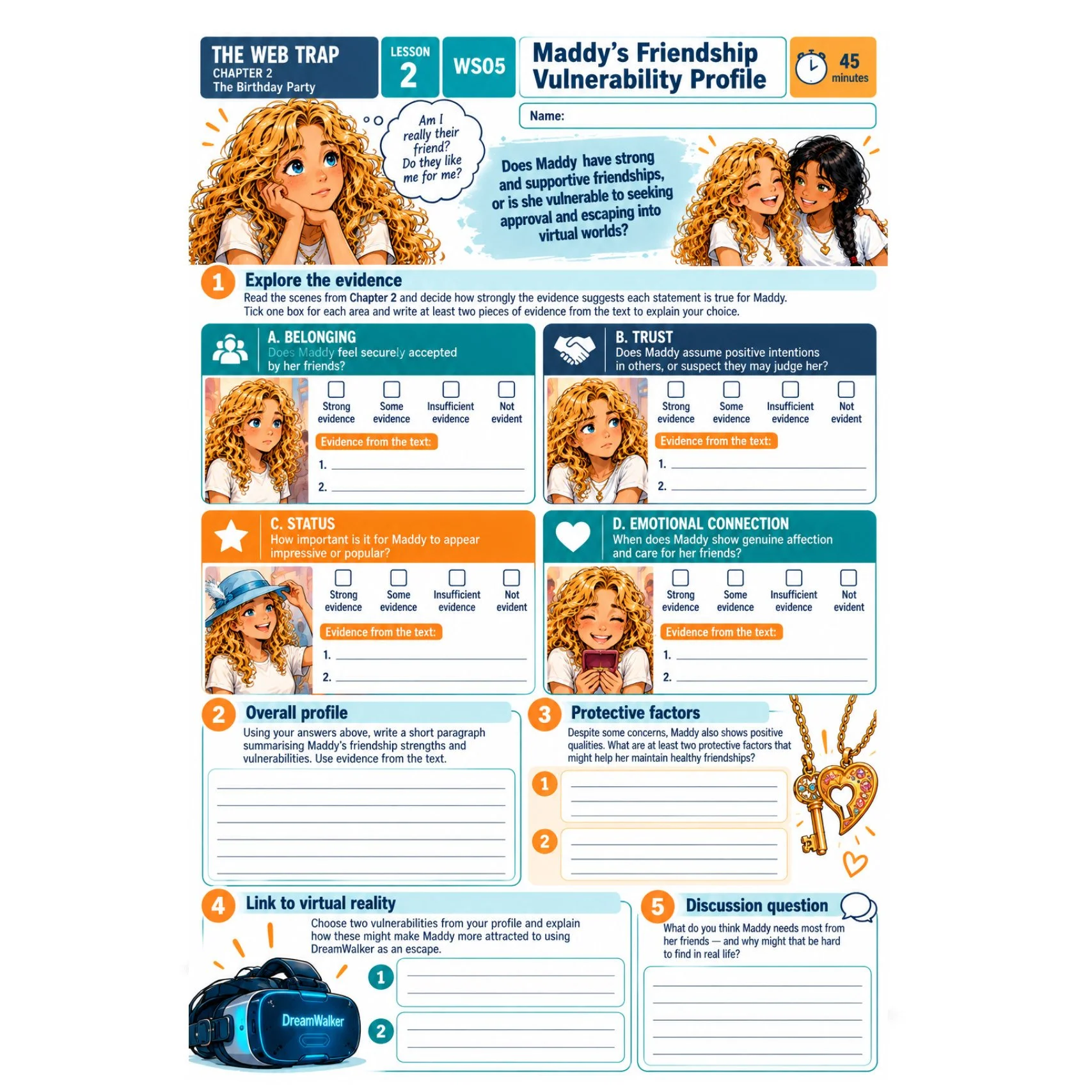 Image 3 of 9
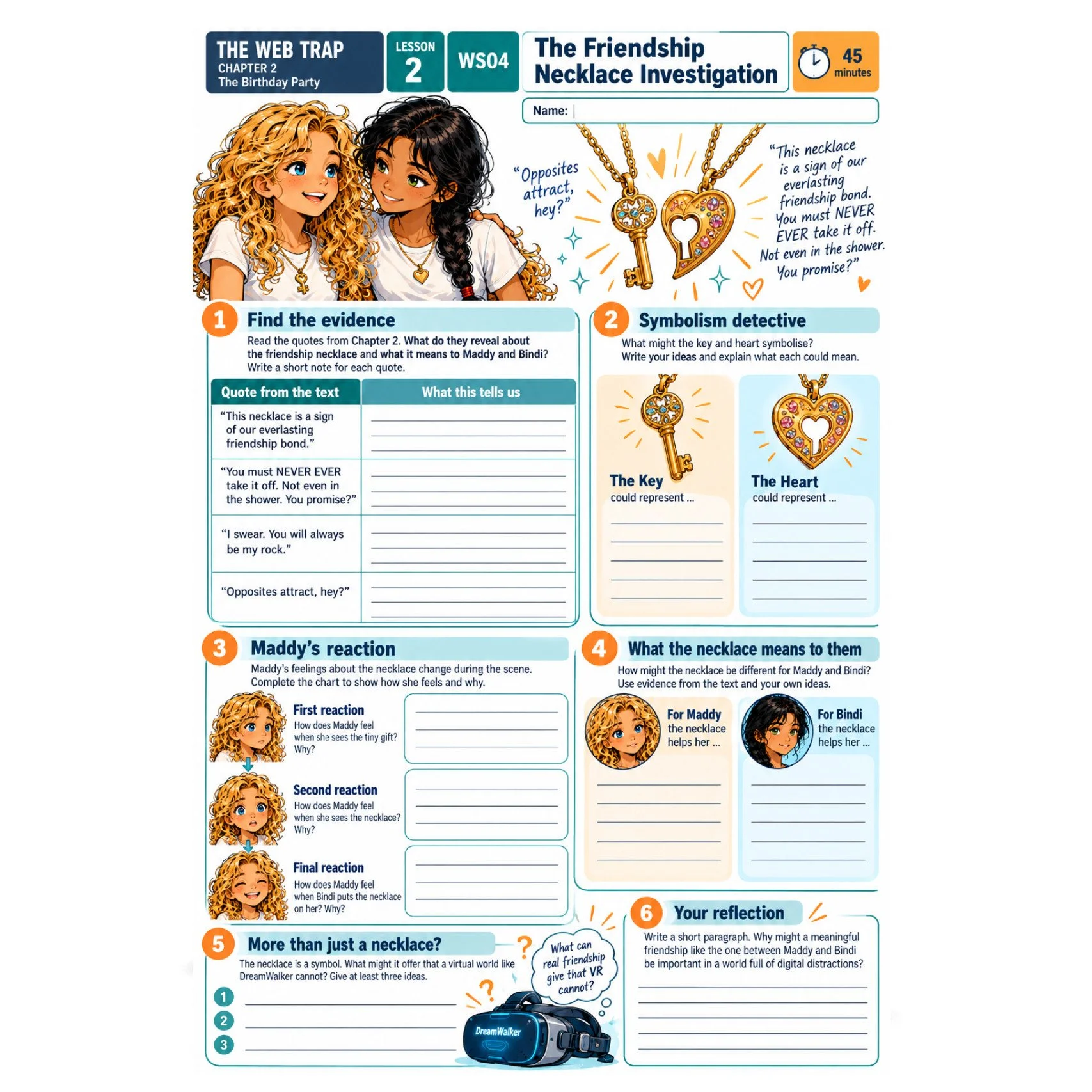 Image 4 of 9
 Image 5 of 9
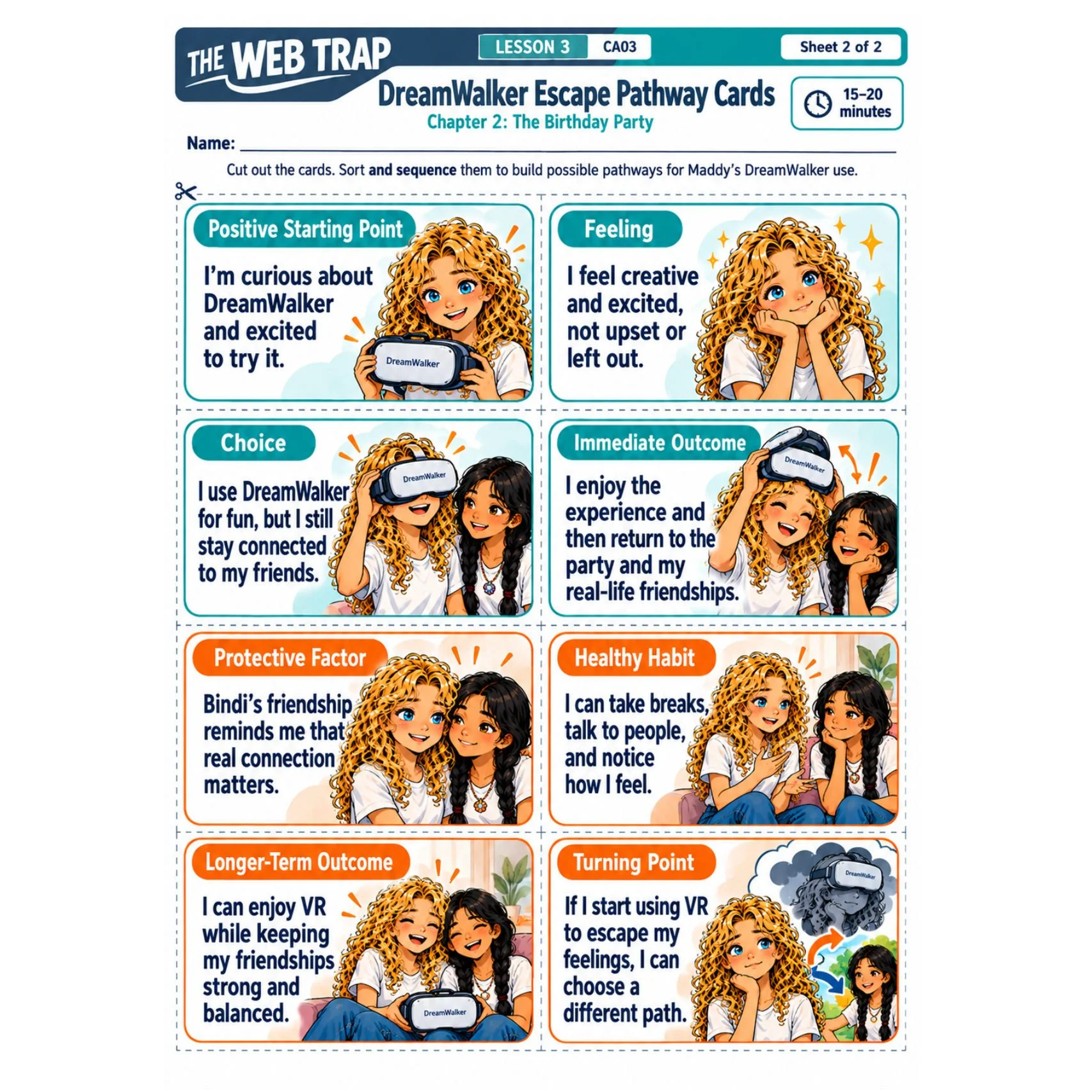 Image 6 of 9
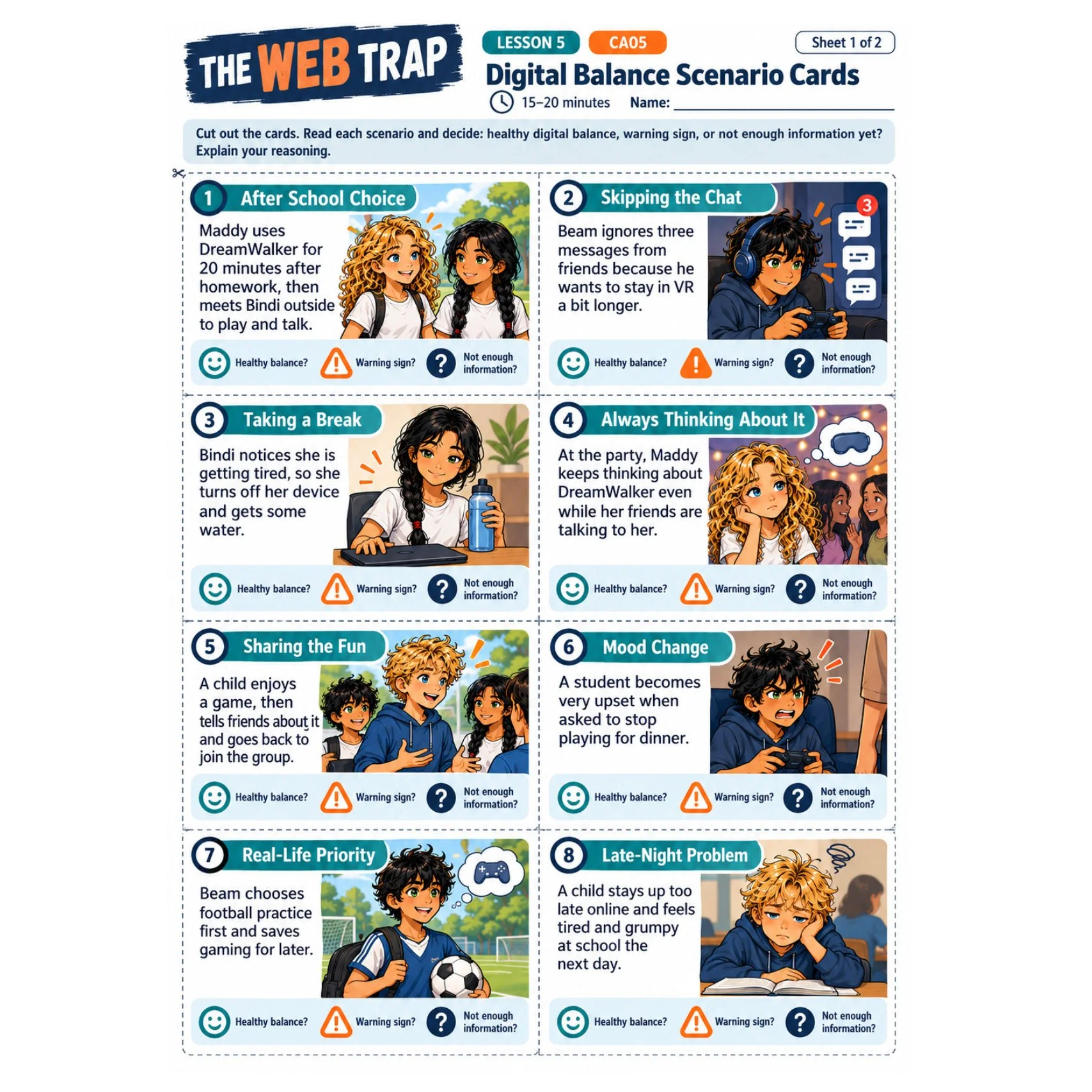 Image 7 of 9
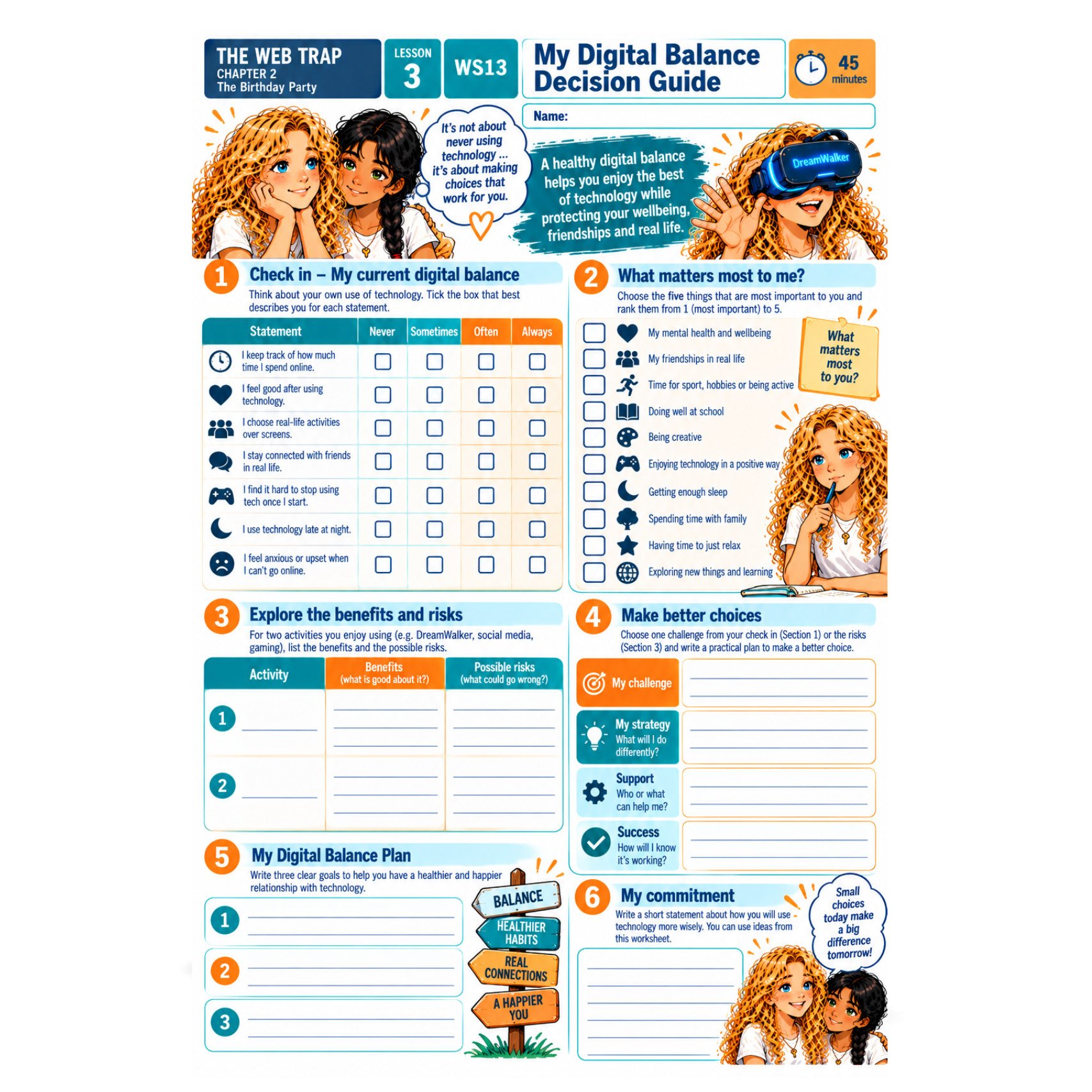 Image 8 of 9
 Image 9 of 9


