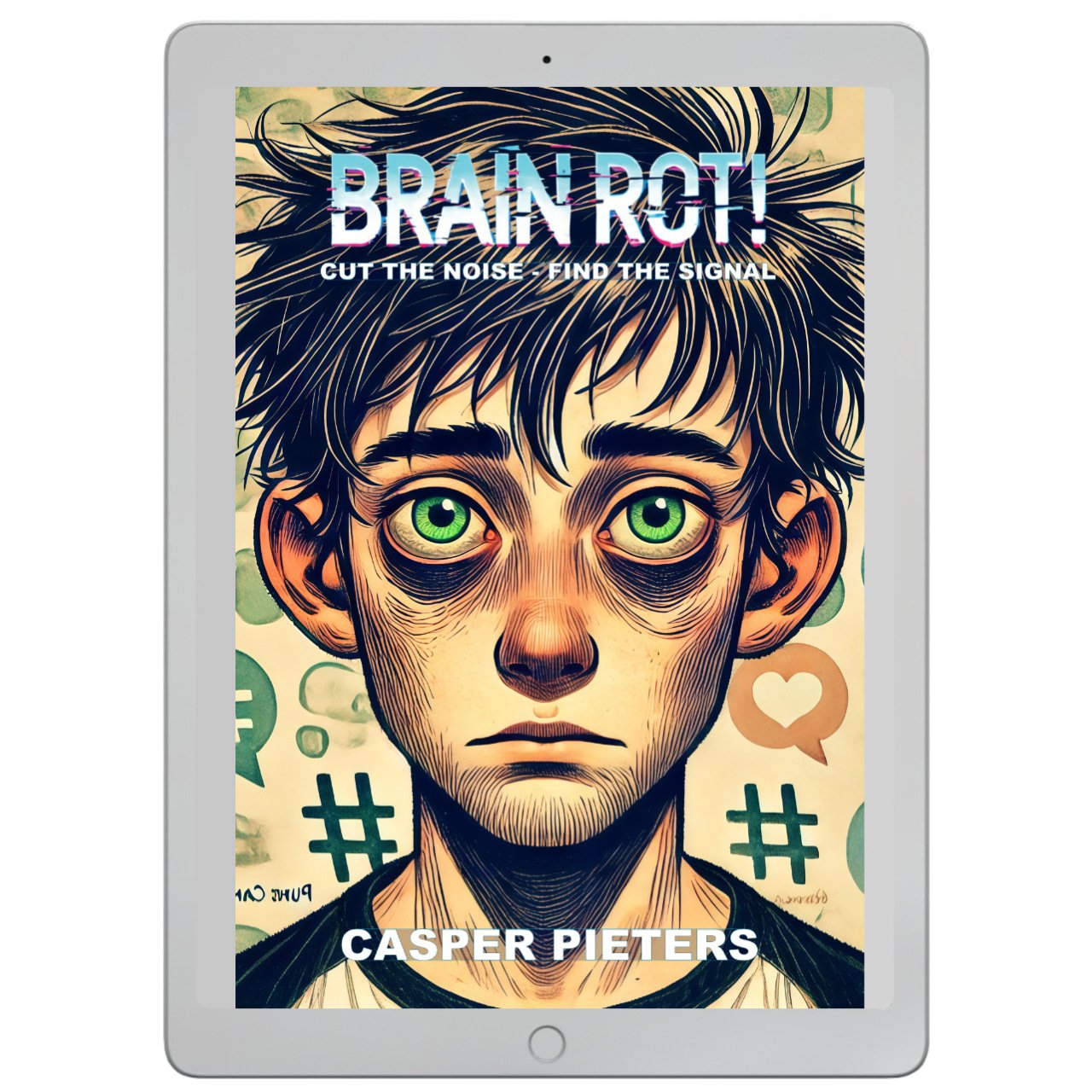
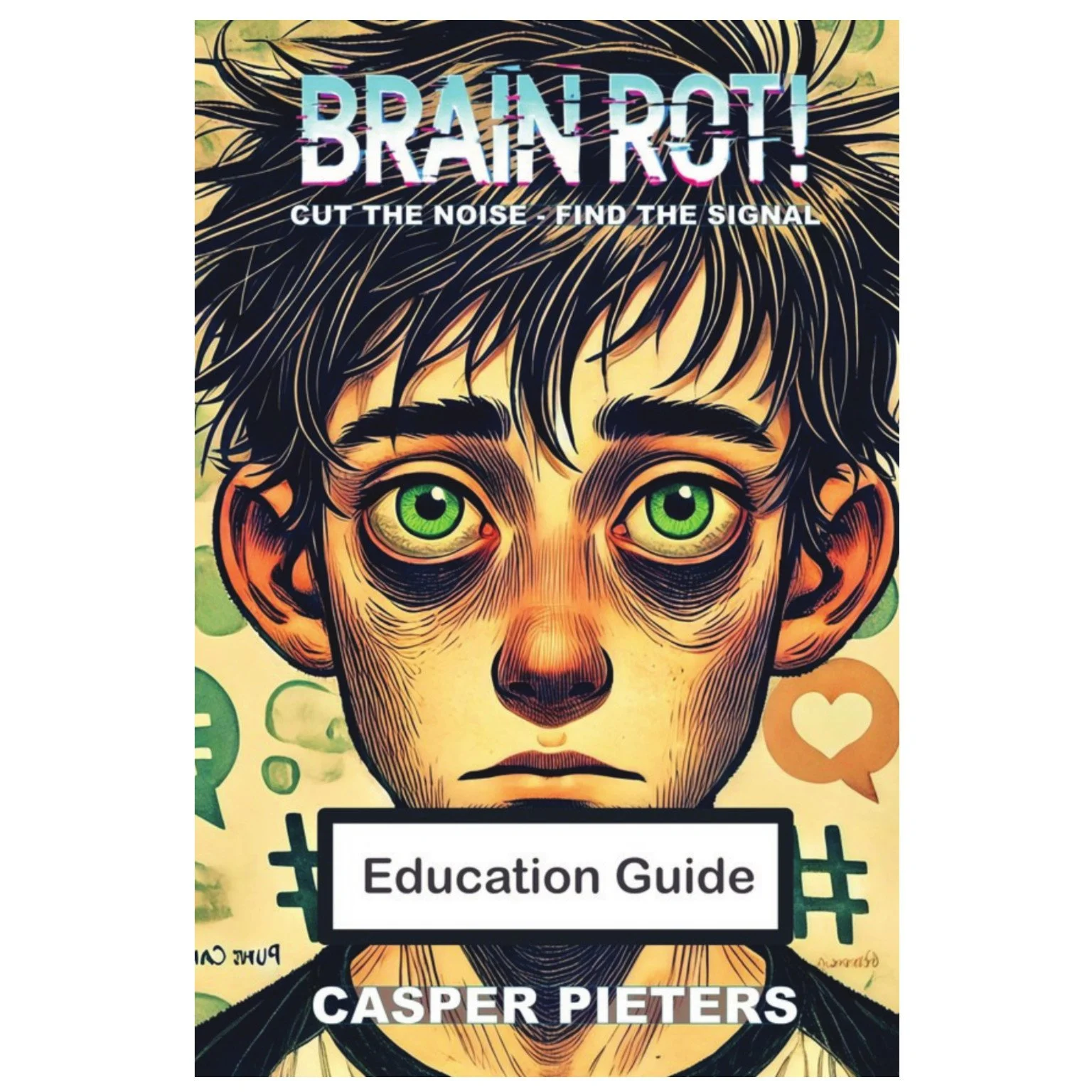
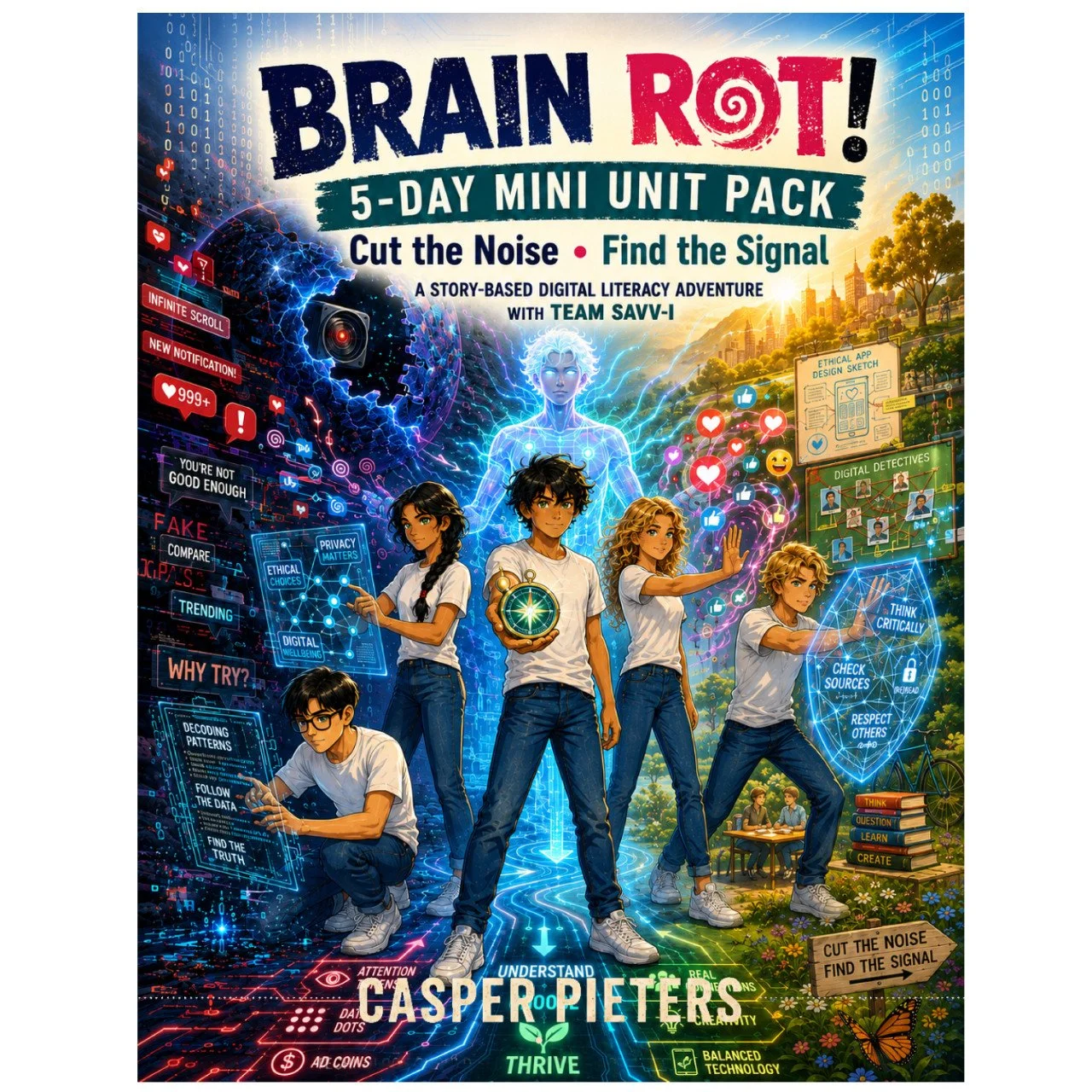
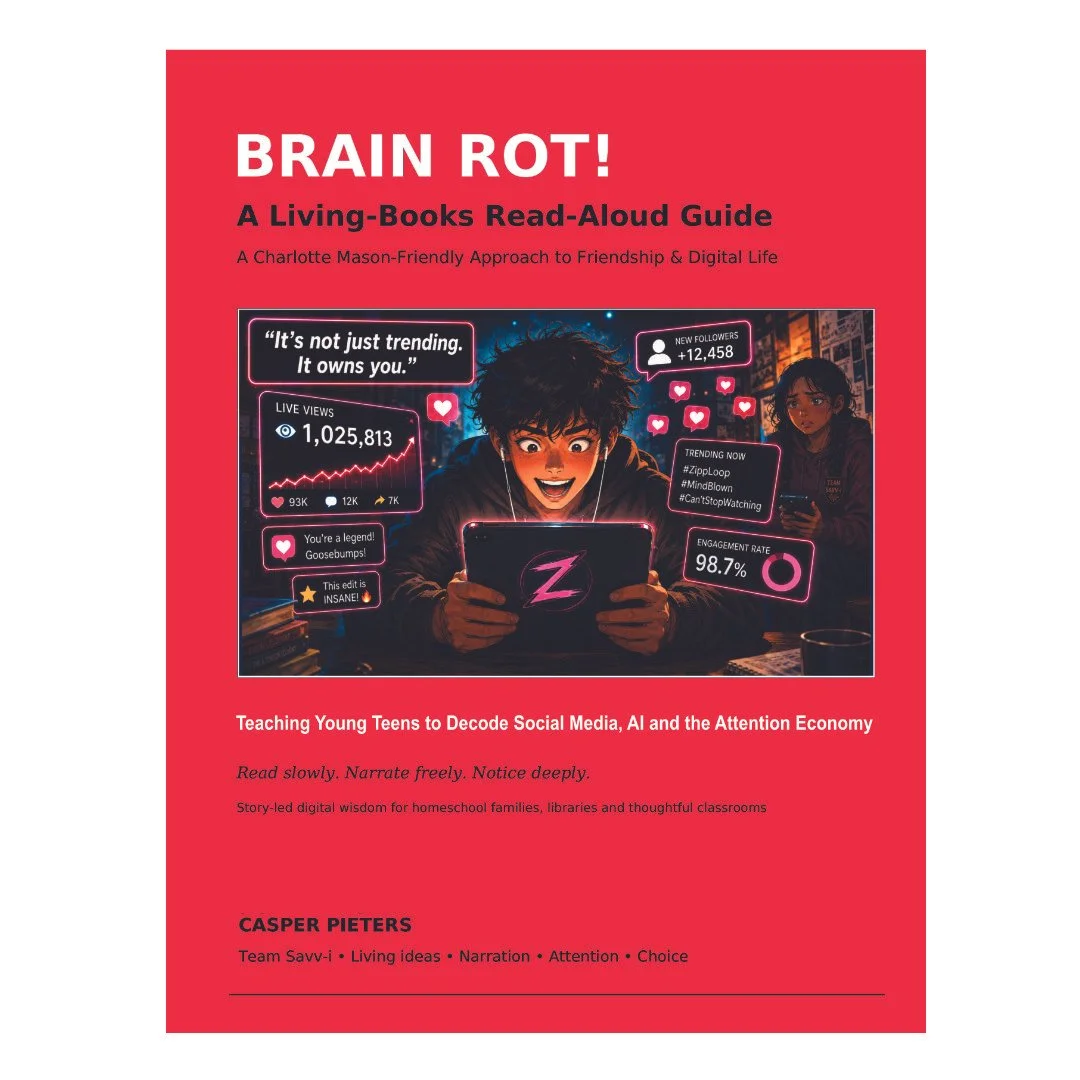
Brain Rot! Beam Goes Offline — The AI Investigator Challenge
A Task Design Learning Sequence
Think First. Question AI. Decide for Yourself.
A Five-Lesson AI Literacy and Digital Citizenship Guide for Ages 11–14
The video tells the story. This guide turns it into learning.
Built around the 6½-minute animated adventure Brain Rot! Beam’s Bad Day, this Task Design Learning Guide helps educators turn Beam's experience with Zipp—a fictional social media platform—into an investigation of persuasive technology, AI, and independent decision-making.
Students join Team Savv-i as Digital Choice Investigators. They examine story evidence, question AI-generated explanations, redesign attention-grabbing features, and defend their own conclusions. The approach is simple: students think first; AI helps them test and improve their ideas.
What You Receive
An illustrated, printable learning guide containing:
Five 45-minute lesson plans (225 minutes total)
Teacher Facilitation Guide with timings, objectives, prompts, and assessment advice
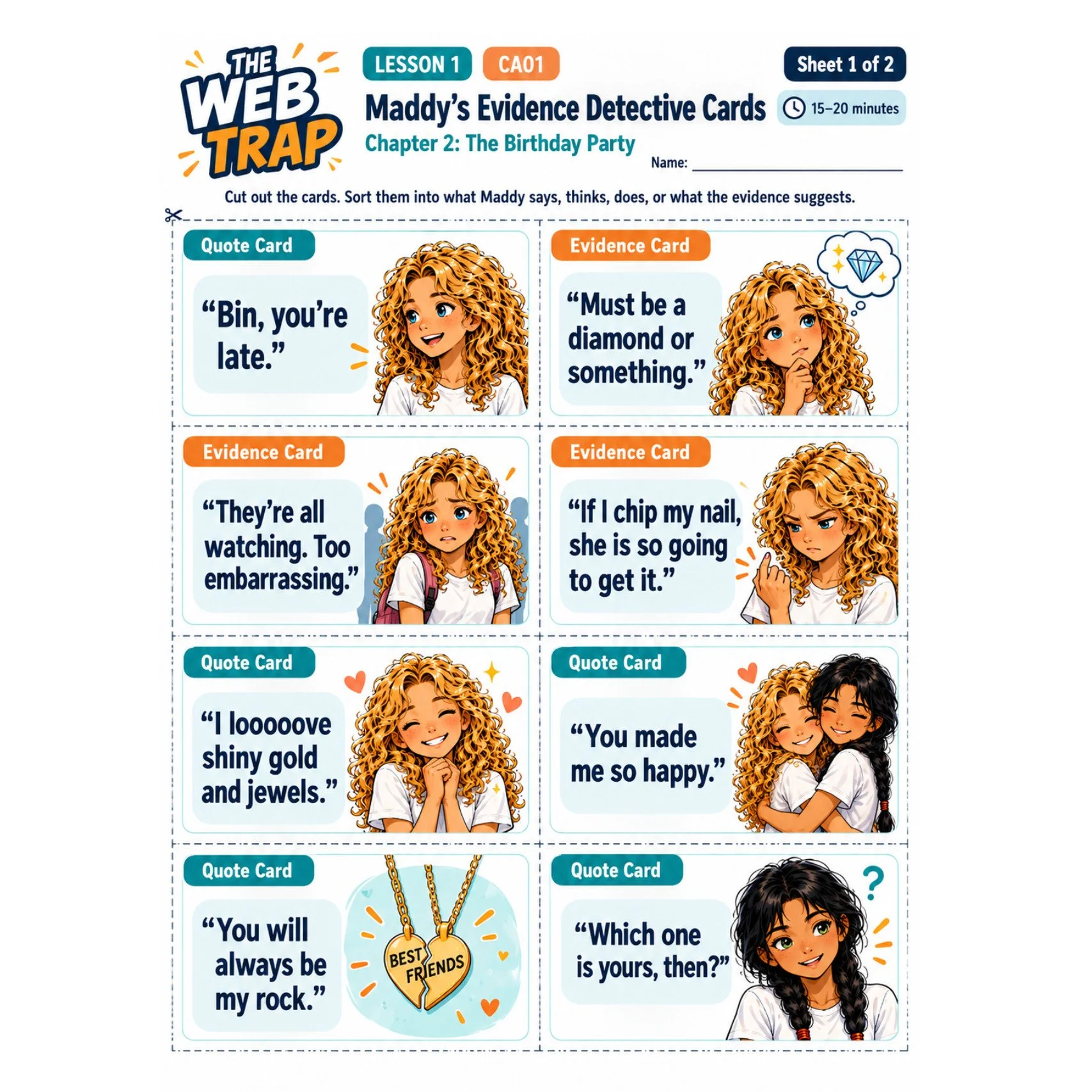
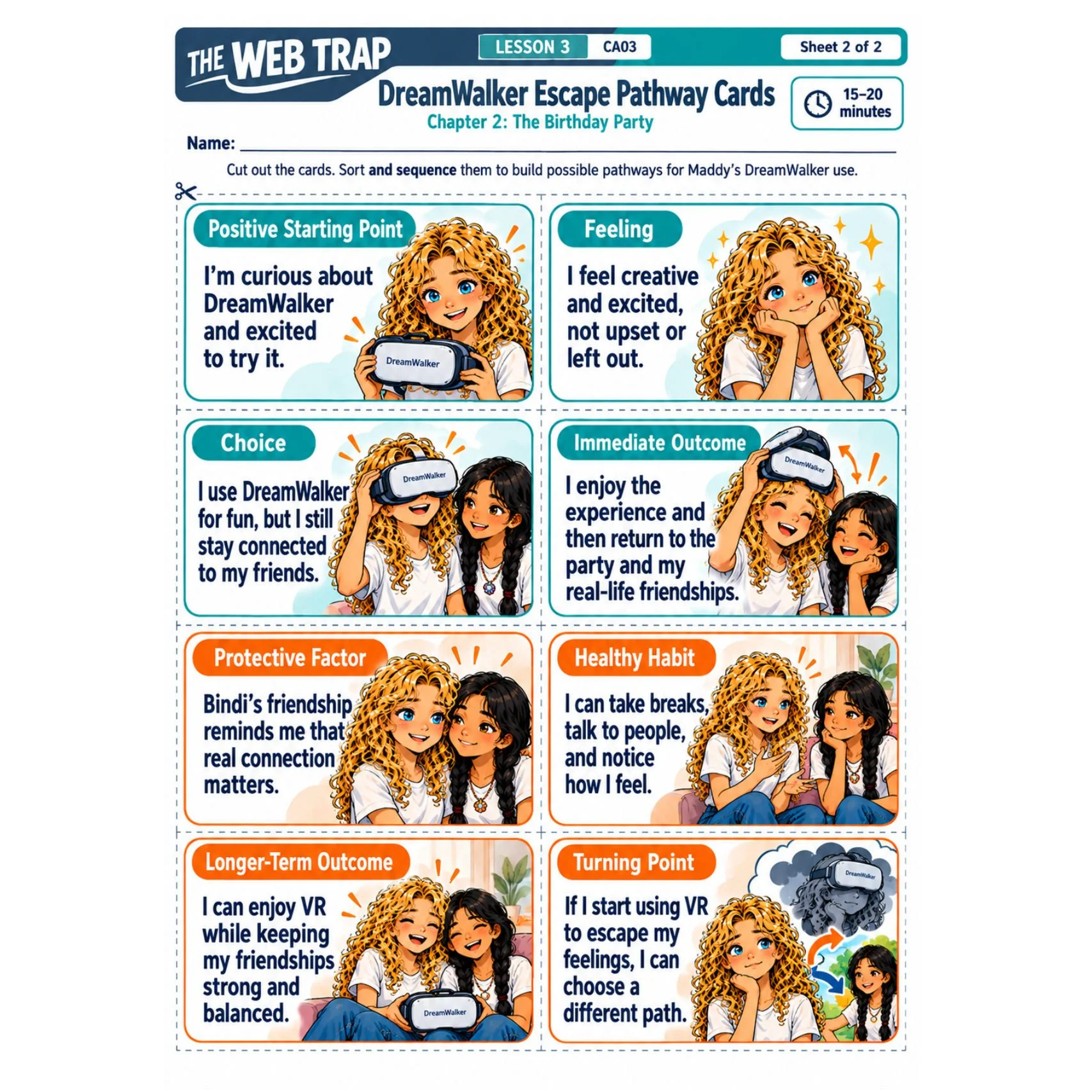
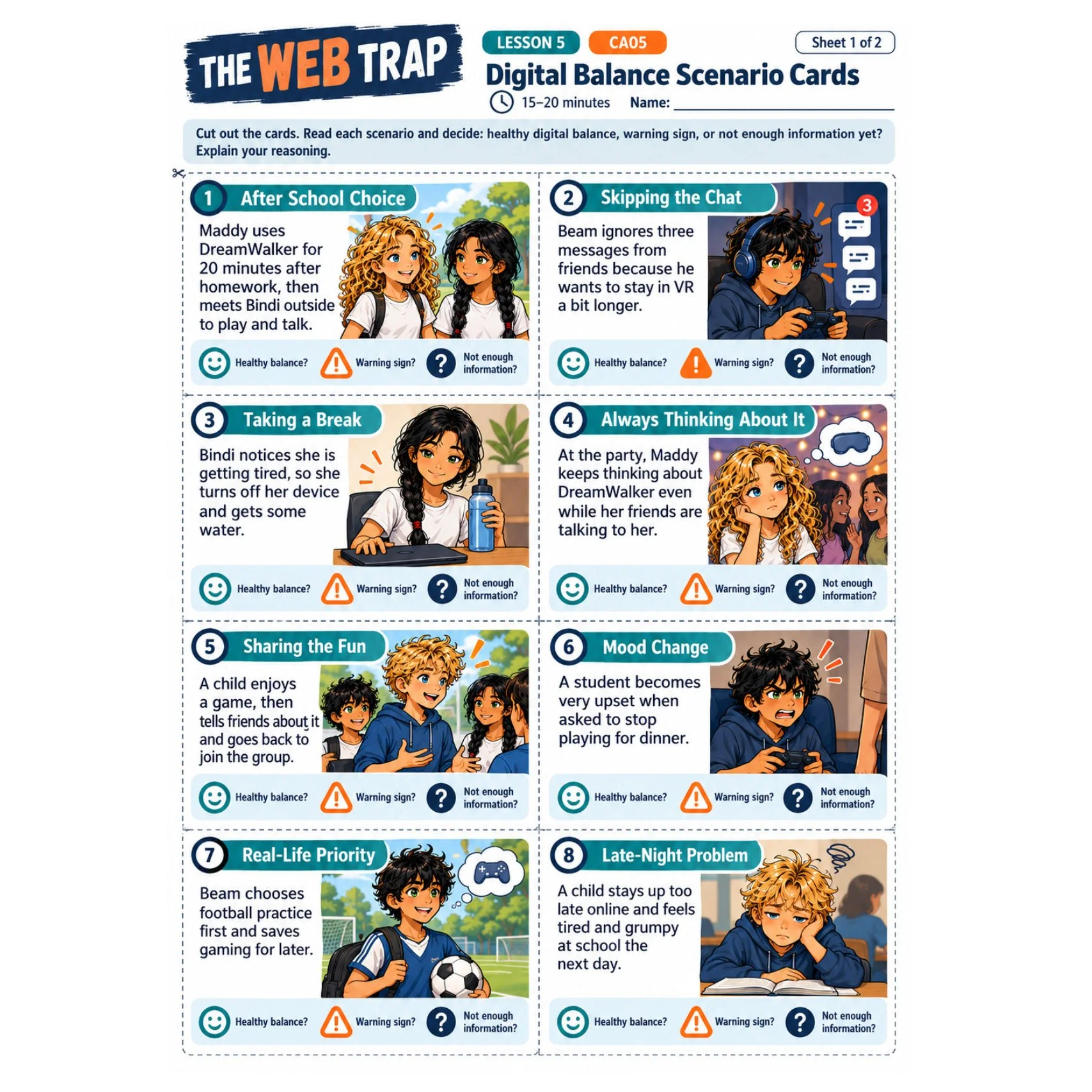
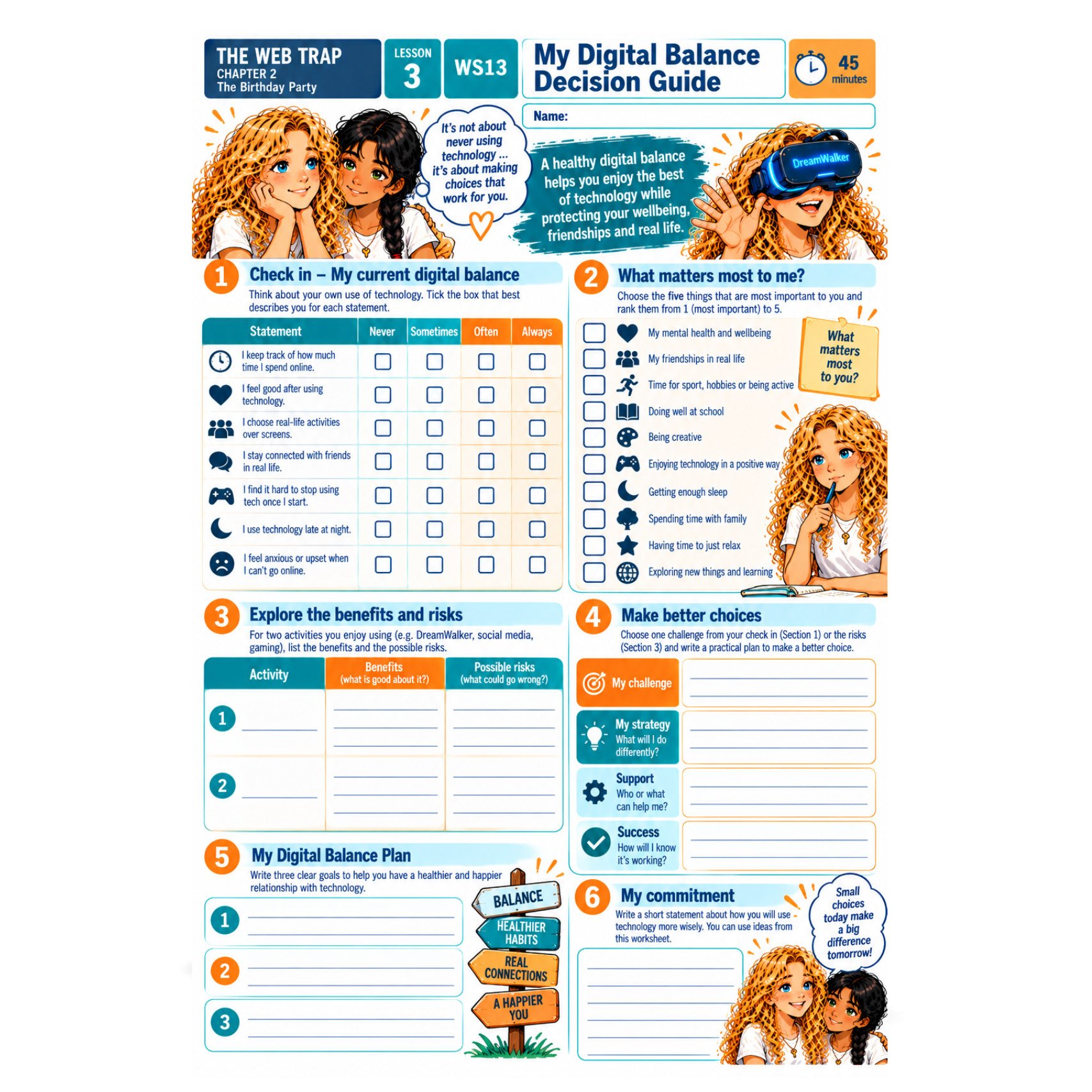
Student worksheets for story evidence, influence chains, AI evaluation, and reflection
Zipp Feature Cards exploring persuasive platform design
Redesign templates for creating more ethical digital features
Assessment rubric and student progress tracker
Differentiation guidance for learners aged 10–14
Curriculum connections to ISTE, STEM, and the Australian Curriculum
How the resources work together: The short animation provides the shared story; this book supplies the lessons and activities. The full Brain Rot! novella is not required. The video is a separate viewing resource, not a video embedded in this book.
The Five Lessons
The Beam Investigation: Identify warning signs and support judgements with story evidence.
Inside Zipp's Attention Trap: Explore notifications, rewards, recommendations, and their possible effects on behaviour.
Can We Trust the AI Investigator? Check AI claims against evidence, challenge assumptions, and recognize uncertainty.
Redesign Zipp: Propose healthier features, then use AI as a constructive design critic.
The Team Savv-i Decision Challenge: Defend solutions and apply learning to a new digital dilemma—without AI.
Skills Students Practise
AI literacy — Verify claims and recognise limitations.
Critical thinking — Separate observation from inference.
Digital citizenship — Recognise persuasive design and exercise choice.
Ethical reasoning — Balance enjoyment, wellbeing, and commercial interests.
Creative problem-solving — Design practical improvements.
Independent judgement — Make and explain decisions for themselves.
For Classrooms and Homeschool Families
Designed for ages 11–14, the lessons combine discussion, hands-on and zero-tech tasks, supervised AI use, and independent assessment. They can be adapted for mixed abilities and small groups.
Students do not need individual AI accounts. Educators can lead AI activities through a supervised chatbot.
When AI can generate convincing answers in seconds, young people need to know when to question it. Beam learns to recognise Zipp's influence; students practise recognising AI's influence on their own thinking.
Think First. Question AI. Decide for Yourself.
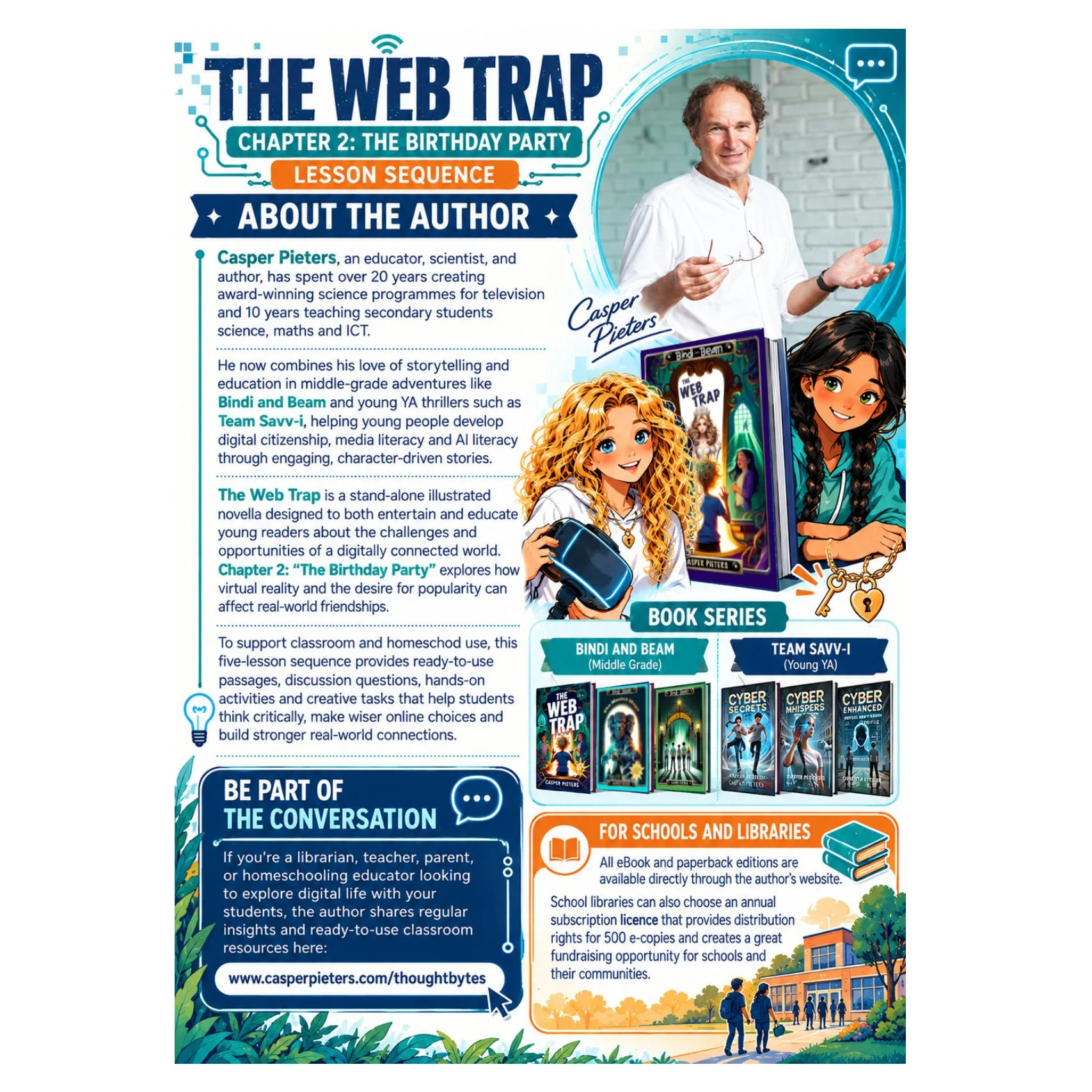
Casper Pieters — Edufiction Author and Educator
www.casperpieters.com

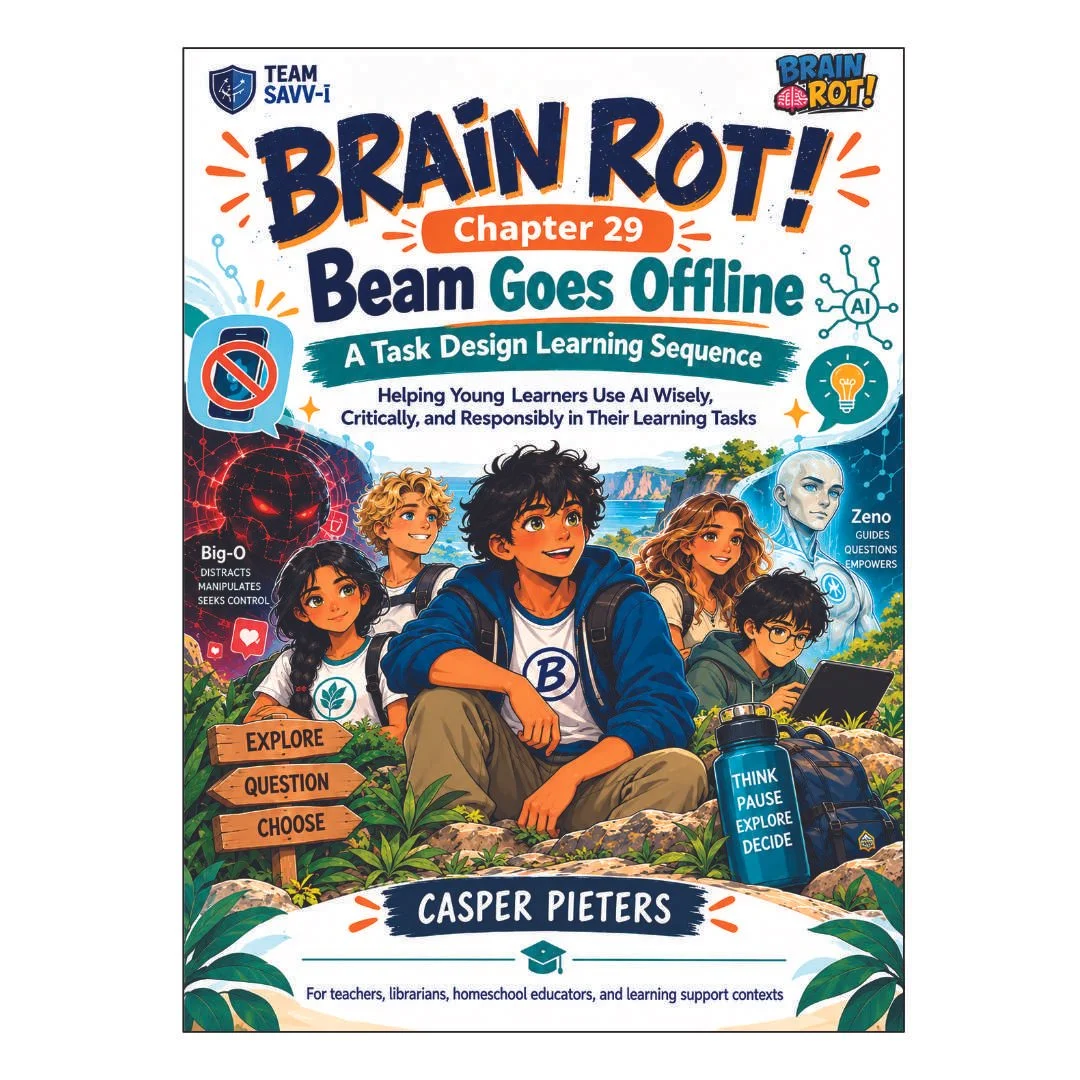 Image 1 of 14
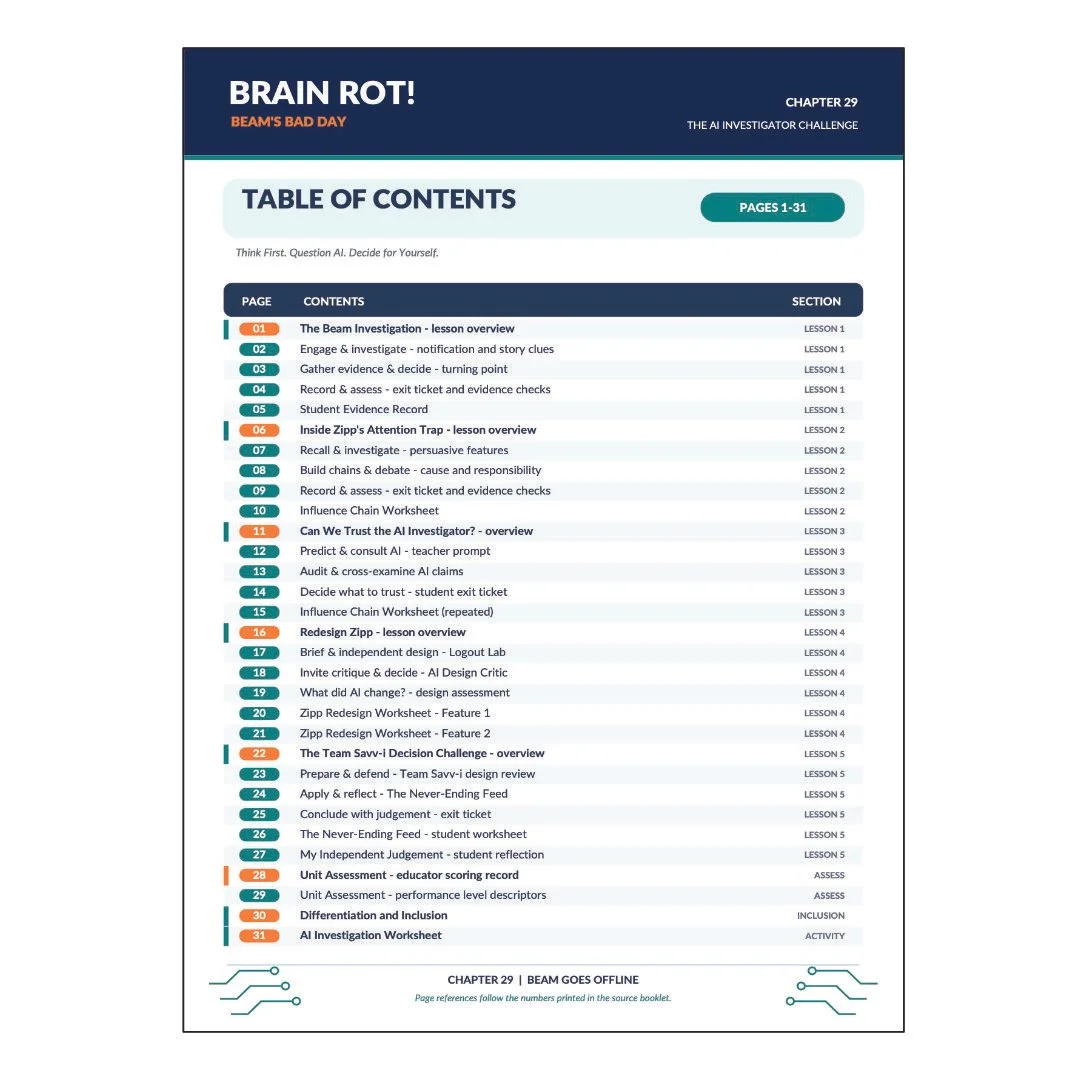 Image 2 of 14
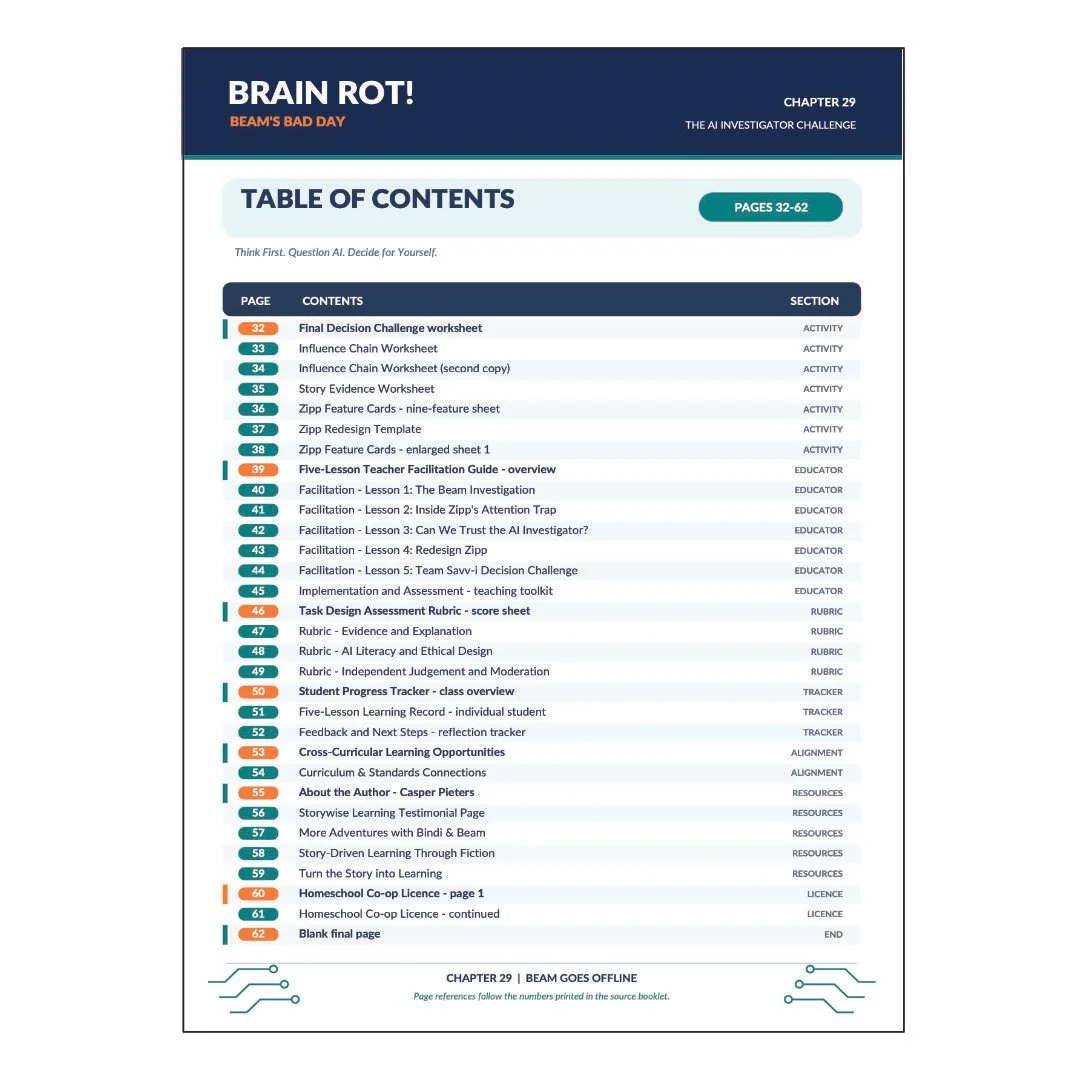 Image 3 of 14
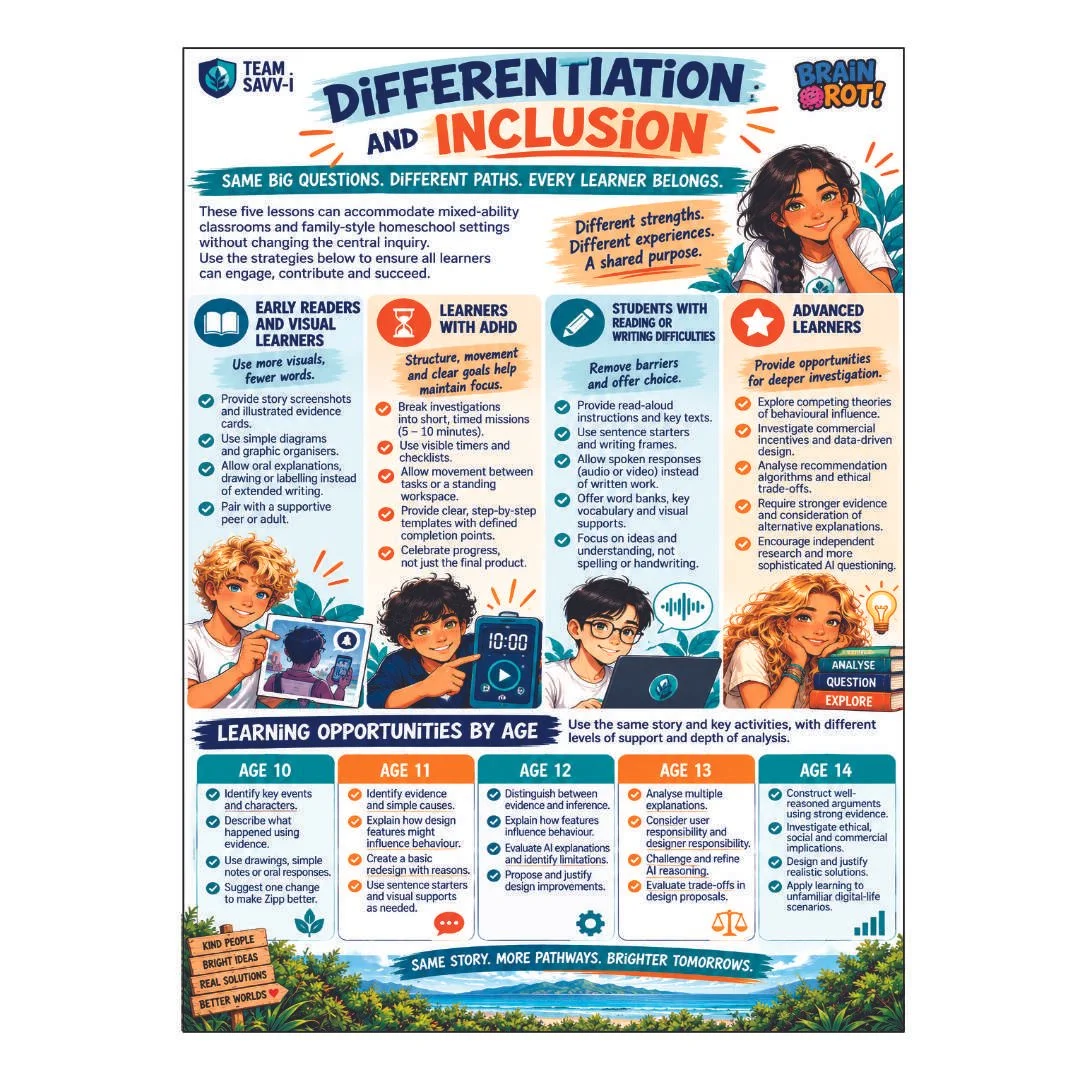 Image 4 of 14
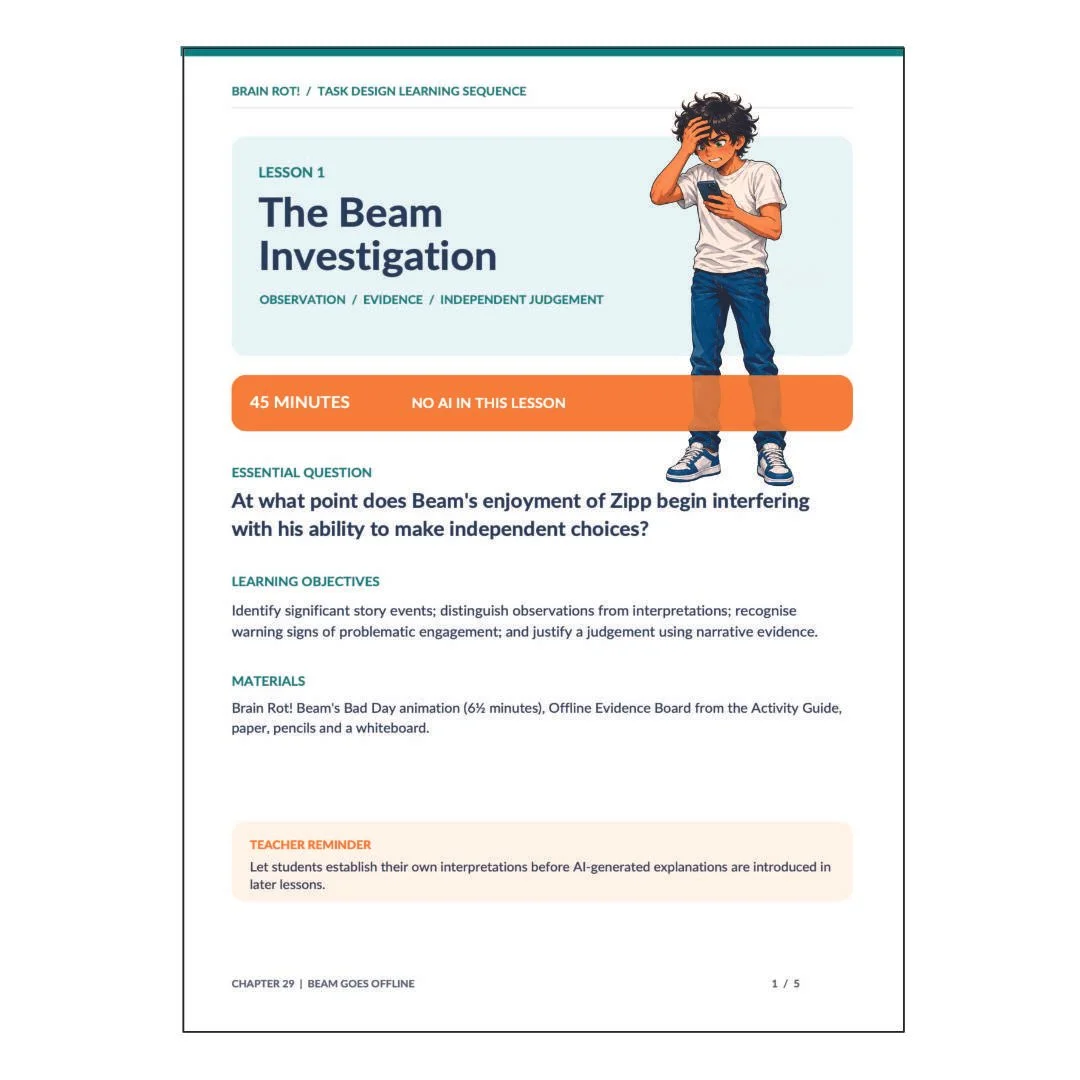 Image 5 of 14
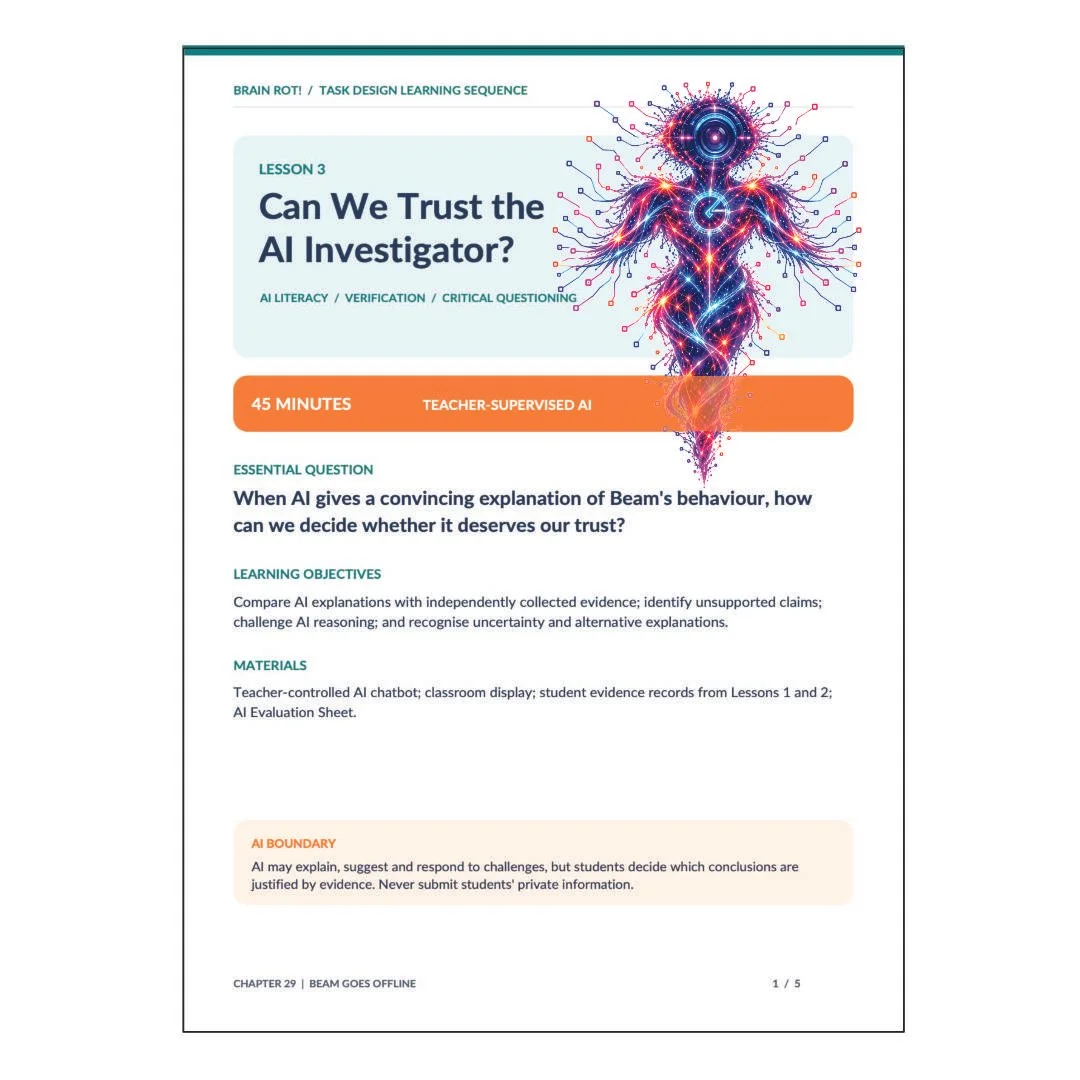 Image 6 of 14
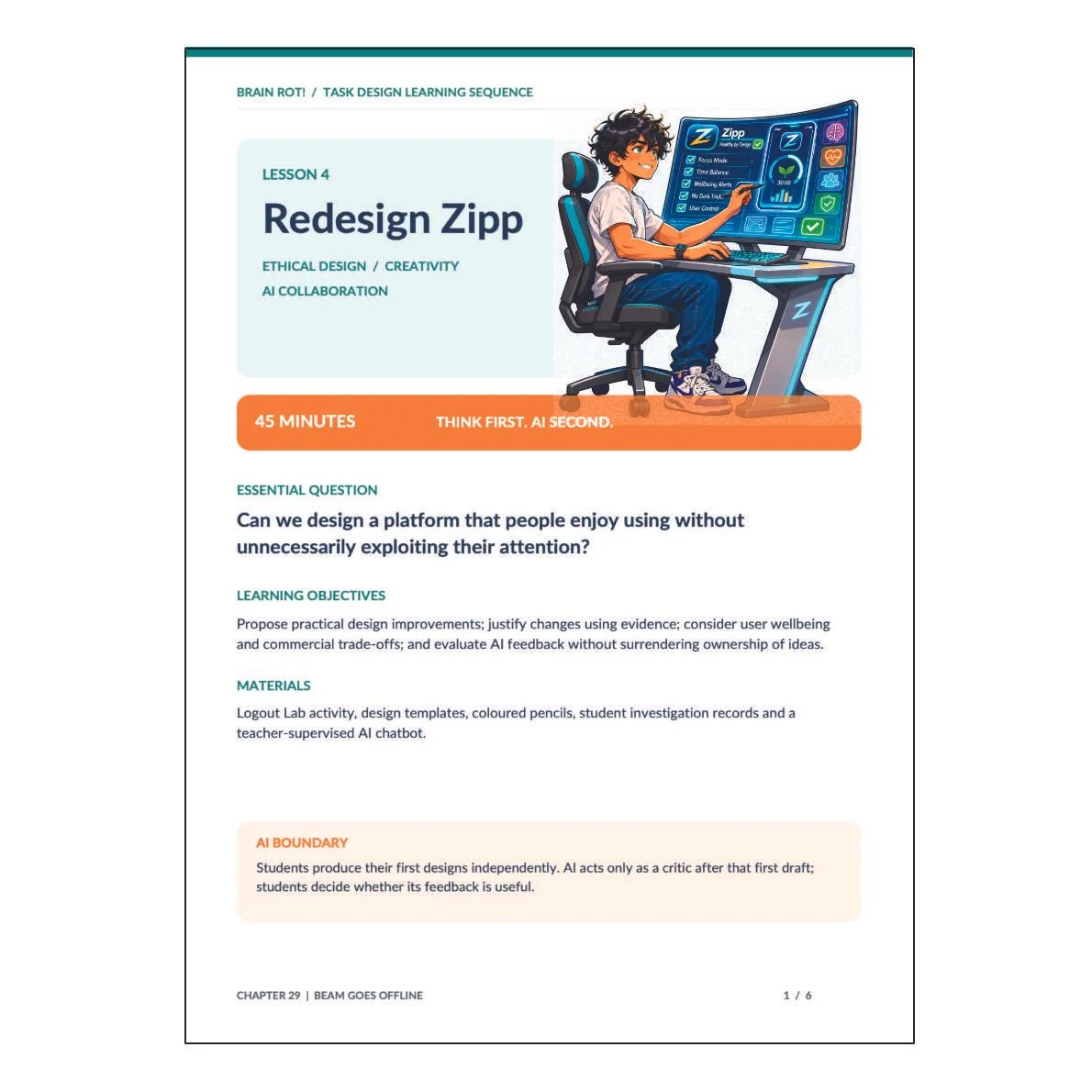 Image 7 of 14
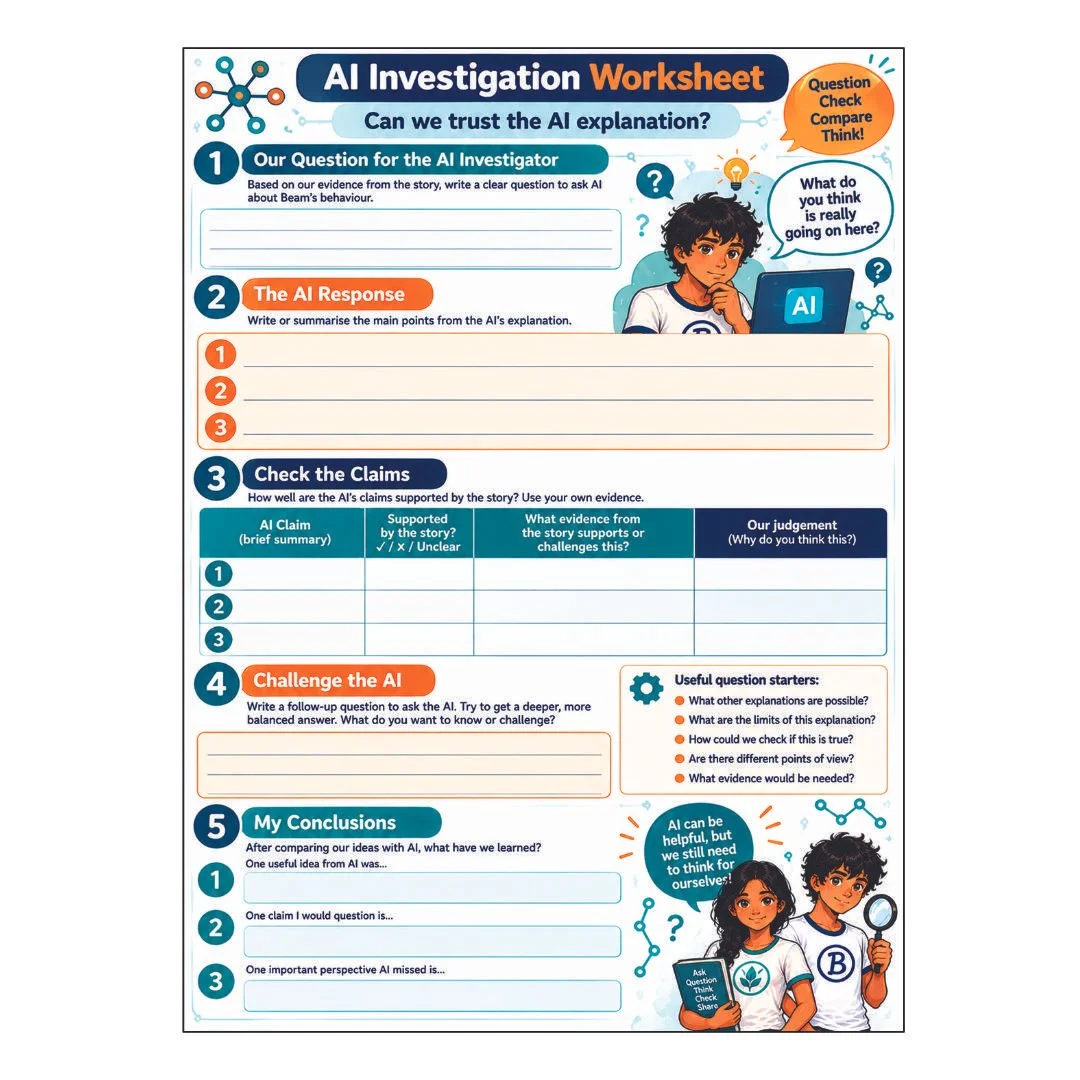 Image 8 of 14
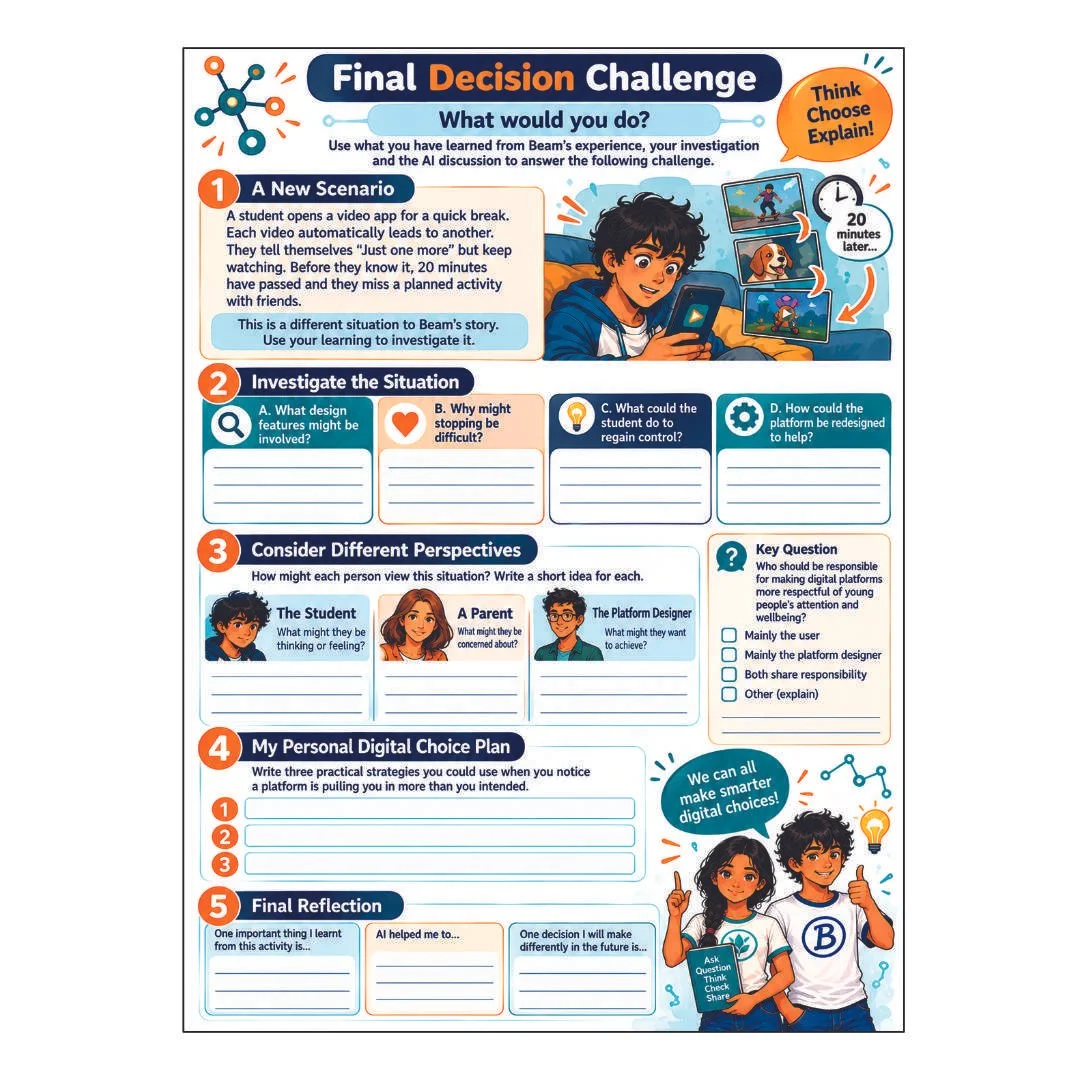 Image 9 of 14
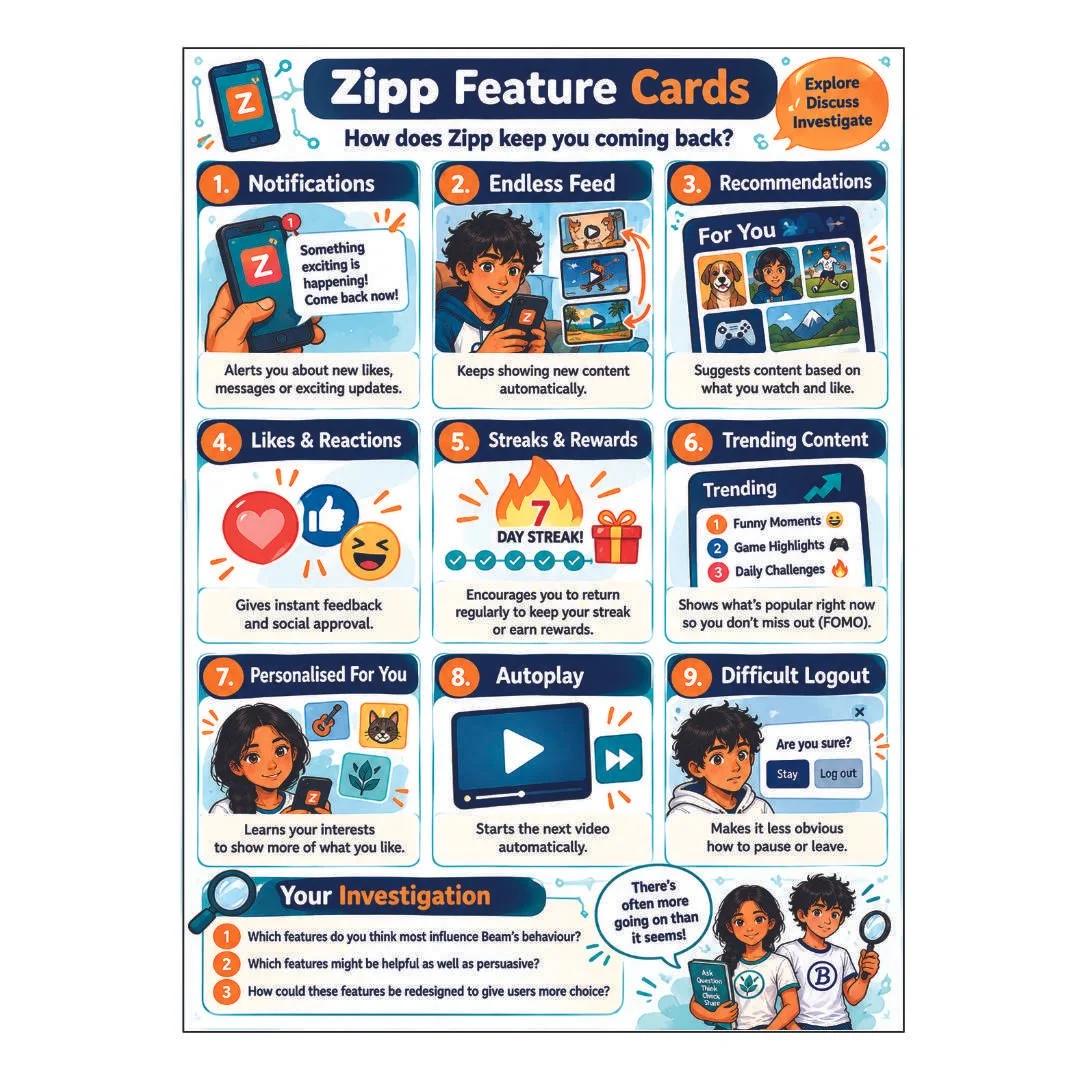 Image 10 of 14
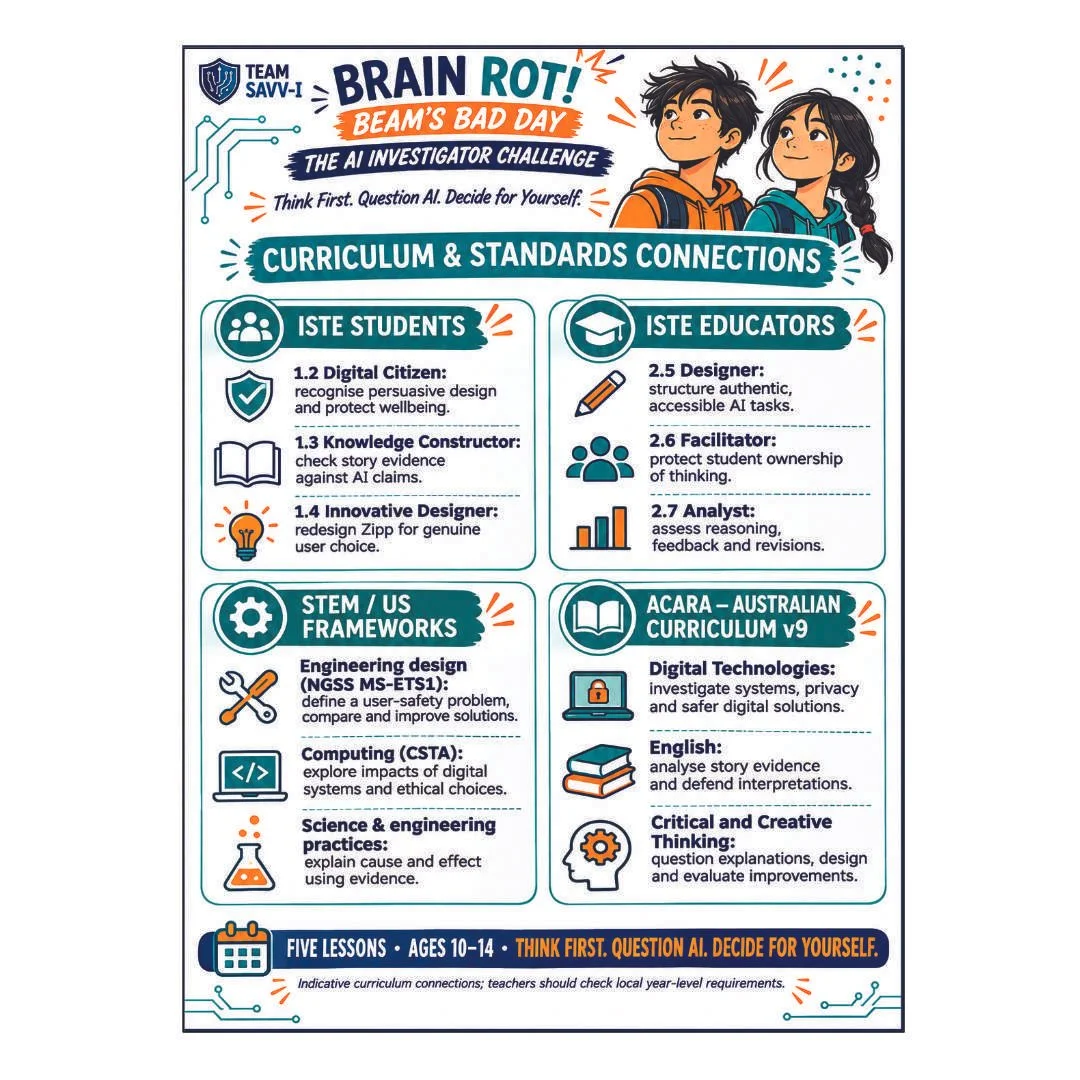 Image 11 of 14
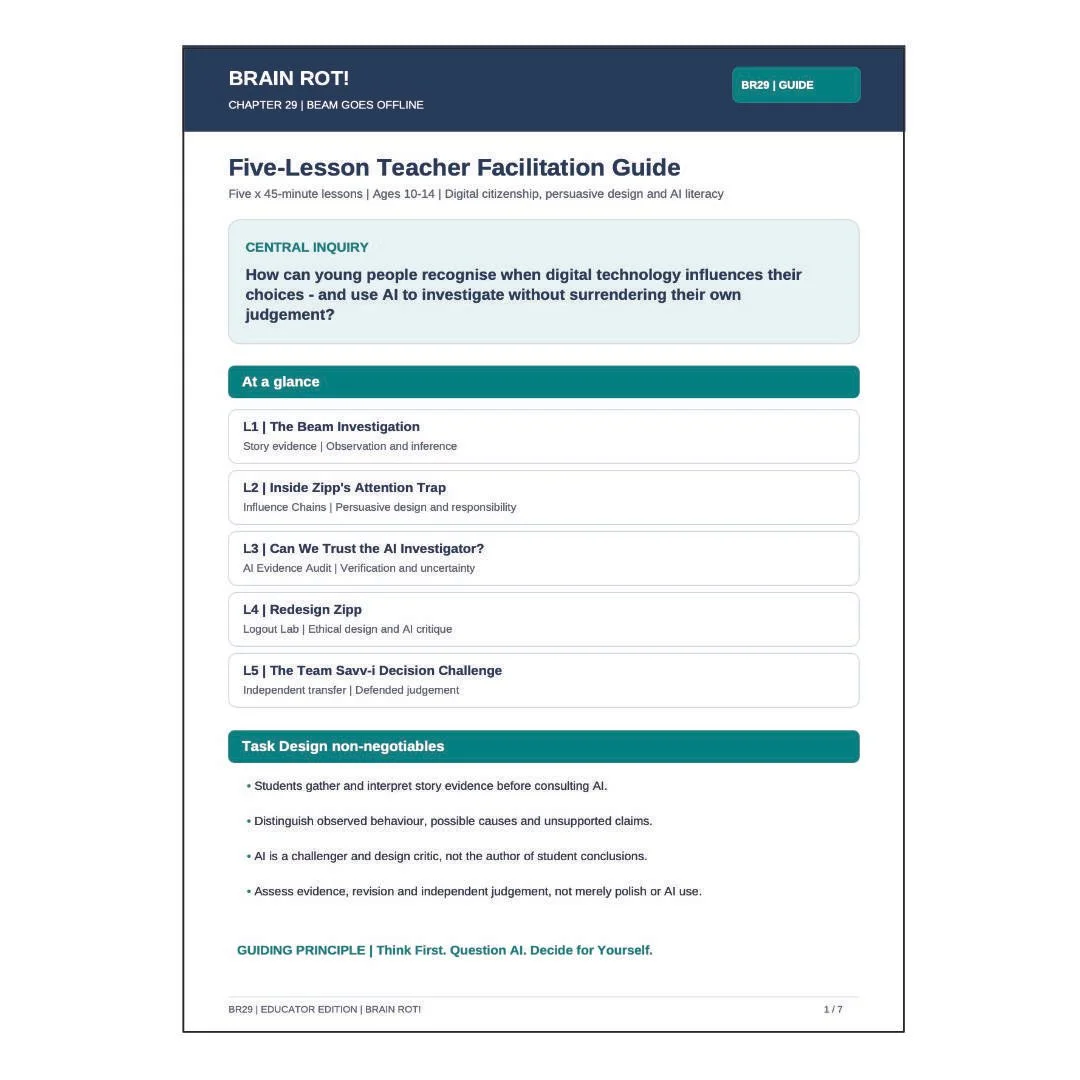 Image 12 of 14
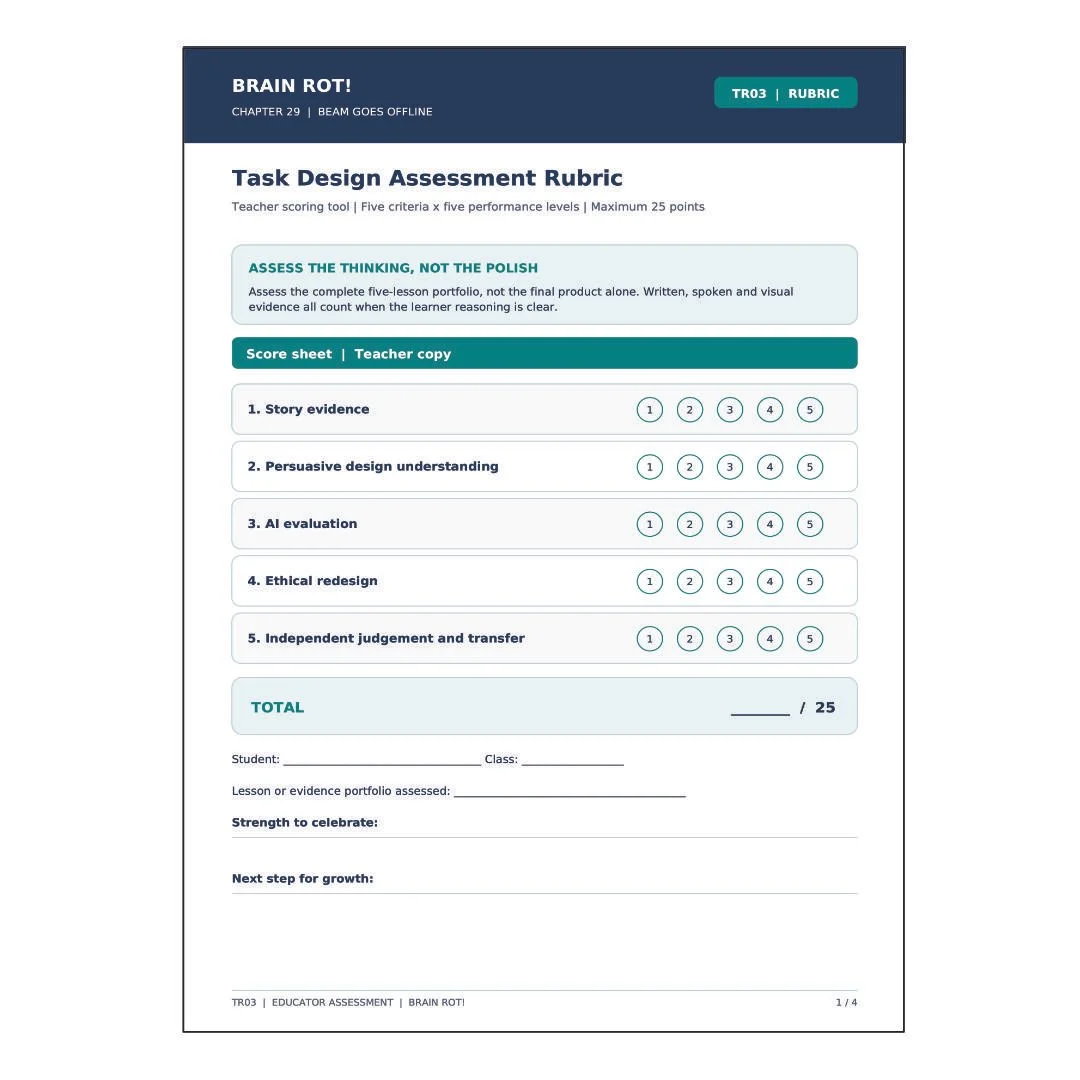 Image 13 of 14
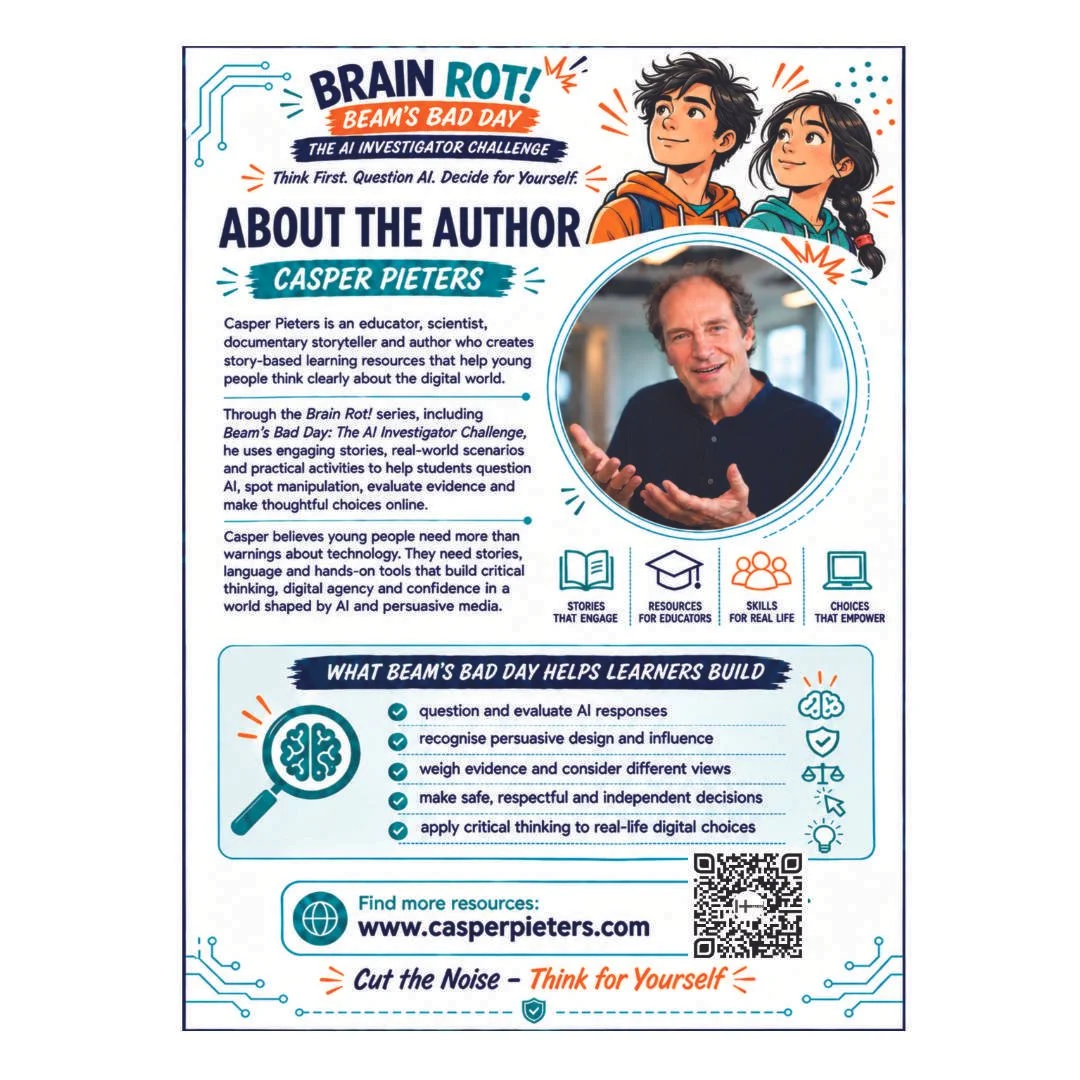 Image 14 of 14